

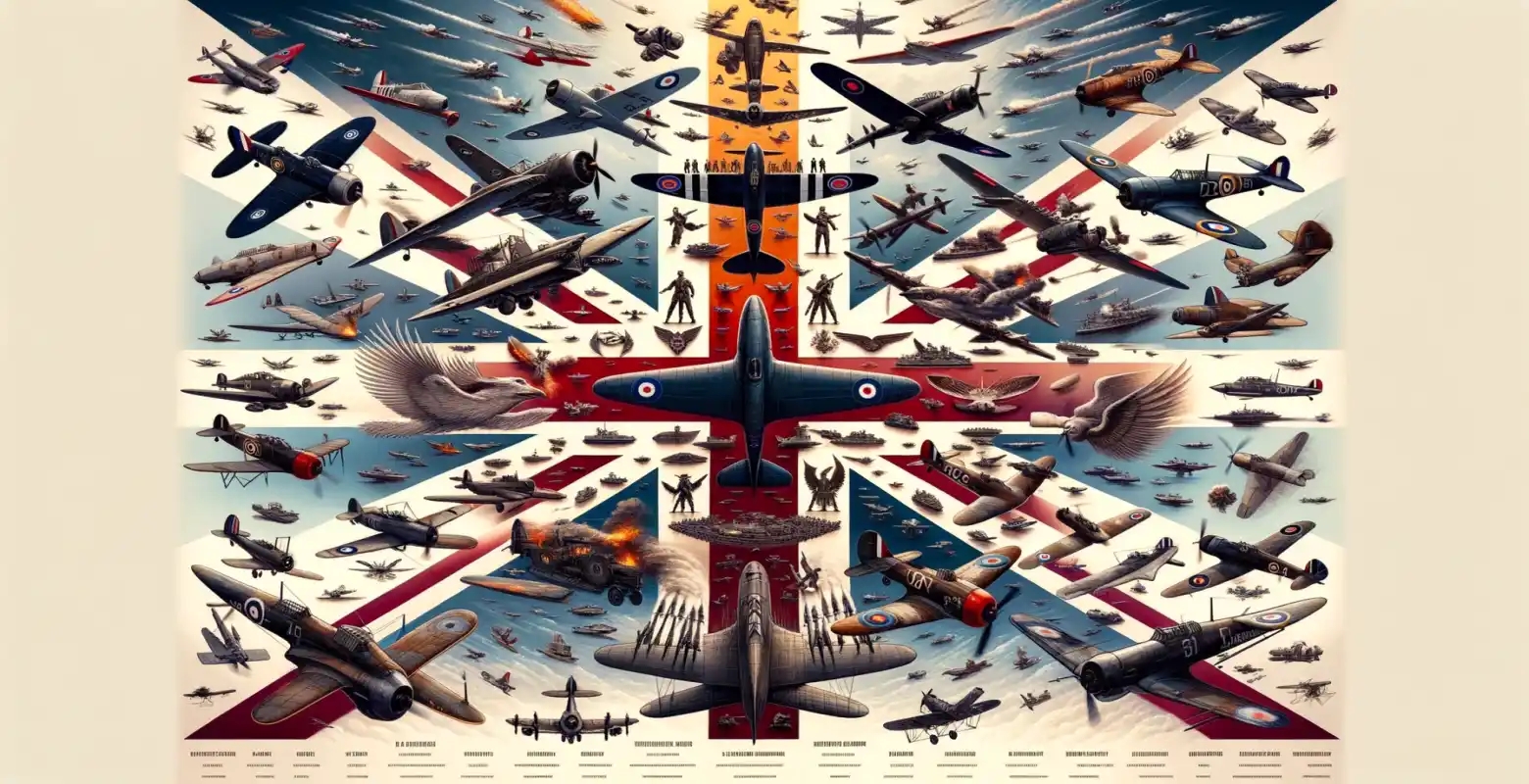
History of the most important aerial battles
Introduction
The history of aerial battles is a fascinating subject that reflects the evolution of military technology and strategic thinking. From the first aerial engagements during World War I, through key battles of World War II, to contemporary conflicts involving drones and modern fighter jets, aerial battles have played a crucial role in shaping the outcomes of armed conflicts. In this article, we will trace the most important aerial battles in history, analyzing their significance and impact on the course of historical events. We will also examine how technological advancements have influenced the tactics and strategies of aerial warfare, as well as the challenges facing air forces today.
World War I: Birth of Military Aviation
World War I was a turning point for military aviation. Initially used for reconnaissance, airplanes quickly became a significant element of wartime activities. The first aerial battle took place on October 5, 1914, when French pilot Joseph Frantz shot down a German Aviatik aircraft. Soon after, aviation began to play a crucial role in military operations. Aircraft such as the Sopwith Camel and Fokker Dr.I became known as some of the most effective fighters of the era. The introduction of synchronizers enabling shooting through the propeller was an innovation that revolutionized aerial combat.
World War II: Era of Air Superiority
During World War II, aerial battles became even more complex and intense. The Battle of Britain in 1940 was the first major campaign fought entirely in the air. The British Royal Air Force (RAF) successfully repelled attacks by the German Luftwaffe, preventing Germany from invading the British Isles. This success was made possible through the use of radar and modern fighters like the Hawker Hurricane and Supermarine Spitfire.
Other important aerial battles of this period include the Battle of Midway and the Battle of Guadalcanal, which were crucial for dominance in the Pacific region. Naval aviation, especially aircraft launched from aircraft carriers, began to play a dominant role, ushering in a new era in naval warfare.
Cold War: New Technologies and Strategies
Following the end of World War II, there was a rapid development in aviation technology. The introduction of jet aircraft and guided missiles changed the face of aerial battles. The Korean War was the first conflict where jet aircraft, such as the F-86 Sabre and MiG-15, were widely used. These engagements were known as "mig alley" due to the intensity of aerial combat.
During the Cold War, aviation also served as a deterrent, and the development of strategic bombers and ballistic missiles became a key element of the MAD (Mutual Assured Destruction) doctrine. This period also saw the emergence of the first anti-ballistic missile defense systems.
Modern Wars: Stealth Technology and Drones
Contemporary armed conflicts have brought new challenges and technologies in the field of aerial warfare. The introduction of stealth technology, which allows aircraft to evade radar detection, has revolutionized aerial operations. Fighters such as the F-22 Raptor and F-35 Lightning II are examples of modern aircraft that utilize this technology.
Drones have also become an integral part of modern air forces, enabling reconnaissance and combat operations without risking pilot lives. Conflicts like the war in Afghanistan and operations against ISIS in Syria and Iraq have demonstrated the effectiveness of drones in conducting precise attacks.
The Future of Aerial Battles
Looking towards the future, we can expect further advancements in technology that will impact the conduct of aerial battles. The integration of artificial intelligence, autonomous systems, and the development of hypersonic technologies open up new possibilities and challenges for air forces worldwide.
With increasing dependence on technology, new threats such as cyberattacks that can disrupt the operation of complex military systems are also emerging. In the future, ensuring security and integrating modern technologies in a way that enhances the effectiveness of military operations while minimizing the risk of large-scale conflicts will be crucial.
Conclusion
The history of aerial battles is a story of human ingenuity, determination, and the relentless pursuit of technological dominance. From humble beginnings during World War I, through key battles of World War II and the Cold War, to contemporary conflicts - each era has brought something new to the way we conduct operations in the air. Today's air forces face the challenge of adapting to a rapidly changing technological environment, making this topic incredibly important and relevant. It is worth following the development of this field, as future aerial battles will undoubtedly shape the course of global conflicts in the years to come.


Number of comments: 0