

Military aviation in armed conflict - the key importance of air superiority
Introduction
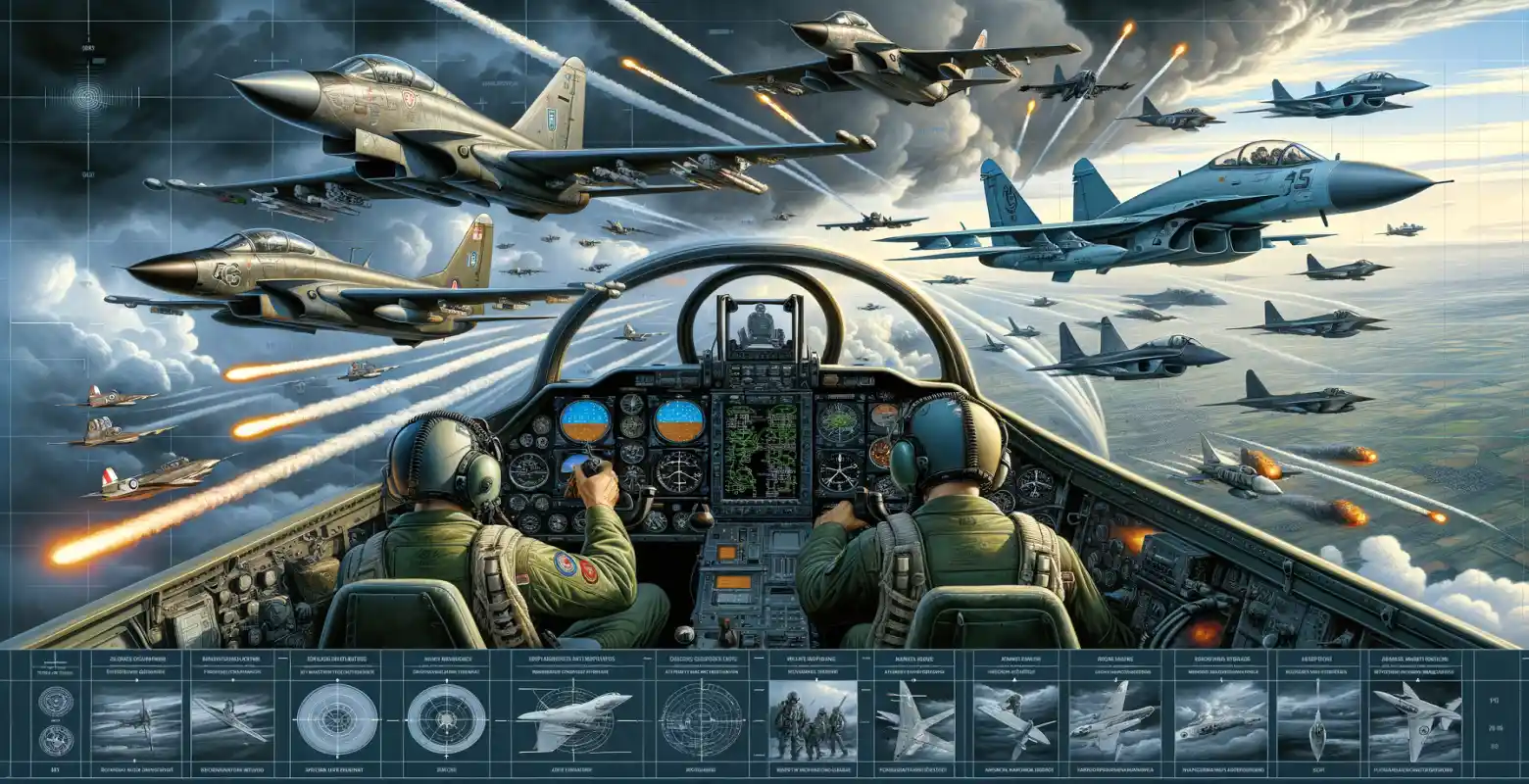
Military aviation plays a key role in modern armed conflicts. Air superiority, the ability to control the airspace over the area of military operations, is one of the most important factors determining the success of military operations. In today's world, where technologies are developing rapidly, possessing modern air forces becomes not only a priority but a necessity for many countries. In this article, we will look at the significance of air superiority in armed conflicts, discussing its key aspects, historical background, challenges, and future trends.
Significance of Air Superiority
Air superiority is the ability to control the airspace, preventing the enemy from conducting air operations. It is a factor that can determine the outcome of an armed conflict. Modern air forces have advanced technologies that allow for quick and precise strikes, logistical support, and reconnaissance. Air superiority also ensures the safety of ground and naval forces, protecting them from airborne attacks.
During World War II, the significance of air superiority was fully appreciated for the first time. Campaigns such as the Battle of Britain demonstrated how crucial it is to have controlled airspace. Contemporary conflicts, such as those in the Persian Gulf, confirmed that air superiority enables more effective military operations with fewer casualties.
Technologies and Innovations in Military Aviation
Technological development in military aviation is ongoing. Modern fighter jets, such as the F-35 Lightning II or Su-57, are equipped with advanced radar systems, stealth capabilities, and electronic warfare capabilities. Combat drones, like the MQ-9 Reaper, have revolutionized the way air operations are conducted, allowing missions to be carried out without risking human lives.
These technologies not only increase operational efficiency but also influence military strategy, changing the way operations are planned and executed. Innovations such as artificial intelligence and automation in aviation open up new possibilities that can significantly enhance air superiority in the future.
Challenges in Maintaining Air Superiority
Despite technological progress, maintaining air superiority is not without challenges. The high costs of developing and maintaining modern air forces are a significant burden on military budgets. Additionally, the development of anti-missile and anti-aircraft defense systems, such as the S-400, poses a serious threat to dominance in the airspace.
Another challenge is cyber warfare, which can threaten guidance and air communication systems. Cyber attacks can disrupt the functioning of key systems, which can have catastrophic consequences for military operations.
The Future of Military Aviation
The future of military aviation will undoubtedly be linked to further technological development. Unmanned systems, artificial intelligence, and cooperation between different branches of the armed forces will be key elements of future military strategies. Military aviation will have to evolve to meet new challenges, such as conflicts in cyberspace or hybrid warfare.
International cooperation in the development of military technologies can play a crucial role in the future. States will need to seek new alliances and partnerships to effectively counter threats and maintain air superiority.
Summary
Air superiority is one of the most important elements of modern armed conflicts. Thanks to modern technologies and innovations, military aviation plays a crucial role in the strategy and execution of military operations. However, maintaining this superiority requires continuous investment in technology development and personnel training. In the future, international cooperation and adaptation to new challenges will be crucial to maintaining dominance in the airspace. For any country that wishes to play a significant role on the international stage, investments in military aviation will remain a priority.



Number of comments: 0