

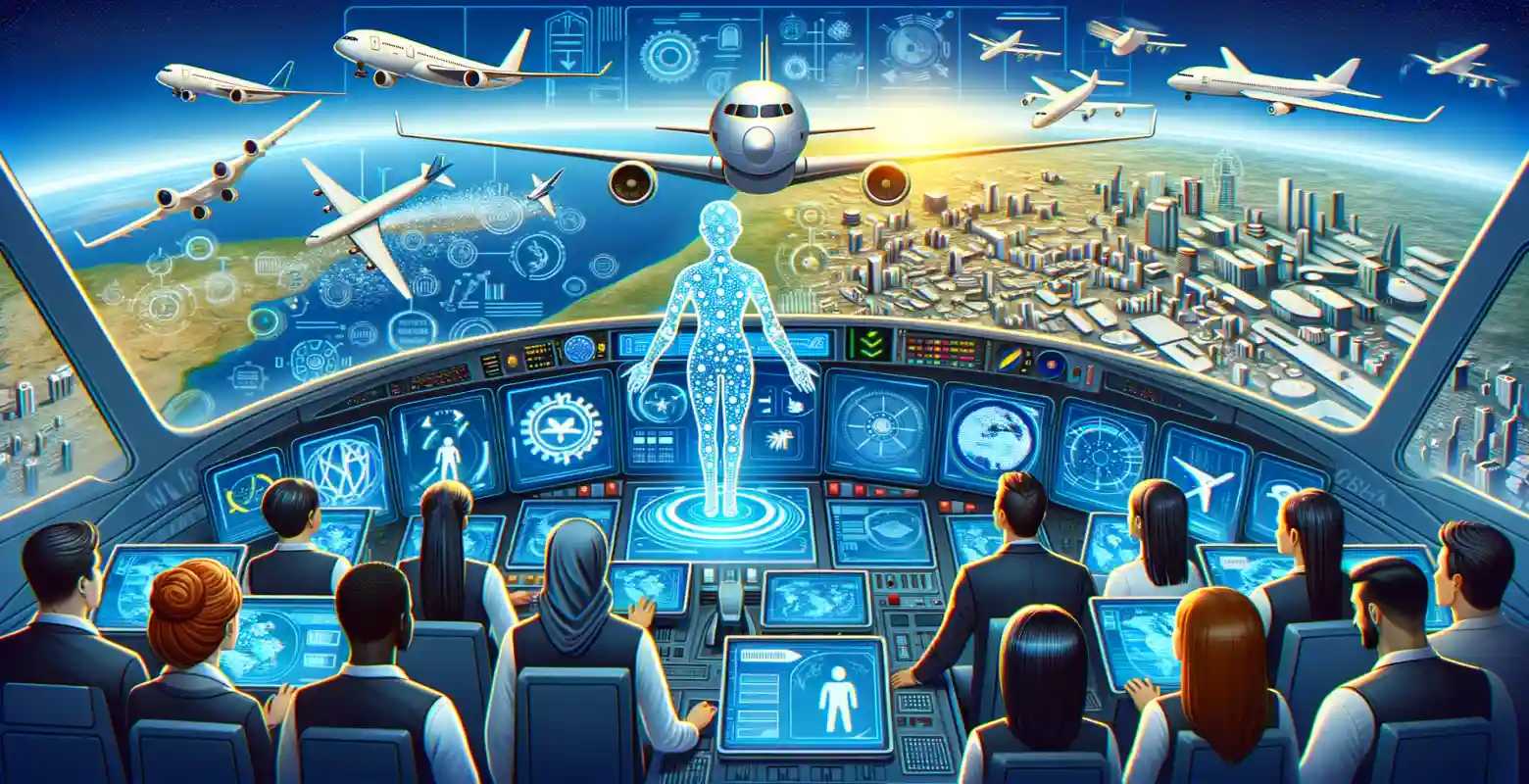
What role does artificial intelligence play in aviation?
Introduction
Contemporary aviation is on the cusp of a technological revolution driven by artificial intelligence (AI). What was once the realm of science fiction not long ago is now becoming a reality that not only transforms how we fly but also enhances the safety, efficiency, and comfort of air travel. In this article, we will examine the role that artificial intelligence plays in aviation, the benefits that arise from it, and the challenges facing the industry. This will provide you with a comprehensive overview of the impact of AI on this dynamic sector.
Automation of Airport Processes
Artificial intelligence plays a crucial role in automating processes at airports, aiming to increase efficiency and reduce operational costs. An example could be the use of AI algorithms to manage passenger traffic. By analyzing real-time data, airports can optimize the flow of passengers, shortening queues for security checks or baggage check-ins.
AI systems can also predict flight delays by analyzing weather data, flight history, and other variables. This allows airlines and passengers to be better prepared for potential disruptions, increasing customer satisfaction and operational efficiency.
Cockpit Assistants
Advanced decision-support systems for pilots, based on artificial intelligence, are becoming increasingly common. Cockpit assistants can analyze vast amounts of data in real time, providing pilots with crucial information regarding weather conditions, aircraft technical status, or optimal flight routes.
These systems not only improve flight safety but also help reduce fuel consumption, which is important in terms of environmental protection and airlines' operational costs. It is also worth mentioning the potential development of autonomous aircraft in the future, although this topic still raises many controversies and requires further research.
Technical Maintenance and Fleet Management
Artificial intelligence plays a key role in predictive maintenance. These systems analyze sensor data from aircraft to predict when a particular part may fail. This allows planning maintenance in a way that minimizes aircraft downtimes and ensures their safe operation.
Predictive maintenance also enables fleet management optimization, which is essential for airlines that want to avoid costly flight delays and cancellations. In this way, AI contributes to increasing the reliability and profitability of aviation operations.
Safety and Air Traffic Control
Safety is one of the most important aspects of aviation, and artificial intelligence plays a crucial role here. AI systems are used to monitor and analyze data from radars, allowing for faster and more precise identification of potential threats in airspace.
Additionally, AI can support air traffic controllers by providing them with information on optimal flight routes or assisting in traffic management during high traffic loads. This increases the efficiency and safety of air traffic control systems.
Challenges Related to Implementing AI
Despite the numerous benefits that artificial intelligence brings to aviation, its implementation faces several challenges. One of the main issues is data security. AI systems require access to vast amounts of data, raising concerns about protecting them from cyberattacks.
Another challenge is trust in the technology. Both passengers and airline staff must be convinced of the reliability and safety of AI systems. This requires transparency in how these systems operate and effective communication of the benefits they bring.
The Future of Artificial Intelligence in Aviation
The future of artificial intelligence in aviation looks promising. The dynamic development of technology and increasing investor interest make us expect further innovations. It is possible that in the future, we will see autonomous passenger aircraft, although this process will require solving many technical and regulatory issues.
Artificial intelligence can also contribute to the development of more sustainable forms of air transport by optimizing flight routes and reducing fuel consumption. This is crucial in the context of global efforts to protect the environment.
Summary
Artificial intelligence is playing an increasingly important role in aviation, bringing numerous benefits in terms of efficiency, safety, and travel comfort. Despite existing challenges, the potential of this technology is enormous and will certainly be further developed. It is important for both the aviation industry and regulators to work together to ensure the proper implementation of these innovations. For passengers and airlines, this means better travel experiences and increased reliability of air transport. Therefore, it is worth following the development of artificial intelligence in this sector to stay up to date with the latest trends and innovations.



Number of comments: 0