

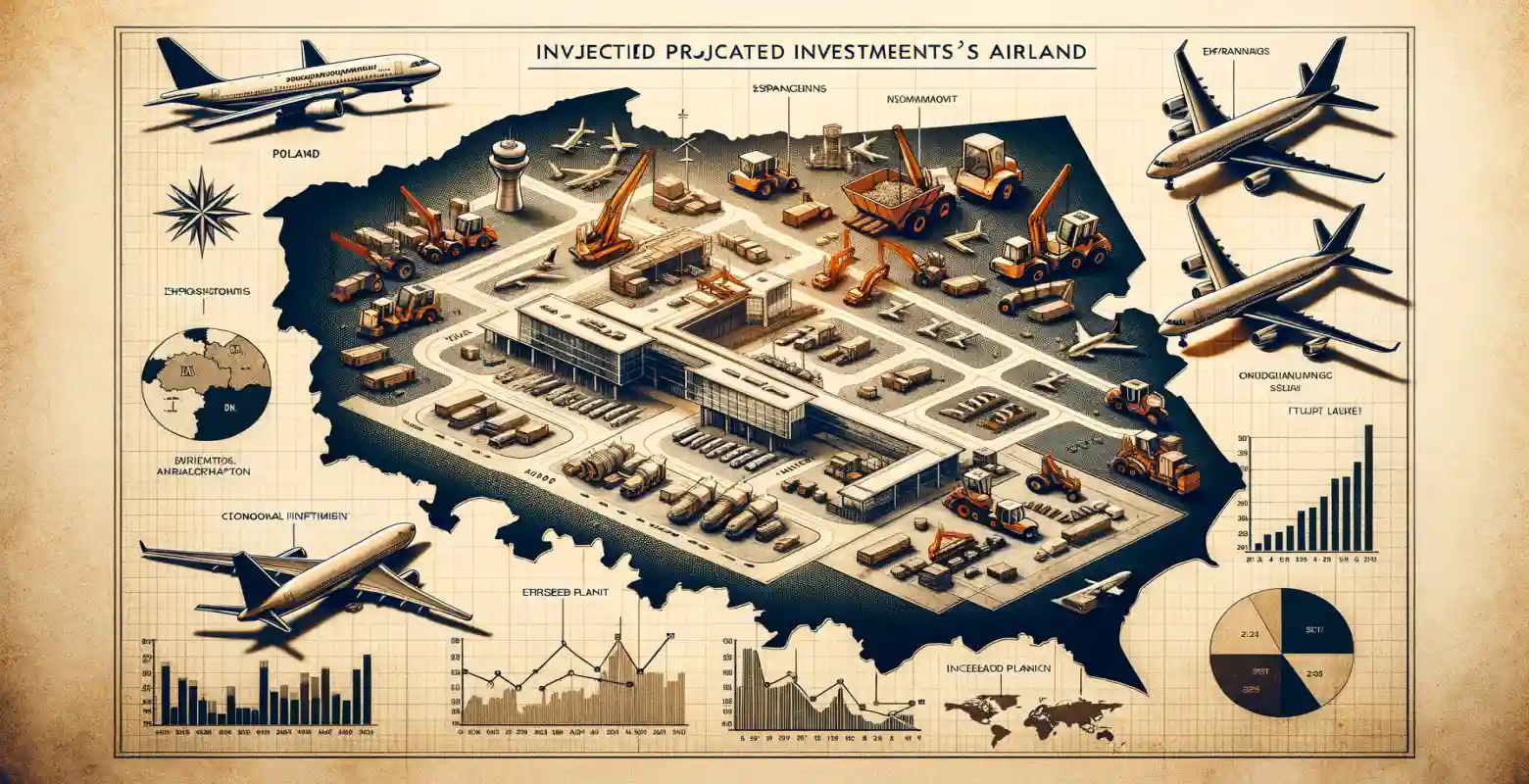
What airport investments does Poland plan in the coming years?
Introduction
With the dynamic economic development and the growing importance of the tourism sector, investments in aviation infrastructure have become a key element of Poland's development strategy. Airports are not only transfer points but also significant logistical centers that support trade and attract foreign investments. In the coming years, Poland plans to implement a series of investments in airports aimed at improving their capacity, safety, and travel comfort. In this post, we will take a detailed look at the planned airport investments in Poland, why they are important, and the benefits and challenges associated with them.
Policy for the Development of Aviation Infrastructure in Poland
Being one of the largest countries in Central Europe, Poland plays a crucial role in the regional transportation system. The Polish government has adopted an ambitious policy for the development of aviation infrastructure, which aims not only at modernizing existing airports but also at constructing new facilities.
Central Communication Port (CPK) is the most significant investment in the Polish aviation sector. This project envisions the construction of a new multifunctional airport in central Poland, which is set to become one of the largest aviation hubs in Europe. CPK is designed to handle both passenger and cargo traffic, contributing significantly to increasing the capacity of the entire aviation transport system in Poland.
As part of the policy for the development of aviation infrastructure, investments are also planned for the modernization and expansion of existing regional airports, such as Krakow-Balice, Gdansk-Rebiechowo, or Katowice-Pyrzowice. The growth in their capacity aims to better meet the increasing demand for aviation services.
Central Communication Port: Main Assumptions and Goals
The Central Communication Port, also known as "Solidarity," is one of the most ambitious infrastructure projects in Poland's history. The project entails the construction of an airport near Baranow, about 40 km from Warsaw. CPK is intended to become the main transportation hub, integrating air, rail, and road transport.
The project's assumptions include building an airport with a capacity of up to 45 million passengers per year with the possibility of further expansion. CPK also plans to create modern railway infrastructure connecting the airport to major Polish cities, significantly reducing travel time.
The investment in CPK aims not only to improve Poland's transport accessibility but also to strengthen its position as a key player in the European transport market. The long-term benefits of implementing this project include increased competitiveness of the Polish economy, the creation of new jobs, and the growth of Poland's significance as a logistics center in Europe.
Modernization and Expansion of Regional Airports
In addition to investments in the Central Communication Port, Poland also plans significant expenditures on the modernization and expansion of regional airports. The increasing number of passengers using airports in Krakow, Gdansk, or Katowice requires adapting infrastructure to new challenges.
John Paul II Krakow-Balice Airport plans to expand its passenger terminal and modernize airport infrastructure to increase capacity and improve passenger service comfort. Similar actions are foreseen in Gdansk, where infrastructure development aims not only to increase the number of passengers served but also to develop the cargo sector.
Katowice-Pyrzowice, one of the fastest-growing airports in Poland, also plans expansion, including the construction of a new passenger terminal and expansion of apron areas. These investments aim to meet the growing demand for both passenger and cargo flights.
Challenges Associated with Investments in Airports in Poland
Despite numerous benefits, investments in aviation infrastructure also come with several challenges. One of the main issues is securing financing. Projects like CPK require significant financial investments from both public funds and private investors.
Another significant challenge is environmental protection. Airport expansion necessitates minimizing the negative impact on the environment, including noise and emissions. This requires the implementation of modern technologies and eco-friendly solutions.
Social issues, such as the relocation of residents from areas designated for investments, can also pose a challenge. This requires close cooperation with local communities and ensuring appropriate compensation.
Benefits and Future Trends in Airport Development
Investments in aviation infrastructure bring numerous benefits at both the local and national levels. They contribute primarily to increased transport accessibility, promoting tourism development and attracting foreign investments.
In the context of future trends, attention is drawn to the growing importance of sustainable development. Airports are increasingly investing in eco-technologies, such as solar panels, energy management systems, and emission-reducing technologies.
Another trend is the digitalization of airport processes. Automation of check-ins, intelligent air traffic management systems, and the use of artificial intelligence are just some of the innovations that can revolutionize airport operations in the future.
Summary
Investments in aviation infrastructure are a strategic element of Poland's development on the international stage. Projects such as the Central Communication Port and the modernization of regional airports aim to increase capacity, improve passenger service quality, and strengthen Poland's position as an important transport hub in Europe.
Despite challenges related to financing, environmental protection, or social issues, the potential benefits of airport investments are significant. Through the modernization and expansion of aviation infrastructure, Poland has the opportunity to become a leader in the region, attracting investments and stimulating economic development.
In the context of future trends, investments in sustainable development and the digitalization of airport processes will be crucial. These investments will help address the challenges of the 21st century and ensure the long-term development of the aviation sector in Poland.



Number of comments: 0