

Flight simulators - what do modern pilot training programs look like?
Introduction
Flight simulators are an integral part of modern pilot training, which has gained importance in the era of dynamic development of aviation technologies. Modern airlines and training institutions are increasingly investing in advanced simulators to ensure high quality education and flight safety. Why have flight simulators become a key element of pilot training? What benefits do they bring and what challenges do their creators and users face? In this post, we will take a closer look at this fascinating subject.
History of Flight Simulators
The first flight simulators appeared in the 1920s, with their main purpose being to provide pilots with basic training in aircraft operation. Initially, they were simple mechanical devices simulating basic aircraft movements. Over the years, with technological advancements, simulators evolved, gaining in precision and realism.
In the 1960s, analog simulators were introduced, utilizing advanced hydraulic systems to simulate more complex flight maneuvers. The next step was the introduction of digital simulators in the 1980s, allowing for a more realistic reproduction of flight conditions through the use of computers. Today's flight simulators are advanced systems that combine the latest technologies of virtual reality, computer modeling, and interactivity.
How Modern Flight Simulators Work
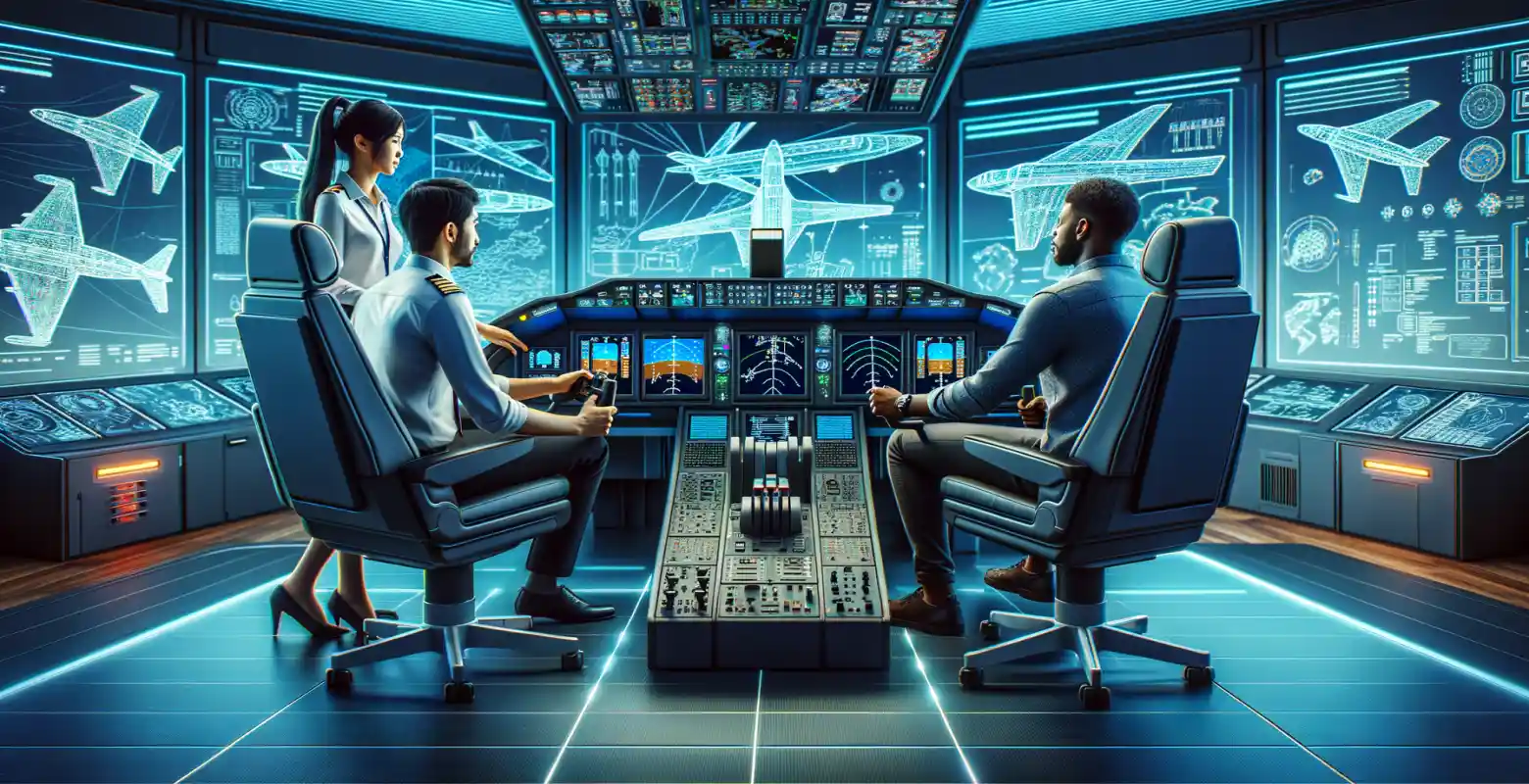
Modern flight simulators are complex systems consisting of several key elements: the pilot's cabin, visualization system, sound system, and motion mechanism. The pilot's cabin is a faithfully reproduced replica of a real aircraft cockpit, allowing for realistic training in instrument operation and onboard systems.
The visualization system is one of the most important elements of a simulator, reproducing the pilot's view of the external environment. Through the use of advanced projectors and panoramic screens, pilots can experience realistic weather conditions, changes in day and night, and various emergency scenarios.
The sound system reproduces authentic sounds accompanying the flight, such as engine noises, radio communications, or warning signals. The motion mechanism is an advanced hydraulic or electromagnetic system that simulates forces acting on the aircraft during takeoff, landing, or turbulence.
Advantages of Using Flight Simulators
The use of flight simulators in pilot training brings a number of benefits. Above all, it allows for safe and controlled practice of emergency situations, which would be difficult to replicate in real conditions. Pilots can repeat specific scenarios multiple times, enabling the consolidation of skills and more effective preparation for real situations.
Flight simulators are also cost-effective. Training on a simulator is much cheaper than actual training flights, allowing for the optimization of pilot education costs. Additionally, simulators are environmentally friendly as they do not consume aviation fuel or emit CO2.
Simulators also enable training to be conducted at any place and time, increasing the flexibility of the educational process. Modern simulators also offer the possibility of personalizing training scenarios, allowing for adaptation to individual pilot needs and skills.
Challenges and Limitations of Flight Simulators
Despite numerous advantages, flight simulators also have their limitations. One of the main challenges is ensuring an adequate level of realism that allows for faithful reproduction of all aspects of flight. Achieving this goal requires advanced technology and significant financial investments, which may be a barrier for smaller training centers.
Another challenge is the need for regular software updates for simulators to keep pace with dynamically changing aviation technologies and safety regulations. This requires constant collaboration with aircraft manufacturers and adapting simulators to new aircraft models.
The Future of Flight Simulators
The future of flight simulators looks promising. As virtual and augmented reality technologies become more advanced, it can be expected that simulators will offer even more realistic and engaging training experiences. The development of artificial intelligence may also contribute to more precise modeling of training scenarios and better adaptation to pilots' individual needs.
Flight simulators will play a key role in training the pilots of the new generation, and their importance will grow along with the increasing demand for more sustainable and effective educational methods. As the aviation industry becomes more complex, simulators will need to evolve to meet new challenges and expectations.
Summary
Flight simulators are an integral part of modern pilot training, offering safe, cost-effective, and efficient learning methods. Despite some challenges, such as costs and the need for continuous updates, the benefits of their use are invaluable. Thanks to simulators, pilots can improve their skills in realistic conditions, leading to increased safety and efficiency of flight operations. In the future, the development of VR and AI technologies will certainly contribute to further enhancing simulators, making them an even more essential tool in the pilot training process.


Number of comments: 0