

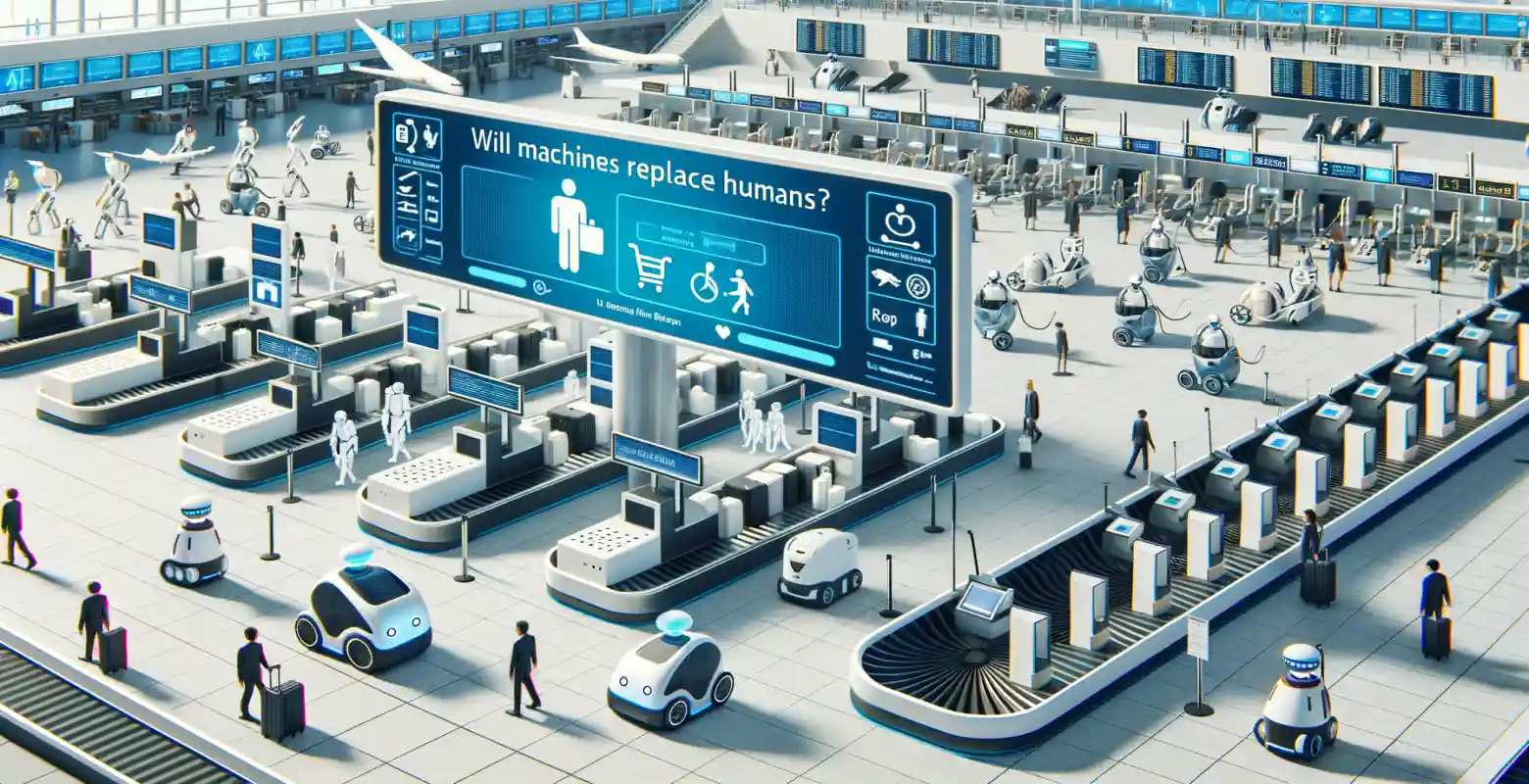
Automation at airports - will machines replace people?
Introduction
Automation at airports has become one of the key topics in discussions about the future of air travel. In the era of rapid technological progress, the question of whether machines can replace humans is gaining importance. Automation encompasses a variety of technologies, from self-service kiosks to advanced security systems. In this article, we will examine how automation affects the functioning of airports, what benefits and challenges it brings, and what future directions of development in this field may be.
History and Development of Automation at Airports
The beginnings of automation at airports date back to the 1980s when the first computer systems were introduced to handle passenger reservations and check-in. In the 1990s, the first self-service check-in kiosks appeared, revolutionizing the way passengers prepare for their flights. With the beginning of the 21st century, automation began to cover more aspects of airport operations, including baggage management and security control.
Modern Technologies Supporting Automation
One of the key elements of automation at airports is self-service kiosks, which enable passengers to quickly and conveniently check in. Another innovation is biometric gates, which use facial recognition technology to enhance security and expedite the check-in process. Baggage management systems have also been automated through the use of RFID technology, allowing for real-time tracking of luggage and reducing the number of lost suitcases.
Automation and Security at Airports
Security is one of the key aspects influenced by automation. Modern baggage scanners and facial recognition systems have significantly increased the effectiveness of security checks. Automatic monitoring systems can identify potential threats faster and more precisely than traditional methods. However, the introduction of these technologies also raises questions regarding passenger privacy and data protection.
Benefits of Automation at Airports
Automation brings many benefits, both for passengers and airport managers. In addition to increasing operational efficiency, automation allows for cost reduction by decreasing the number of required employees. Passengers save time with faster check-ins and shorter queues at security checkpoints. Additionally, automated baggage management systems minimize the risk of lost luggage, contributing to overall customer satisfaction.
Challenges Associated with Automation
Despite numerous advantages, automation at airports also poses certain challenges. One of the main issues is employment. As machines take on more tasks, the demand for workers decreases, raising concerns about job loss. Another challenge is ensuring security and protecting personal data in the face of increasing use of biometric technologies.
The Future of Automation at Airports
In the future, we can expect further development of automation at airports. Increasing emphasis will be placed on integrating intelligent systems capable of predicting and responding to changing conditions in real time. Technologies such as artificial intelligence and the Internet of Things (IoT) will play a crucial role in further streamlining airport operations. It is also possible that fully automated airports will emerge in the future, where human involvement will be minimized.
Summary
Automation at airports is an inevitable process that brings both a range of benefits and challenges. Although machines may replace humans in many tasks, this does not mean the complete elimination of the need for human work. Instead, automation will require workers to develop new skills and adapt to changing work conditions. The key to success will be a balanced approach that maximizes the benefits of technology while considering social and ethical aspects. For passengers, automation means more convenient and efficient travel, which is the goal pursued by the entire aviation industry.



Number of comments: 0