

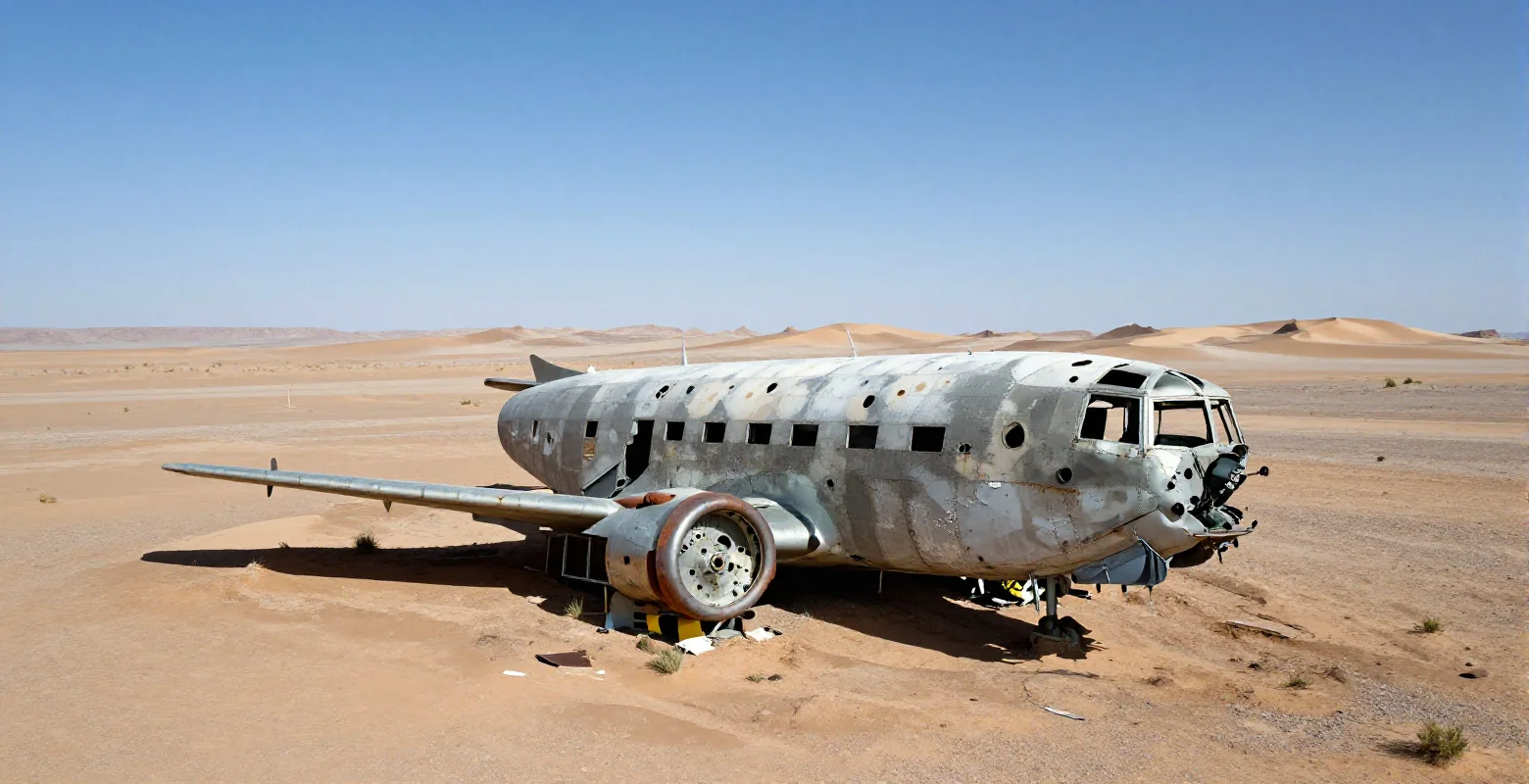
Aircraft Graveyards in the Deserts: What Happens to Retired Machines?
Introduction
In the vast, harsh landscapes of deserts around the world lie forgotten relics of the past - thousands of aircraft that have ended their service. These "graveyards" are not just scrap yards, but also places of immense historical and ecological significance.
From legendary Boeing 747s to modern Airbus A380s - every airplane has its "life cycle." When it is retired from service, it becomes part of a complicated process of recycling or disposal. But what exactly happens to these gigantic machines?
Retirement and Dismantling Process
Retiring an aircraft is not just a business decision, but also a complex technical process. Airlines sell the machines at auctions to specialized recycling companies or museums.
Most often, the aircraft ends up at one of the “graveyards,” such as the Mojave Desert in the USA, where the dry climate slows down corrosion. There, the tedious dismantling process begins.
- Jet engines are disconnected and often sold for spare parts.
- Composite components, like wings or fuselage, are cut into smaller pieces.
- Metals - aluminum, stainless steel, and titanium - go to smelters.
- The interior of the aircraft (seats, entertainment systems) is dismantled separately, often donated to charity or disposed of.
Recycling and Reuse
Modern aircraft are largely made of aluminum (about 60%) and composites (30%). Recycling these materials is key to environmental sustainability.
According to Boeing data, recycling one 747 saves about 15 tons of raw materials. Companies like AirLease Corporation and GE Aviation actively promote a circular economy.
- Recycled aluminum uses 95% less energy than primary production.
- Composites are often processed into building materials or furniture components.
- Electronics are recovered, and precious metals (e.g., gold in circuit boards) are refined.
- Acrylic glass from cockpits is used to produce furniture or decorative elements.
Environmental and Legal Challenges
Despite advances in recycling, “graveyards” remain a challenge. It is estimated that by 2030, there will be about 15,000 passenger aircraft around the world destined for disposal.
The main issues are:
- Pollution: Improper disposal of technical fluids (hydraulics, fuel) can contaminate soil and groundwater.
- CO2 Emissions: Transporting aircraft to distant “graveyards” generates a significant carbon footprint.
- Legal Regulations: The lack of uniform international regulations complicates the management of the process.
- Costs: Dismantling large machines (e.g., A380) can cost up to $5 million.
Outlooks and Innovations
The aviation industry is seeking solutions. Examples include:
- Modular Design: Aircraft designed to be easier to dismantle (e.g., new Airbus models).
- Circular Supply Chains: Companies like Lufthansa Technik create parts exchange platforms.
- New Materials: Research into biodegradable composites (e.g., the Eco-Aviation project).
- Digital Twins: Simulations of the dismantling process to minimize waste.
Conclusions
The “graveyards” of aircraft are not just a symbol of the passing of technology but also a laboratory for the future of recycling. The key is to combine technical innovations with ecological responsibility - so that future generations of machines leave a smaller footprint on the Earth.


Number of comments: 0