

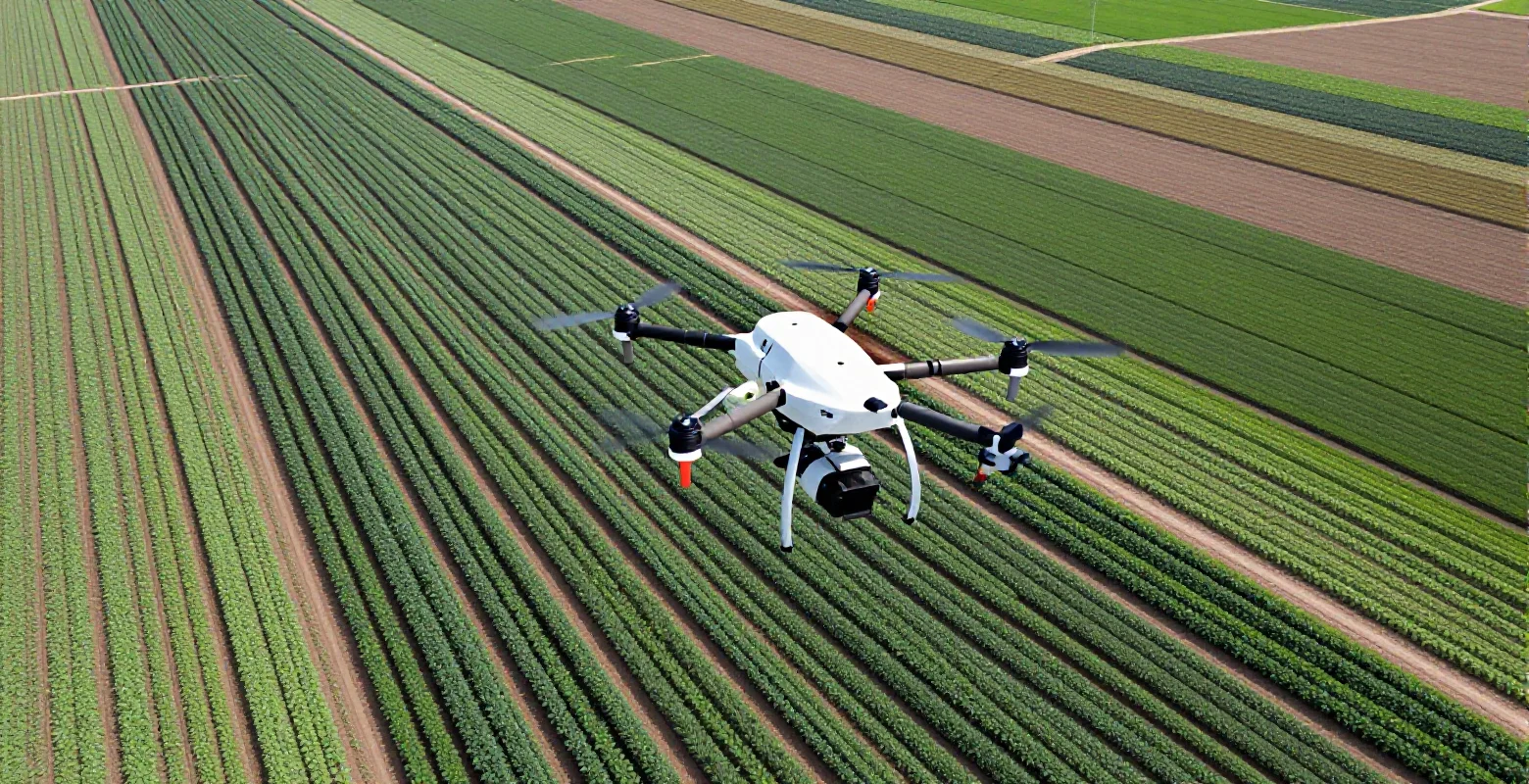
The Future of Drones in Precision Agriculture: A Technological Revolution in the Fields
Introduction
Agriculture, which has been the foundation of human civilization for centuries, is currently undergoing a profound transformation thanks to the integration of modern technologies. One of the most groundbreaking tools in this revolution is drones, which are finding increasingly broader applications in precision agriculture. Drones enable precise monitoring of crops, optimization of fertilization and irrigation, and quick responses to problems, which translates into increased efficiency and reduced costs.
The history of using drones in agriculture dates back to the early 21st century, but it is only in the last decade that they have truly flourished. Thanks to advancements in sensor technology, artificial intelligence, and miniaturization of electronics, drones have become an integral part of modern farms.
Technologies and Applications
Drones in precision agriculture utilize advanced technologies such as multispectral cameras, thermal sensors, lidars, and GPS systems. Multispectral images allow for analysis of plant conditions, detection of diseases, and water stress, while thermal sensors measure soil and plant temperature. Lidars, on the other hand, enable the creation of precise terrain maps, which are invaluable for planning agricultural practices.
One of the key applications of drones is monitoring plant growth. Through regular flights over fields, farmers can track crop development, identify areas of lower productivity, and take appropriate corrective actions. For example, in the case of detecting nutrient deficiencies, drones can precisely deliver fertilizers only where needed, minimizing waste and costs.
Impact Analysis on the Industry
- Increased Efficiency: Drones allow for more effective resource management, leading to higher yields and better product quality.
- Cost Reduction: Precision fertilization and irrigation reduce the use of chemicals and water, resulting in lower production costs.
- Environmental Protection: Less use of pesticides and fertilizers contributes to lower pollution of soil and groundwater.
- Faster Decision-Making: Data from drones is available almost instantly, allowing for quick responses to problems and process optimization.
Perspectives and Challenges
Despite numerous benefits, the development of drones in agriculture faces certain challenges. One of them is the legal regulations regarding the flights of unmanned aerial vehicles. Many countries are introducing increasingly restrictive regulations, which may limit the freedom of drone use by farmers.
Another challenge is the integration of drone data with existing farm management systems. This requires investment in appropriate software and staff training. Moreover, the costs of purchasing and maintaining drones can be a barrier for small and medium-sized farms.
Conclusions
The future of drones in precision agriculture looks promising, but their full potential will only be unlocked if existing barriers can be overcome. Collaboration between technology producers, regulators, and farmers is crucial for the further development of this field. Drones have the potential to become an integral part of modern agriculture, contributing to sustainable development and ensuring food security worldwide.


Number of comments: 0