

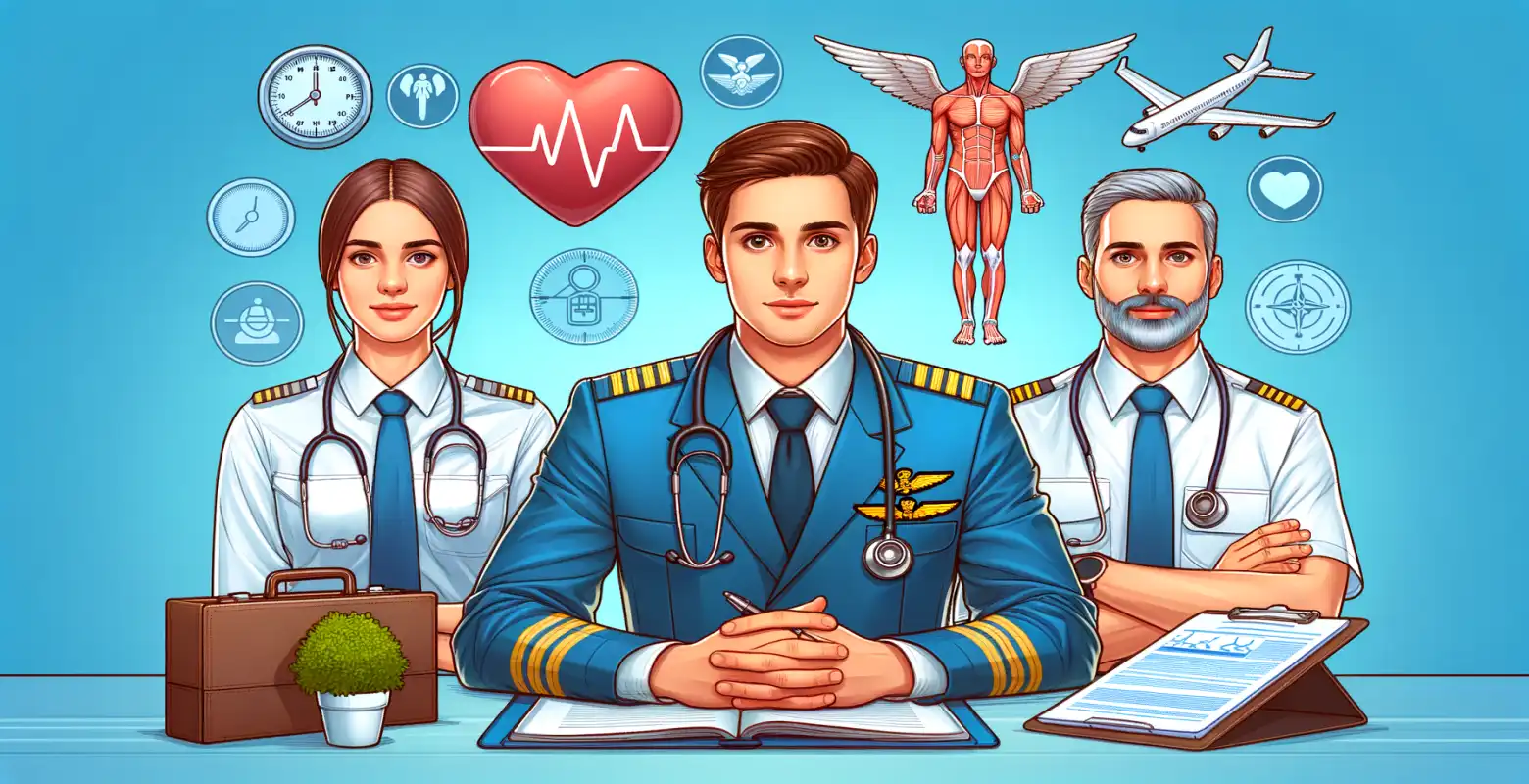
What are the health requirements for future pilots?
Introduction
The dream of flying has accompanied humanity for centuries. Modern technologies have made it possible to fulfill this desire, and the profession of a pilot has become synonymous with prestige and passion. However, to sit behind the controls of an aircraft, it is essential to meet a series of health requirements. Why are they so crucial? A pilot carries a huge responsibility for the safety of passengers and crew, as well as for an aircraft worth sometimes hundreds of millions of dollars. In this article, we will look at what the health requirements are for future pilots, what examinations candidates must undergo, and what challenges they may face along the way.
Basic health requirements
Health requirements for future pilots are strictly defined by international and national regulations. In Poland, the implementation of these regulations is overseen by the Civil Aviation Authority (CAA), which is based on standards set by the International Civil Aviation Organization (ICAO) and the European Aviation Safety Agency (EASA).
The primary document required is the so-called Medical Certificate of Fitness, which is divided into three classes. For professional pilots, the most important is the Class 1 Certificate. It requires regular medical examinations, which cover the assessment of many aspects of physical and mental health.
Ophthalmological examinations
The ability to have proper vision is crucial for every pilot. Ophthalmological requirements include not only visual acuity but also the ability to distinguish colors, spatial vision, and peripheral vision. Pilots must have visual acuity of at least 6/6 in each eye, with or without correction. Additionally, tests for color blindness are a standard part of the assessment, as the ability to distinguish colors of light signals is crucial in aviation.
Hearing examinations
Similar to vision, hearing plays a key role in flight safety. Pilots must be able to clearly receive radio communications, which are essential for aviation communication. Audiometric tests assess the ability to perceive sounds of various frequencies. Any hearing impairments must be minimal enough not to affect the pilot's ability to perform their duties.
General physical health
A pilot's physical health is no less important than their sensory abilities. Examinations include an overall health assessment, including blood pressure, cardiovascular system functioning, respiratory system, as well as neurological examinations. Any serious health issues, such as heart diseases or neurological disorders, can disqualify a candidate.
Mental health and emotional stability
Equally important to physical health is the mental health of future pilots. Aviation is a profession that requires immense concentration, stress resistance, and the ability to make quick decisions. Candidates undergo psychological assessment to exclude disorders that could negatively impact flight safety. Emotional stability, teamwork skills, and the ability to cope in crisis situations are crucial.
History and evolution of health requirements
Health requirements for pilots have evolved over the years. Initially, the focus was mainly on physical abilities, but over time, the importance of mental and emotional fitness was recognized. Modern technologies allow for more comprehensive examinations, and advances in science contribute to better understanding of factors that can affect flight safety.
Challenges and the future of health requirements
While current standards are stringent, the future brings new challenges. Climate change, increased flight volume, and the development of autonomous aviation may impact how we assess pilots' capabilities. Additionally, there is a growing emphasis on mental health, which may lead to the introduction of new psychological tests.
Research shows that stress and burnout are growing issues among pilots, which may lead to more regular psychological assessments and support programs for flight crews.
Summary
Being a pilot is not just a passion but also a tremendous responsibility. Meeting rigorous health requirements is crucial for ensuring safety in the skies. As our article shows, this process involves a wide range of examinations, both physical and psychological. In the face of dynamic changes in aviation, these principles will continue to evolve to meet new challenges. For future pilots, this means a constant focus on health and readiness to adapt. If you dream of a career at the controls, prepare for a demanding yet highly rewarding journey.



Number of comments: 0