

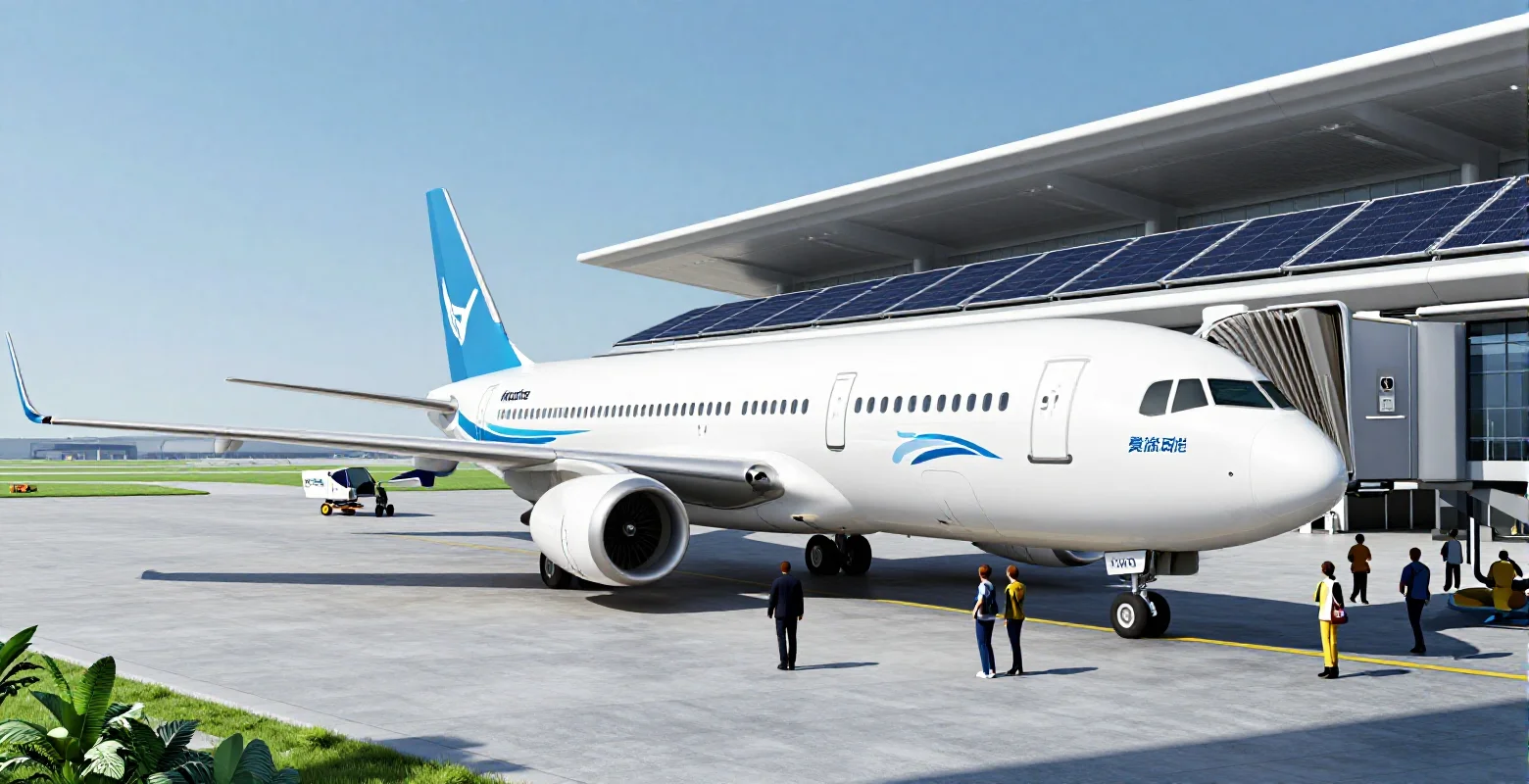
The Future of Hydrogen Aviation: Technology, Challenges, and Perspectives
Introduction
Aviation has been struggling with the issue of CO2 emissions for years, which plays a significant role in global warming. In light of tightening environmental regulations and increasing ecological awareness, the aviation industry is searching for alternative sources of propulsion. One of the most promising solutions is hydrogen - a clean fuel with enormous potential.
Hydrogen, as an energy carrier, does not emit carbon dioxide during combustion, and the only byproduct is water vapor. This feature makes it an ideal candidate for the fuel of the future for aviation. However, the path to commercial use of hydrogen in airplanes is filled with technical, economic, and infrastructural challenges.
Hydrogen Propulsion Technology
Hydrogen propulsion is based on two main technologies: hydrogen-fueled turbine engines (HTUs) and fuel cells. HTUs use hydrogen as fuel in traditional jet engines, while fuel cells convert the chemical energy of hydrogen directly into electrical energy.
Fuel cells, especially those based on polymer electrolyte membranes (PEM), are currently the most advanced. Companies like Airbus and Boeing are intensively working on integrating these technologies into airplane prototypes, such as the ZeroEM model and the De Havilland DHC-2 demonstrator.
Impact Analysis on the Industry
- Advantages: Zero CO2 emissions, applicability in various types of aircraft, potential for significantly reduced noise (in the case of electric propulsion).
- Disadvantages: High hydrogen production costs (currently mainly from natural gas), limited energy density, need for expanding infrastructure for storage and distribution.
- Key Technologies: Advanced PEM fuel cells, hydrogen storage systems (liquid or compressed), integration with existing aircraft structures.
- Applications Examples: Prototypes of regional aircraft (e.g., hydrogen-powered ATR-72), concepts for long-range aircraft, ground tests, and demonstration flights.
Perspectives and Challenges
Despite its immense potential, hydrogen aviation faces serious barriers. The production of green hydrogen (from water electrolysis using renewable energy sources) is still expensive and not scalable. Furthermore, airport infrastructure requires significant changes - from refueling systems to modifications in ground handling procedures.
Legal regulations are also evolving. The European Union and the USA are actively working on emission standards that could accelerate hydrogen adoption. However, full commercialization may take 10-20 years due to the scale of investments and the necessity of certifying new technologies.
Conclusions
Hydrogen aviation is not science fiction but a real path to decarbonizing the sector. Although the challenges are significant, technological progress and increasing regulatory pressure create solid foundations for this revolution. The key will be the collaboration of industry, governments, and the scientific community to transform the vision of zero-emission aviation into reality.



Number of comments: 0