

Sustainable Practices at Airports: New Trends and Challenges for the Future of Infrastructure
Introduction
Airports, being key nodes of global mobility, face an unprecedented challenge: the necessity of reconciling the growing needs of passengers with environmental responsibility. According to a report by the International Air Transport Association (IATA), aviation-related CO2 emissions account for about 2% of the global carbon footprint, but their share in total energy consumption by the transport sector reaches as high as 35%. This makes innovative solutions at airports not just a matter of prestige but a necessity.
Historically, airports were designed for maximum capacity and operational efficiency. However, current trends indicate a radical shift in priorities: from reducing the carbon footprint, optimizing resource consumption, to creating passenger-friendly spaces. An example is Copenhagen-Kastrup Airport (CPH), which announced a plan in 2023 to achieve climate neutrality by 2030 - five years ahead of the EU schedule.
Green Infrastructure and Technologies
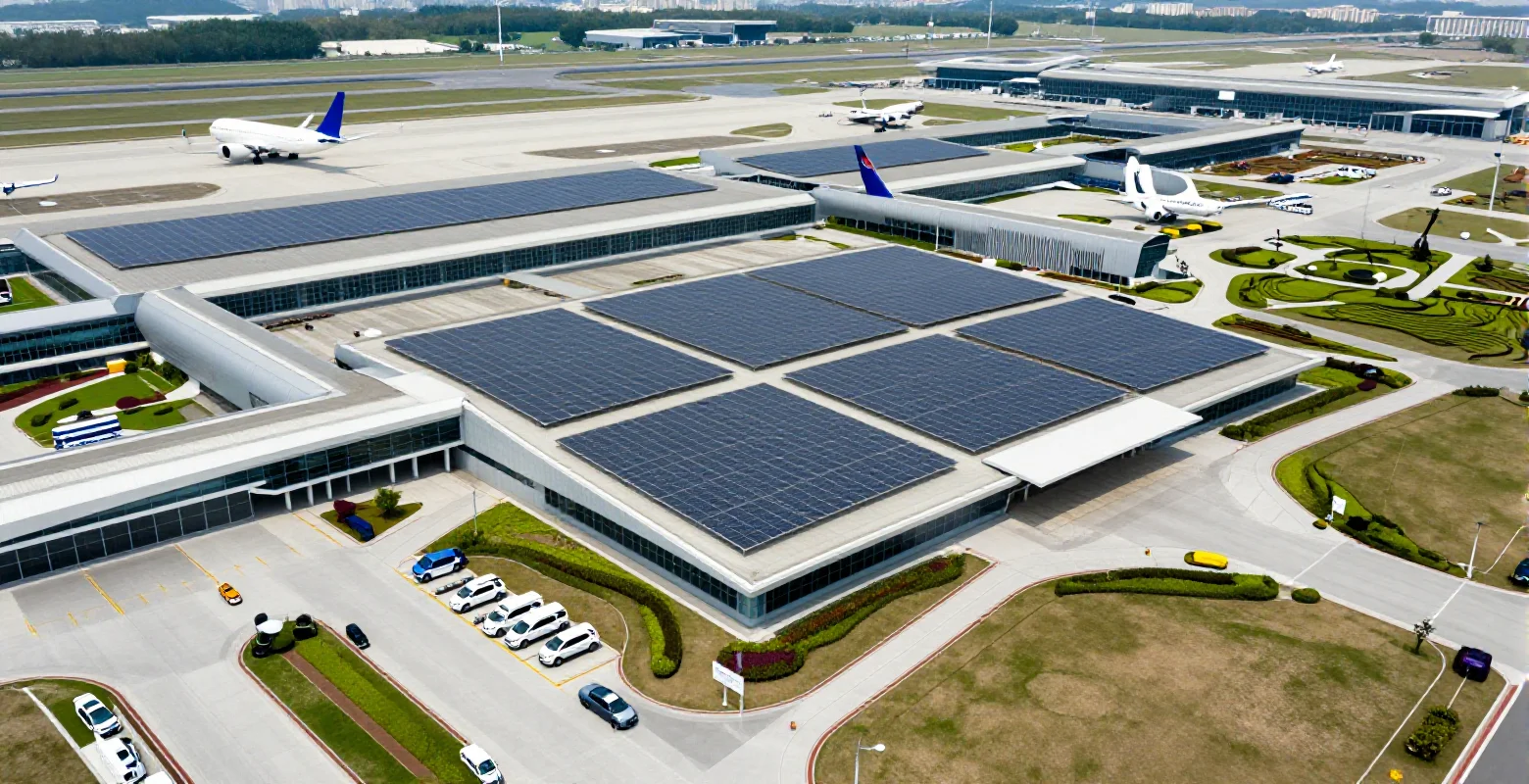
A key area of transformation is power systems. Airports are increasingly investing in photovoltaic panels (e.g., Amsterdam Schiphol Airport has covered 20 hectares of rooftops with them), wind turbines, and lithium-ion battery-based energy storage. At the same time, electromobility is developing: ground vehicles, such as tugs and buses, are being replaced by electric or hydrogen models. An example is Zurich Airport, where 100% of the ground service vehicle fleet is already zero-emission.
Innovations also include water management. Rainwater recovery systems, sewage treatment plants powered by biogas, and closed water cycles (as at Stockholm-Arlanda Airport) save millions of liters per year. Additionally,



Number of comments: 0