

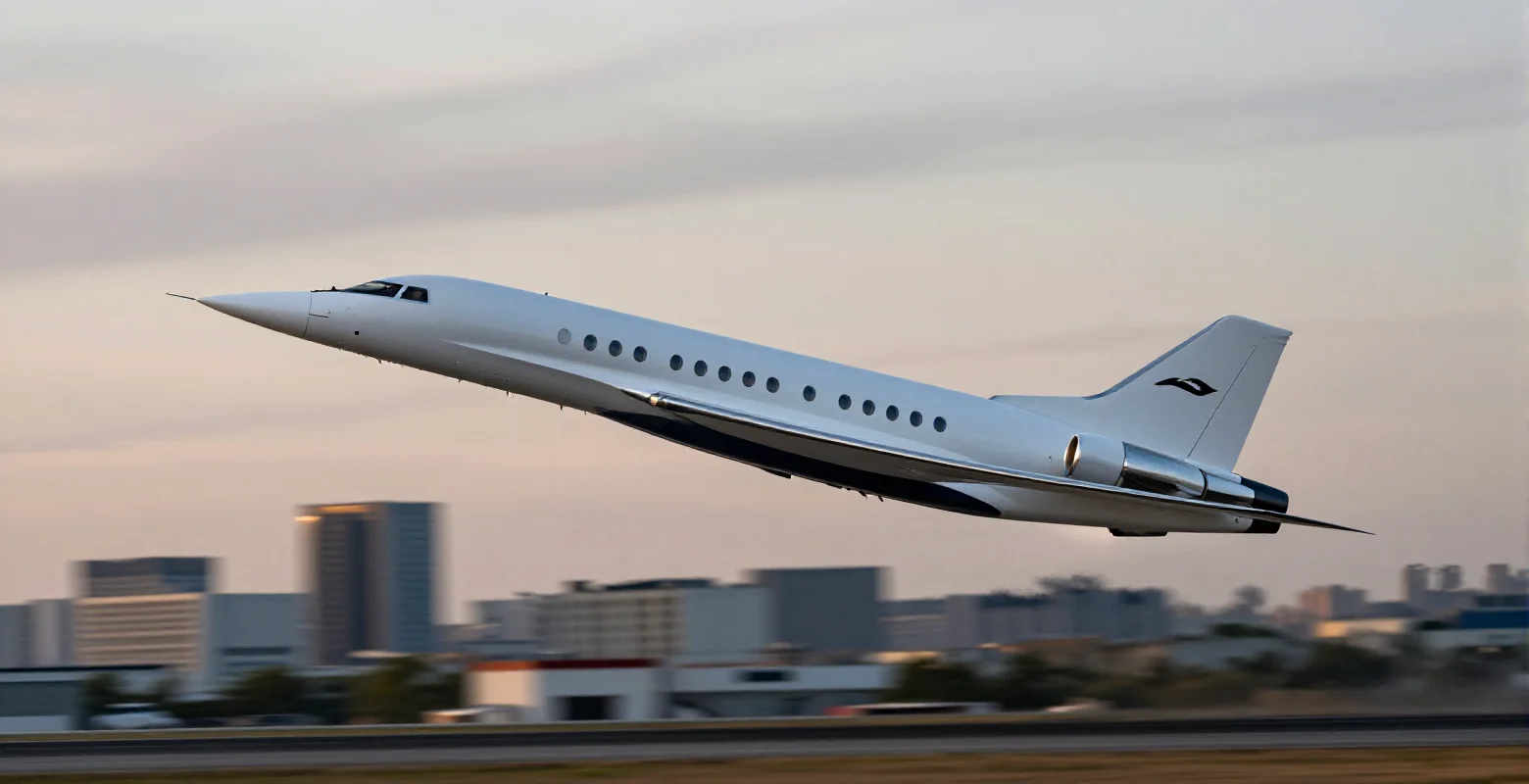
The Future of Supersonic Passenger Flights: Technology, Challenges and Prospects
Introduction
Supersonic passenger flights have been a topic of fascination for decades among technology enthusiasts and travelers. After years of hiatus due to high operational costs and environmental constraints, new generations of supersonic aircraft are making a comeback, promising a revolution in intercontinental travel.
The history of supersonic passenger flights dates back to the 1960s and 1970s, with aircraft like the Concorde and Tu-144 transforming air transport. However, their retirement in the 1990s left a void that companies such as Boom Supersonic and Spike Aerospace are now seeking to fill.
Technological Revolution: New Generations of Supersonic Aircraft
Modern supersonic passenger aircraft projects focus on three key areas: fuel efficiency, noise and emission reduction, and travel comfort.
The Boom Overture, designed by the American company Boom Supersonic, is expected to fly from New York to London in just 3.5 hours - half the time of traditional transatlantic flights. By utilizing advanced composite materials and new-generation turbofan engines, the Overture is set to consume 30% less fuel than modern wide-body aircraft.
The Spike S-512, a project by California-based Spike Aerospace, is another example of innovative approach. This twin-engine jet promises supersonic speeds on medium-haul routes, such as flying from San Francisco to Tokyo in 5 hours - a reduction of over 30% compared to current options.
Market Analysis and Impact on the Aviation Industry
- Advantages: - Intercontinental travel time reduction of 30-50% - Potential lowering of ticket prices due to greater fuel efficiency - Stimulation of new aviation technologies development
- Challenges: - High certification and prototype testing costs (estimated at $1-2 billion per aircraft) - Need for airport infrastructure modernization (runways, navigation systems) - Environmental constraints and noise regulations
- Key Technologies: - New composite materials reducing aircraft weight - Advanced propulsion systems (e.g., low-noise engines) - Innovative wing shapes minimizing aerodynamic drag
- Market Examples: - United Airlines orders for 45 Boom Overture aircraft - NASA partnerships with companies developing supersonic technologies - Boom Supersonic's XB-1 prototype tests reaching Mach 1.2 speed
Perspectives and Challenges
Despite promising technological advancements, supersonic passenger flights face several barriers. One of the most significant is the need to meet stringent environmental standards - the noise generated by supersonic aircraft remains a major issue, especially over populated areas.
In 2019, the UK aviation regulator CAA introduced a temporary ban on supersonic flights within British airspace, posing a serious challenge to plans for commercial operation of new aircraft. Similar restrictions may emerge in other countries if effective noise-reduction solutions are not implemented.
Conclusions
The future of supersonic passenger flights depends on the industry's ability to overcome technological, regulatory, and environmental barriers. While new generations of aircraft offer tremendous potential in terms of travel time reduction and efficiency, their commercial success will require close cooperation between manufacturers, airlines, and regulators. If these challenges are overcome, supersonic flights could become a reality by the 2020s, ushering in a new era of global air transport.


Number of comments: 0