

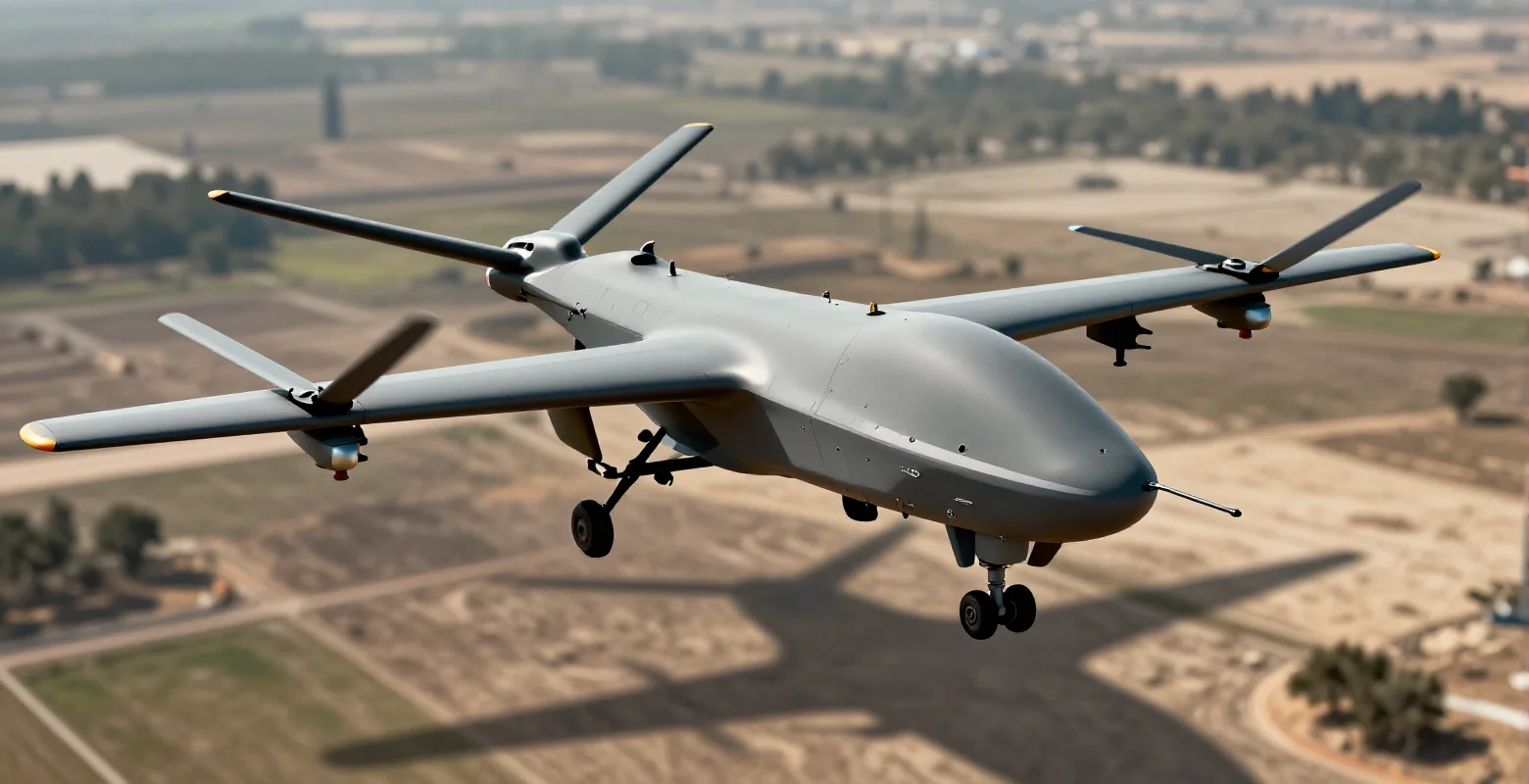
Air Revolution: New Technologies Driving Military Drone Development
Introduction
Military drones, once considered an exotic technological curiosity, have now become the cornerstone of modern military strategies. Their role has evolved from simple reconnaissance tools to advanced combat platforms capable of making real-time autonomous decisions.
The history of military drones dates back to the 1940s when unmanned aerial vehicles (UAVs) were first used for reconnaissance purposes. However, it was only in the last decade that a true technological revolution occurred, transforming the modern battlefield.
Advanced Autonomous Systems
The heart of modern military drones lies in advanced artificial intelligence (AI) and machine learning technologies. Drones equipped with these capabilities can independently analyze sensor data, identify targets, and make attack decisions without manual operator intervention.
An example is the US MQ-9 Reaper drone, which, thanks to integrated AI systems, can track and classify targets in real time. According to a RAND Corporation report, the use of such systems could increase mission effectiveness by as much as 40%.
Innovations in Propulsion and Materials
Progress in drone electric propulsion opens up new operational possibilities. Silent, emission-free electric motors provide better stealth and longer flight times compared to traditional internal combustion engines.
Simultaneously, composite material technology is advancing, allowing for the construction of lighter and more durable structures. An example is the Israeli Heron TP drone, whose carbon fiber composite hull reduces weight by 30% while maintaining strength.
Network-Centricity and System Integration
- Enhanced situational awareness - a swarm of drones can cover a large area, providing comprehensive real-time data
- Damage resilience - losing a single drone does not paralyze the entire mission
- Tactical flexibility - the ability to quickly reconfigure formations based on the situation
- Reduced operational costs through the use of inexpensive mass-produced units
Perspectives and Challenges
Despite immense potential, military drone development faces significant barriers. Legal issues related to autonomous weapon systems are becoming an increasingly pressing international problem.
According to a 2023 report by the International Committee of the Red Cross, the lack of regulations regarding "killer robots" could lead to unpredictable humanitarian consequences. Simultaneously, the development of counter-unmanned aerial systems (C-UAS) technology is becoming equally important as unmanned vehicles themselves.
Conclusions
New technologies in military drones are inevitably changing the nature of modern conflicts. Automation, network-centricity, and miniaturization create powerful tools redefining military superiority.
However, with these capabilities come fundamental ethical and strategic questions. How to ensure responsible use of such advanced systems? Where to draw the line between autonomy and human control? These very issues will shape the future of military aviation in the coming decades.


Number of comments: 0