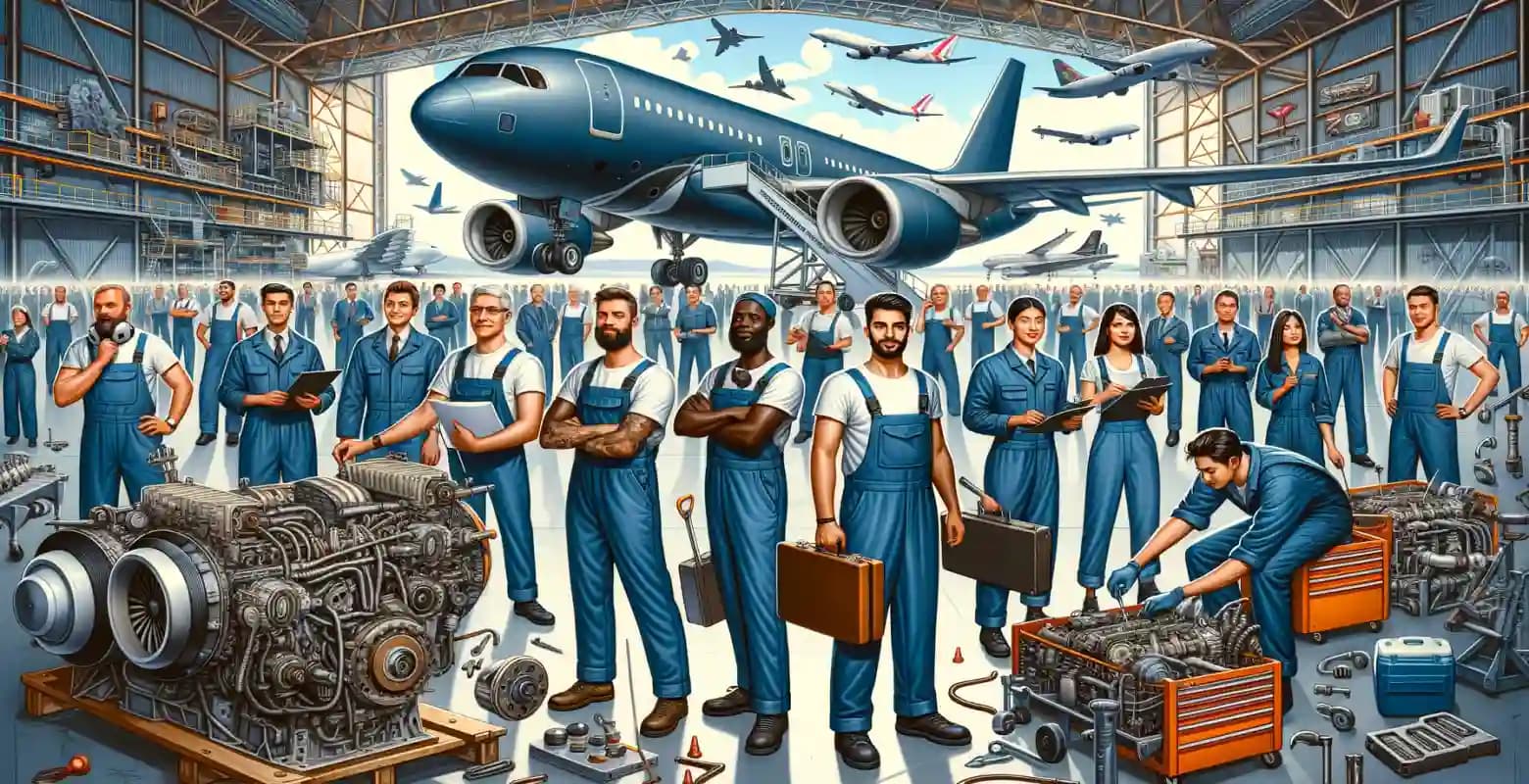
The role of aircraft mechanics in ensuring safety.
Introduction
Safety in aviation is a priority for all involved in the aviation industry. Modern aviation, with its complexity and advanced technology, requires a precise and meticulous approach to the maintenance and repair of aircraft. In this context, the role of aircraft mechanics is invaluable. They are responsible not only for the ongoing maintenance of aircraft, but also for ensuring that every element of the aircraft operates in accordance with the highest safety standards. In this article, we will take a closer look at the role of aircraft mechanics in ensuring safety, their responsibilities, the challenges they face, and future trends in this field.
Significance of Aircraft Mechanics in Safety Maintenance
Aircraft mechanics are key figures in the process of ensuring flight safety. Without their knowledge and skills, maintaining aircraft in excellent technical condition would be impossible. Every flight requires a thorough inspection and confirmation that all systems are functioning correctly. Aircraft mechanics perform a variety of tasks, from routine inspections to complex repairs. Their work is not only technically demanding but also carries a great deal of responsibility, as even the smallest mistake can have serious consequences.
History and Development of the Aircraft Mechanic Profession
The history of the aircraft mechanic profession dates back to the early days of aviation. With the development of aviation technologies, this role has evolved from simple repairs to a highly specialized field. In the 1950s and 1960s, when commercial aviation began to grow rapidly, the demand for qualified aircraft mechanics skyrocketed. Today, aircraft mechanics must be familiar with modern avionics systems, materials science, and international safety regulations.
Scope of Duties of Aircraft Mechanics
The scope of duties of aircraft mechanics is broad and includes various tasks such as:
- Periodic inspections: Regular aircraft inspections are crucial for detecting potential issues before they become serious threats.
- Repairs and part replacement: Mechanics must be prepared to act quickly and effectively in the event of a malfunction, often requiring immediate part replacement or repair.
- Fault diagnostics: Knowledge and skills in diagnostics are essential for identifying the source of technical problems.
- Preventive maintenance: Prevention is key to ensuring safety, so mechanics conduct regular checks to prevent potential malfunctions.
Challenges and Responsibility
The work of aircraft mechanics is associated with many challenges. They often have to work under time pressure, especially in airlines where aircraft need to be ready for the next flight as quickly as possible. Additionally, this work requires continuous updating of knowledge due to rapidly changing technologies. Mechanics must also operate in accordance with strict safety regulations, requiring constant attention and precision.
The Future of the Aircraft Mechanic Profession
The future of the aircraft mechanic profession looks as dynamic as its past. With the introduction of new technologies such as electric or autonomous aircraft, mechanics will need to adapt their skills to new requirements. The development of digital technologies, such as the Internet of Things (IoT) and advanced diagnostic systems, is also changing the way maintenance and repairs are carried out. Therefore, education and training will be crucial to maintaining a high level of competence in this field.
Conclusion
The role of aircraft mechanics in ensuring safety is invaluable. Their work, although often invisible to passengers, is the foundation on which the entire aviation safety system is built. Faced with constant technological changes and growing demands, aircraft mechanics must be prepared to adapt and continuously improve their skills. Thanks to their dedication and professionalism, aviation remains one of the safest modes of transportation. We encourage all those interested in this industry to consider a career in this fascinating and demanding profession.