

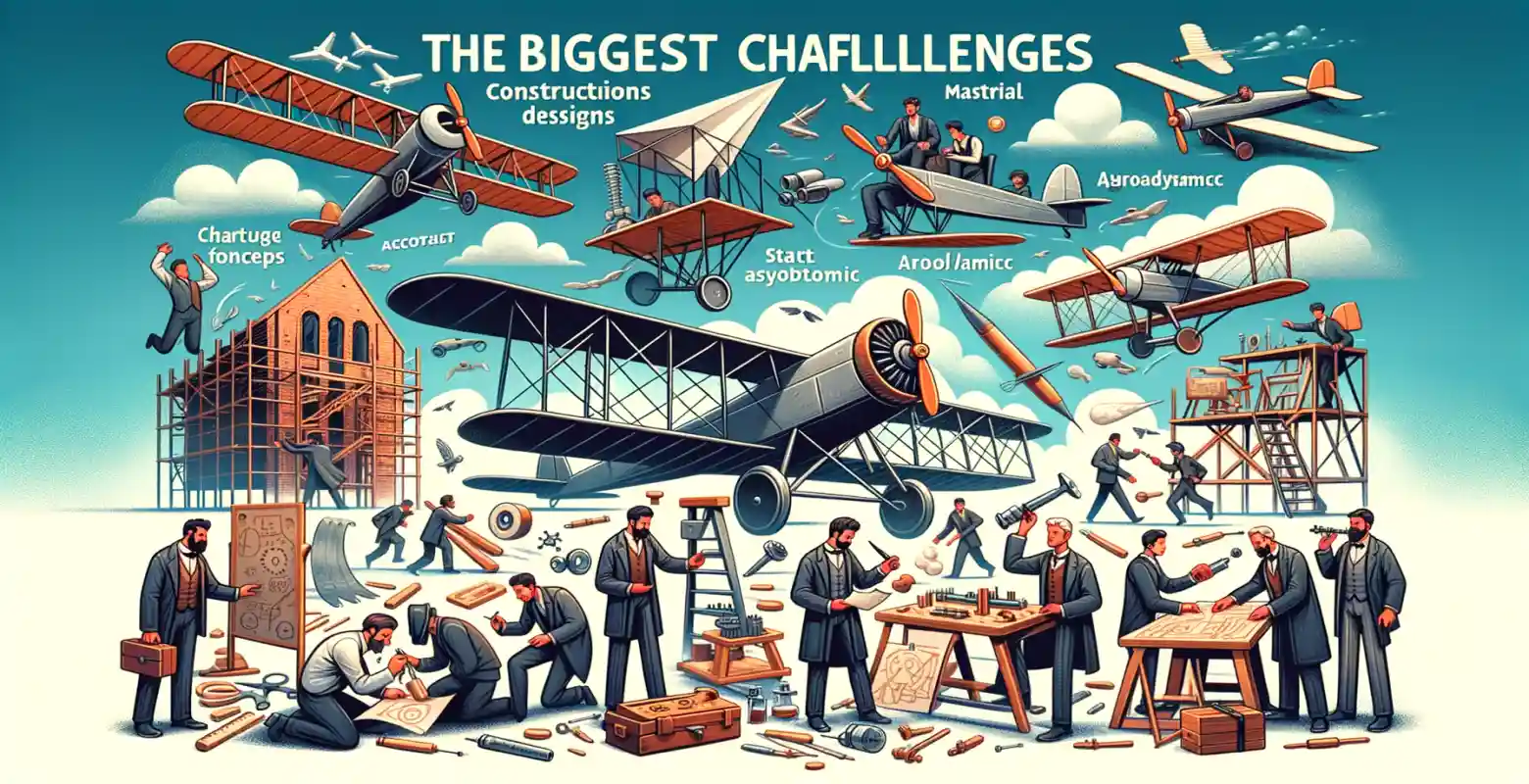
What were the biggest challenges for the constructors of the first airplanes?
Introduction
Air travel is now an integral part of our everyday lives, but few people consider how difficult the beginnings of aviation were. The constructors of the first airplanes faced numerous technical and technological challenges that they had to overcome in order to enable humanity to soar into the skies. In this article, we will look at the most important of these challenges, analyzing what obstacles the aviation pioneers had to overcome and what innovative solutions they implemented. These challenges not only shaped the future of aviation, but also had a lasting impact on our culture and our perception of human capabilities.
Historical Background of Aviation
The beginnings of aviation date back to the late 19th century, when humanity became increasingly fascinated with the idea of taking to the air. Earlier attempts to construct flying machines, such as hot air balloons, did not meet the expectations of controlled flight. As technology and science progressed, constructors began to experiment with machines heavier than air, ushering in a new era in the history of aviation.
Aerodynamics and Wing Design
One of the biggest challenges faced by the early airplane constructors was understanding the principles of aerodynamics and designing wings capable of generating sufficient lift. Bernoulli's principle, which explains how differences in air pressure above and below the wing can generate lift, was crucial to the success of the early projects.
Constructors, such as the Wright brothers, had to develop wing shapes that were efficient enough to lift the weight of the airplane. This required both theoretical research and practical experiments. The Wright brothers conducted hundreds of tests in a wind tunnel, which helped them optimize the shape and profile of the wings of their early airplanes.
Stability and Flight Control
In addition to aerodynamics, stability and flight control were other key challenges. Early designs were often unstable and difficult to control, leading to numerous accidents. Constructors had to develop control systems that would allow the pilot to maneuver the aircraft in three dimensions: roll, pitch, and yaw.
The Wright brothers introduced an innovative solution in the form of "wing warping," which allowed for controlling the roll of the aircraft. Over time, this solution was replaced by more efficient ailerons, which became the standard in modern airplanes.
Materials and Construction
Another significant issue was the availability of suitable materials and construction techniques. Early airplanes had to be lightweight yet strong enough to withstand the stresses during flight. Constructors used various materials such as wood, canvas, and steel to achieve this goal.
For example, the construction of the famous Flyer I by the Wright brothers was based on a wooden frame covered with canvas, providing not only lightness but also flexibility. As technology advanced, new materials like duraluminum were introduced, revolutionizing the aviation industry and enabling the construction of more durable and aerodynamic machines.
Propulsion and Engines
Providing adequate propulsion was one of the toughest tasks for the early constructors. Early engines were often too heavy and inefficient to enable flight. The Wright brothers built their own lightweight and powerful internal combustion engine to power their Flyer I.
Modern jet turbines and turboprop engines are the result of decades of technological development that started from these early, primitive designs. The development of more efficient and reliable engines has increased the range and speed of airplanes, radically changing the way people travel and conduct military operations.
Flight Safety
Safety has always been a key concern in aviation. Early flights were extremely risky, and many ended in disaster. Constructors had to develop not only more reliable machines but also safety systems to minimize the risk of accidents.
Introducing safety standards such as redundancy systems, emergency landing systems, and advanced navigation instruments significantly improved the safety of flights. Today, aviation is one of the safest modes of transportation, thanks to continuous technological development and safety procedures.
The Future of Aviation
Looking towards the future, aviation faces new challenges such as sustainable development and reduction of CO2 emissions. Innovations such as electric airplanes, hybrids, and the use of biofuels are at the forefront of research into the future of aviation.
Technologies like artificial intelligence, automation, and new composite materials also play a crucial role in shaping the future of the aviation industry. These challenges require further international cooperation and investment in research and development to make aviation more environmentally friendly and accessible to a wider range of people worldwide.
Summary
The challenges faced by aviation pioneers were immense, but their determination and innovation allowed for the development of one of the most important transportation fields. Understanding the principles of aerodynamics, developing flight control systems, advancing construction materials and engines, and focusing on safety were key elements that enabled progress in aviation.
Thanks to their work and achievements, today's aviation is not only safer and more efficient but also faces new possibilities and challenges. Continuing this tradition of innovation and technological development is key to future success and sustainable aviation development.


Number of comments: 0