

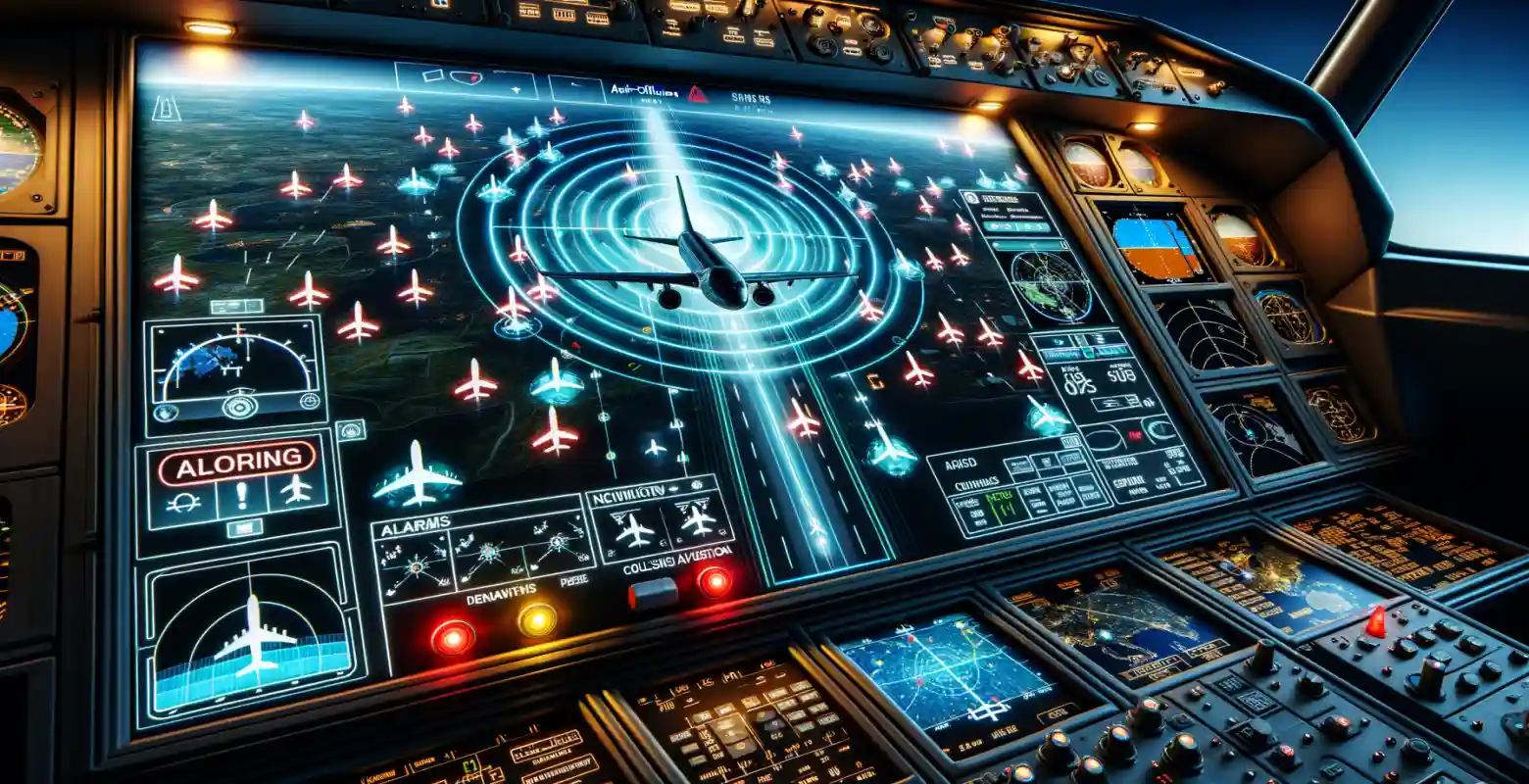
Advanced anti-collision technologies in airplanes
Introduction
Safety is one of the most important aspects in aviation, and the development of anti-collision technologies in aircraft plays a crucial role in ensuring this safety. In today's world, where the number of commercial and private flights is constantly increasing, advanced anti-collision technologies are becoming essential to minimize the risk of accidents in the air. In this article, we will discuss what advanced anti-collision systems are currently used in aviation, what their benefits and challenges are, and what the future forecasts are in this area.
TCAS Systems: Basic Anti-Collision Tool
TCAS (Traffic Collision Avoidance System), also known as the Airborne Collision Avoidance System, is one of the most important tools used in civil aviation today. TCAS monitors the airspace around the aircraft, detecting other aircraft and warning pilots of potential collision threats.
The TCAS system operates based on transponder signals emitted by other aircraft. When it detects other aircraft nearby, TCAS generates visual and audible warnings, and if necessary, issues altitude change commands to avoid collisions. There are different versions of this system, with the latest, TCAS II, capable of two-way communication between aircraft, allowing for coordinated collision avoidance.
ADS-B: Modern Air Traffic Tracking
ADS-B (Automatic Dependent Surveillance-Broadcast) is a technology gaining popularity in aviation as a complement to traditional radars. ADS-B works by automatically broadcasting information about the aircraft's position, speed, and altitude, enabling more precise air traffic tracking.
One of the biggest advantages of ADS-B is its ability to provide better visibility in areas with limited radar coverage, such as oceans or mountainous regions. ADS-B uses GPS satellites to determine the aircraft's position, allowing for more accurate and up-to-date information. In many countries, including the USA and Australia, ADS-B has become mandatory for all aircraft operating in controlled airspace.
EGPWS Systems: Ground Collision Protection
EGPWS (Enhanced Ground Proximity Warning System) is an advanced terrain proximity warning system that helps prevent collisions with terrain. This system is particularly important during flights in challenging weather conditions or mountainous terrain.
EGPWS operates by analyzing data from the GPS system and digital maps, allowing for precise determination of the aircraft's position relative to the ground. The system issues warnings if it detects dangerous proximity to terrain, giving pilots time to take appropriate actions. Thanks to modern algorithms, EGPWS can minimize false alarms, increasing its effectiveness.
HUD Displays: Modern Tool for Pilots
HUD (Head-Up Display) is an information display technology that allows pilots to receive key data without having to take their eyes off the flight path. HUD displays information such as speed, altitude, direction, and navigation data on a transparent screen placed in front of the pilot's eyes.
One of the biggest advantages of HUD is the ability to quickly respond to changing conditions, which can be crucial in emergency situations. This allows pilots to more effectively avoid potential collision threats while maintaining full situational awareness.
Challenges and Future of Anti-Collision Technologies
Although advanced anti-collision technologies significantly enhance aviation safety, their implementation poses a series of challenges. Integration of systems with existing infrastructures and harmonization of international standards are some of the issues that airlines and government agencies must address.
However, the future of anti-collision technologies looks promising. Innovations in artificial intelligence and machine learning open up new possibilities for even more advanced threat detection and real-time decision-making systems. As these technologies continue to evolve, we can expect further improvements in aviation safety.
Summary
Introducing advanced anti-collision technologies in aircraft is a key step towards ensuring even greater safety in airspace. Systems such as TCAS, ADS-B, EGPWS, and HUD play a significant role in collision prevention, and their development and implementation are essential in the face of the growing number of flights.
Despite challenges related to technology integration and standardization, the future looks promising, with the potential for even more advanced anti-collision systems due to advances in artificial intelligence. Understanding the importance and function of these systems is crucial for anyone interested in aviation and its future. Further investments and research in this field are necessary to ensure the safety of air travel worldwide.


Number of comments: 0