The role of military aviation in humanitarian missions
Introduction
Military aviation plays a crucial role in humanitarian missions worldwide. Faced with growing global challenges such as natural disasters, armed conflicts, or pandemics, the operational capabilities of air forces become invaluable. Their quick response, mobility, and ability to deliver aid to hard-to-reach places make them an essential element of international rescue operations. In this article, we will discuss various aspects of the involvement of military aviation in humanitarian missions, analyzing both the benefits and challenges associated with such operations.
History and development of military aviation's involvement in humanitarian missions
The first use of military aviation for humanitarian purposes took place during World War II when Allied air forces delivered supplies to besieged cities. Over the years, with the development of aviation technology and changes in international politics, the role of military aviation in humanitarian missions has significantly expanded. Nowadays, air forces of many countries regularly participate in rescue operations, delivering medical aid, food, water, and other essential supplies to disaster-affected regions.
Technical capabilities of military aviation
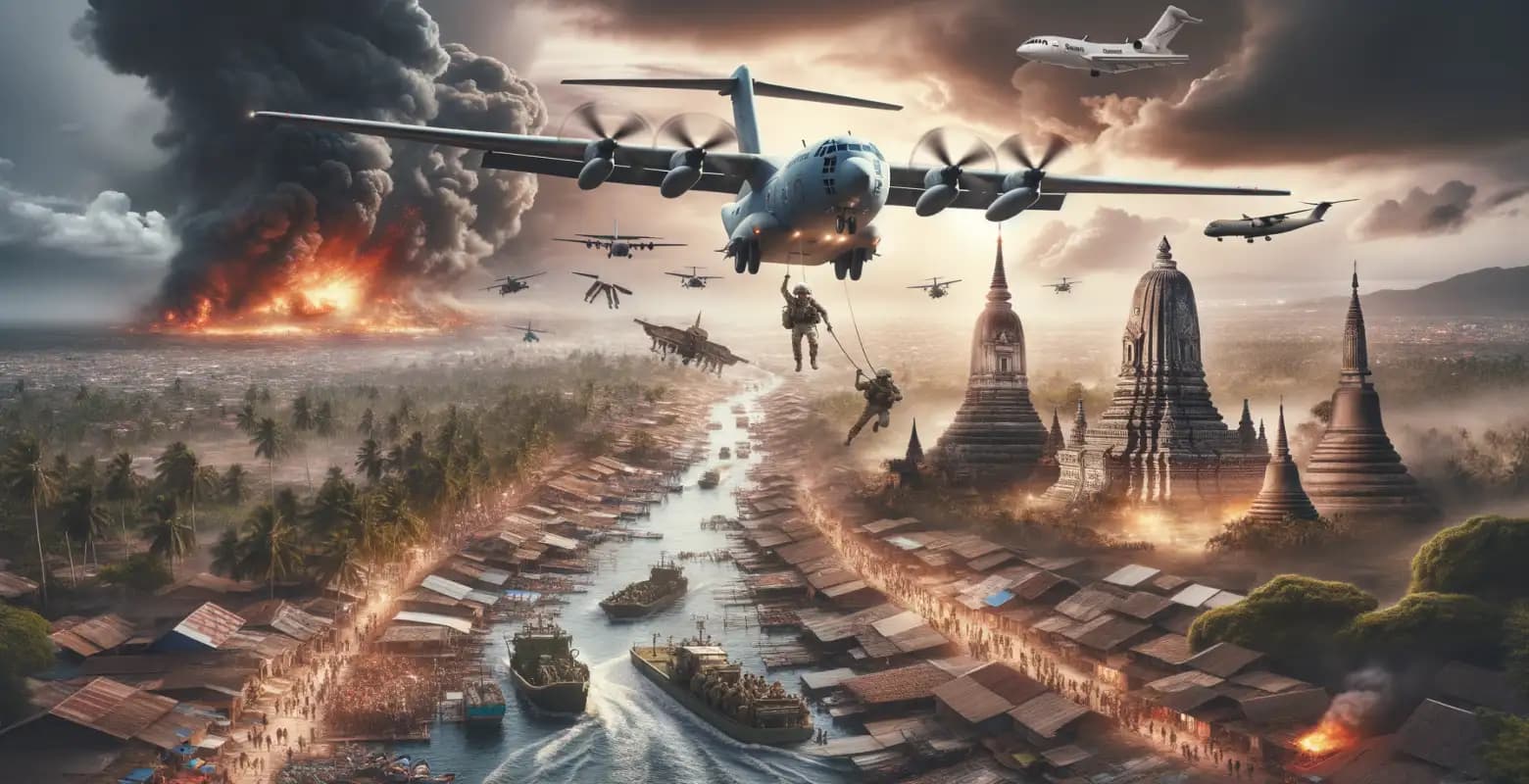
One of the main strengths of military aviation is its advanced technology, which enables quick and effective action in challenging conditions. Transport aircraft, such as the C-130 Hercules or C-17 Globemaster III, can transport large quantities of cargo over significant distances, often in hostile terrain. Helicopters, on the other hand, are crucial in rescue operations in hard-to-reach places such as mountainous areas or flooded regions. Thanks to advanced navigation and communication systems, military aviation can precisely deliver aid to the most needed areas.
Examples of humanitarian missions involving military aviation
In recent years, we have seen many examples of the effective use of military aviation in humanitarian operations. After the earthquake in Haiti in 2010, the United States Air Force played a key role in delivering medical aid and evacuating the injured. Similarly, during the Ebola crisis in West Africa, the military aviation of many countries supported medical and logistical operations, delivering necessary equipment to temporary hospitals.
Challenges associated with humanitarian operations
Despite numerous benefits, the involvement of military aviation in humanitarian missions is associated with many challenges. One of them is coordinating actions with international organizations and local authorities, which requires precise planning and communication. Another problem is the security of operations in conflict-affected regions, where there is a risk of attacks on aircraft units. Additionally, the costs associated with maintaining and operating military equipment can be substantial, posing challenges to the defense budgets of countries involved in such operations.
Advantages of utilizing military aviation in humanitarian missions
Despite the mentioned challenges, military aviation offers a range of advantages that make it indispensable in humanitarian operations. Above all, quick response and the ability to operate in challenging conditions allow for saving many human lives. Furthermore, thanks to their infrastructure and resources, air forces can provide logistical and technical support, which is crucial for the effective implementation of rescue missions.
The future of military aviation in humanitarian missions
Looking to the future, the role of military aviation in humanitarian missions is likely to grow. Faced with climate change leading to more frequent and intense natural disasters, the need for a quick and effective response becomes increasingly urgent. New technologies, such as drones or advanced logistics management systems, may further enhance the efficiency of humanitarian operations. As international cooperation in humanitarian aid intensifies, military aviation will remain a key element of global rescue efforts.
Summary
Military aviation plays an incredibly important role in humanitarian missions, offering quick and effective support in crisis situations. With its technology, infrastructure, and experience, air forces can effectively carry out rescue operations in the most challenging conditions. Despite numerous challenges, the benefits of involving military aviation in humanitarian aid are invaluable. In the future, with the development of technology and closer international cooperation, the role of military aviation in such missions will continue to grow, contributing to saving human lives and mitigating the effects of disasters worldwide.