

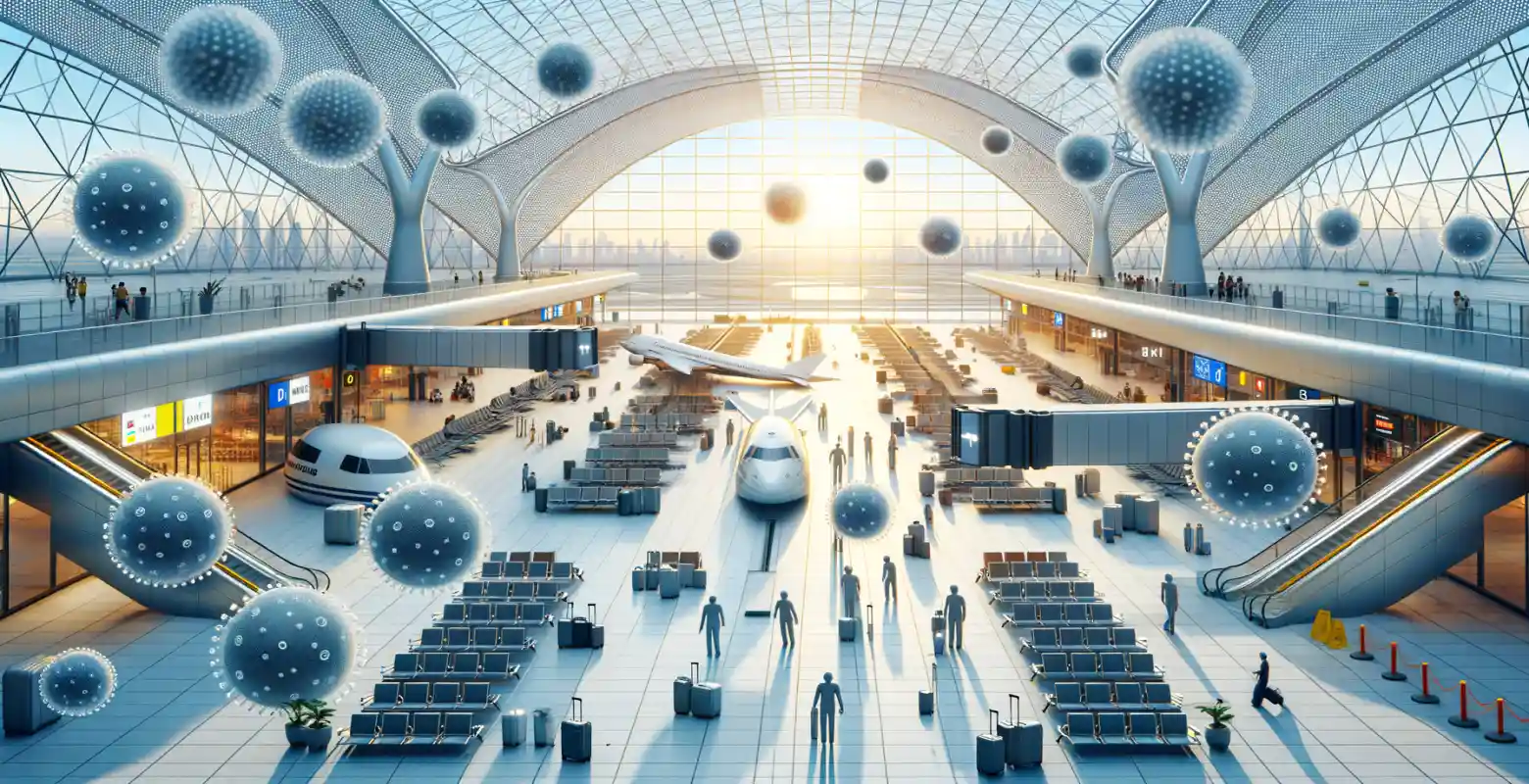
How has the pandemic changed airport design?
Introduction
The COVID-19 pandemic has affected many aspects of our lives, including how we travel and use transportation infrastructure. Airports, as key communication hubs, had to adapt to new realities to ensure the safety of passengers and staff. These changes not only affect current operations but also the design of new terminals and the modernization of existing structures. In this article, we will look at how the pandemic has changed airport design, what innovations have been implemented, and what challenges and future trends can be observed in this dynamic field.
The Impact of the Pandemic on Public Space Design at Airports
The emergence of COVID-19 forced architects and designers of airport spaces to rethink the spatial layout of terminals. Above all, it became essential to provide adequate conditions to maintain social distance. Many airports have changed the seating arrangements in waiting areas and increased the distances between check-in stations.
The design of security control zones has also been optimized to minimize physical contact between passengers and staff. The introduction of self-service systems, such as automatic ticket gates or self-bag tagging stations, has become a standard in many places. These solutions not only increase safety but also expedite the flow of passengers through the airport.
Touchless Technologies and Digitization
The pandemic accelerated the development and implementation of touchless technologies at airports. One of the most important trends is the introduction of mobile applications that allow check-in and access to boarding passes without the need for physical documents. Moreover, many airports have installed facial recognition systems at gates, allowing for quick and secure passage through security checks.
The digitization of processes is not limited to check-in. Cashless payments at airports are increasingly common, using contactless cards or mobile applications. All these technologies aim to minimize physical contact and enhance the comfort and safety of travelers.
Ventilation Systems and Air Quality
One of the key aspects of ensuring health safety at airports is the quality of air. In response to the pandemic, many airports have invested in modern ventilation and filtration systems that can effectively remove viruses and bacteria from the air. These systems often use HEPA filters, capable of capturing even the smallest particles.
Additionally, the frequency of cleaning and disinfecting common surfaces, such as handrails, restrooms, and seating areas, has been increased. In some cases, UV disinfection is also used to further enhance the effectiveness of preventive measures.
A New Approach to Passenger Handling
Changes in airport design also concern the approach to passenger handling. Airports increasingly prioritize operational flexibility, allowing for quick adaptation to changing conditions. The introduction of advanced passenger flow management systems enables effective monitoring and control of people flow in real-time.
Communication with passengers is also crucial. Airports must ensure that information regarding safety procedures, flight schedule changes, or restrictions is easily accessible and understandable. Various communication channels are used for this purpose, from traditional information boards to mobile applications and social media.
Challenges and Future Trends
Although the COVID-19 pandemic has led to many positive changes in airport design, it has not been without challenges. The introduction of new technologies and procedures often entails high costs, which can be a problem, especially for smaller airports. Moreover, the uncertainty about the future of air travel makes long-term planning more difficult.
One of the future trends that may gain importance is the development of sustainable airports. The pandemic has highlighted the need for environmental care and efficient resource utilization. Modern airports will have to consider not only health issues but also ecological concerns, which may involve the installation of solar panels, the use of renewable energy sources, or the creation of green spaces.
Summary
The COVID-19 pandemic has significantly influenced how we design and manage airports. The necessity to ensure the health safety of passengers and staff has accelerated the implementation of new technologies and procedures, changing the face of contemporary airports. While many of these changes come with challenges, they also open up new opportunities for development and innovation in this field. As the world slowly returns to normalcy, airports will need to continue adapting to changing needs and traveler expectations, while also ensuring sustainable development and environmental protection.



Number of comments: 0