

How do airlines take care of the environment?
Introduction
In today's world, ecological awareness and concern for the natural environment are becoming increasingly important in almost every aspect of life. The aviation sector, which is responsible for significant carbon dioxide emissions, is also taking actions to minimize its impact on the planet. In this article, we will look at how airlines care for the environment, what initiatives they undertake, and what challenges they face in the future.
Modern emission reduction technologies
One of the most effective ways airlines can reduce their carbon footprint is by investing in modern technologies and more environmentally friendly aircraft. New generations of aircraft, such as the Boeing 787 Dreamliner and Airbus A350, are designed to reduce fuel consumption. By using lightweight composite materials and more efficient engines, these aircraft consume up to 20% less fuel than their older counterparts.
Airlines also invest in optimizing flight routes to reduce fuel consumption. Advanced flight management systems enable more efficient route planning, leading to shorter flight times and CO2 emissions reduction.
Aviation biofuels
The introduction of sustainable aviation biofuels is another step towards the ecological transformation of the aviation sector. Biofuels, produced from renewable sources such as vegetable oils or organic waste, have the potential to significantly reduce greenhouse gas emissions. Airlines such as KLM and Lufthansa are already testing and implementing the use of biofuels in their fleets.
However, large-scale biofuel production faces many challenges, such as production costs and raw material availability. Nevertheless, further development of this technology is crucial for achieving sustainable development goals in aviation.
Innovative fleet management approaches
In addition to aircraft technologies, airlines are introducing innovative fleet management strategies to minimize environmental impact. Optimizing aircraft utilization, regular technical inspections, and upgrading older aircraft are just some of the actions taken in this area.
An example is Cathay Pacific's "Fly Greener" program, which includes the purchase of more environmentally friendly aircraft and flight optimization for fuel efficiency. Through such initiatives, airlines can significantly reduce their emissions while increasing operational efficiency.
Digitalization and sustainable airport operations
Not only airlines themselves, but also airports play an important role in striving for sustainable development. Digitizing airport processes such as check-in, security control, and baggage management allows for reduced paper and energy consumption.
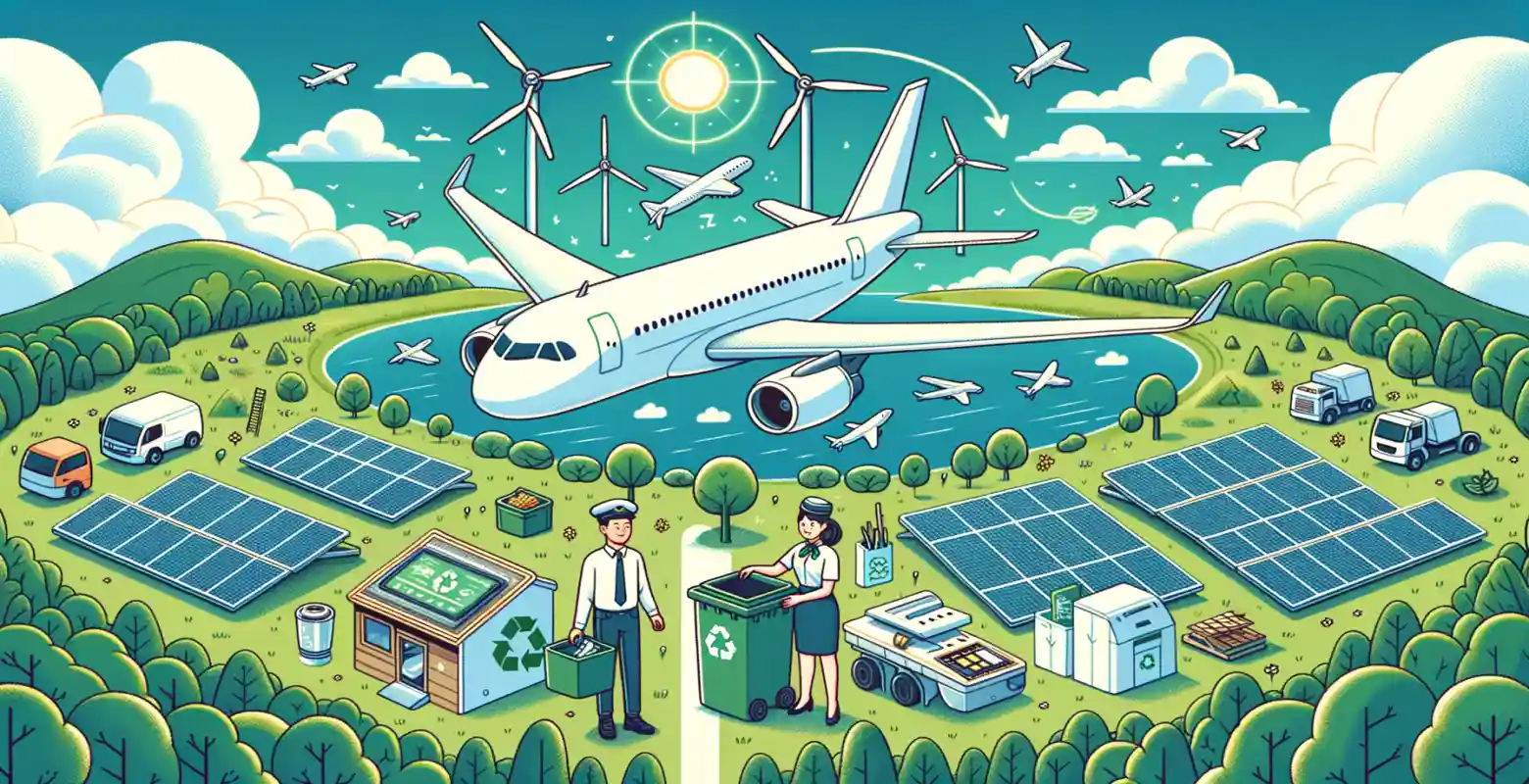
Airports worldwide are also implementing technologies to reduce CO2 emissions, such as LED lighting systems, solar installations, and rainwater management systems. More and more airports are aiming for carbon neutrality, as exemplified by Oslo Airport, the world's first carbon-neutral airport.
Challenges and future trends
Despite many positive changes, the aviation sector still faces many challenges in terms of environmental protection. One of the main problems is the growing demand for air travel, which could offset progress in emissions reduction. Therefore, airlines must continually develop new strategies and technologies to meet these challenges.
In the future, we can expect greater integration of artificial intelligence and big data technologies for further optimization of flight routes and airport operations. Additionally, the development of electric and hybrid aircraft could revolutionize the aviation industry, offering even more environmentally friendly solutions.
Summary
Environmental protection in the aviation sector is an extremely complex issue that requires commitment from both airlines and airports. Through investments in modern technologies, biofuels, and innovative fleet management, it is possible to significantly reduce environmental impact. However, the growing demand for air travel and the associated challenges require continuous development and adaptation of new solutions.
Further progress in sustainable aviation development will be crucial for achieving global climate goals. Therefore, each of us as passengers can contribute to environmental protection through conscious choices and support for these initiatives.



Number of comments: 0