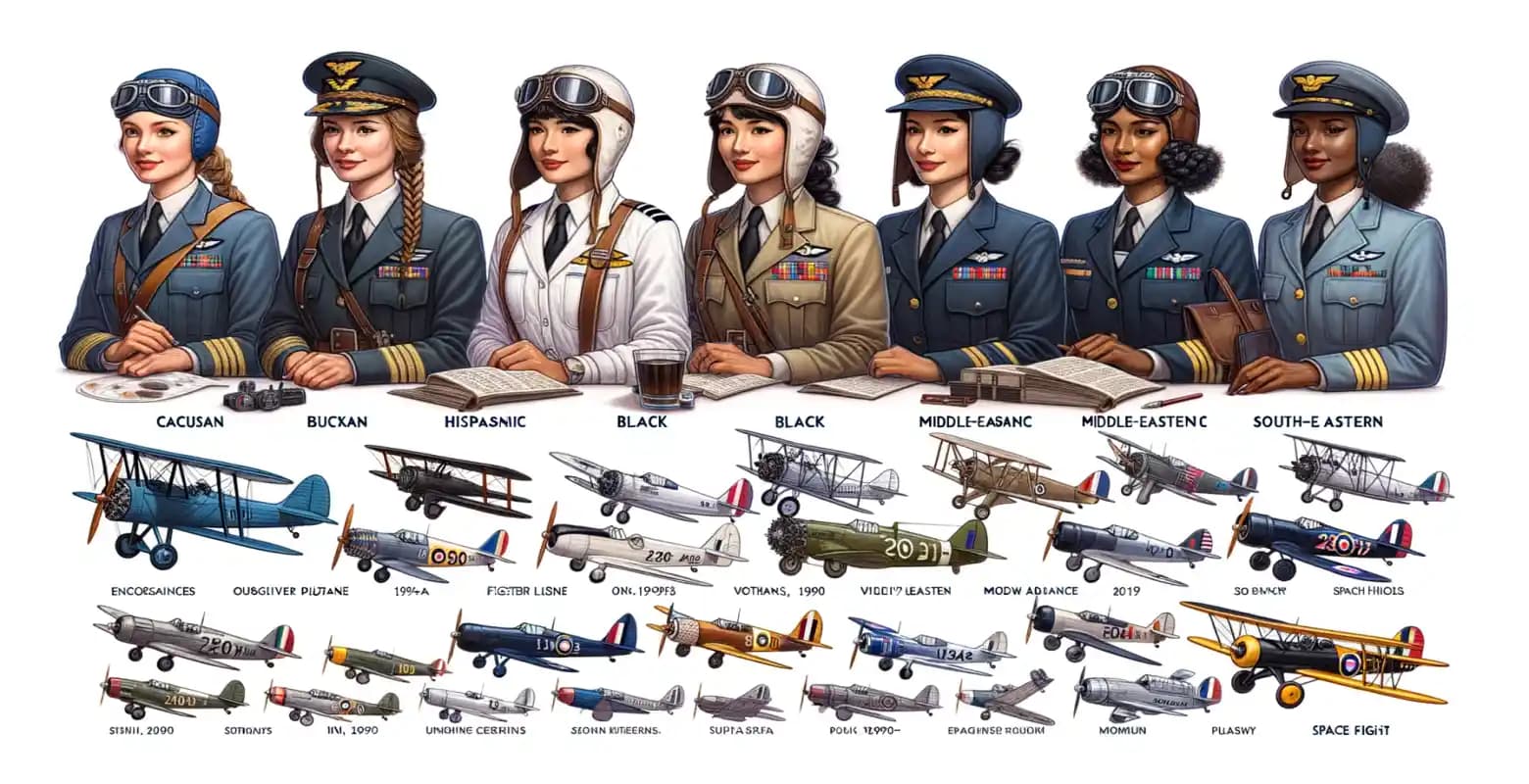
History of female pilots in aviation
Introduction
The history of aviation is full of fascinating figures and remarkable achievements, but it often left women's accomplishments in the shadows. The topic of female pilots is particularly interesting because it shows how determination and passion can break through social and cultural barriers. Despite numerous obstacles, women have played a key role in the development of aviation over the years. In this article, we will take a closer look at the history of female pilots, their achievements, the challenges they had to overcome, and their influence on contemporary aviation.
Beginnings: The First Women in the Skies
Aviation in the early 20th century was dominated by men, but that did not stop courageous women from attempting flights. One of the first women to obtain a pilot's license was Raymonde de Laroche, who in 1910 became the world's first woman with an official pilot's certificate. Her achievement opened doors for many other women.
In the United States, Harriet Quimby became the first American woman to earn a pilot's license in 1911. Unfortunately, her career tragically ended just a year later when she died in an aviation accident. Nevertheless, her pioneering work inspired subsequent generations of women to take on the challenge of aviation.
The Growing Role of Women in Aviation in the Interwar Period
The interwar period was a time of dynamic aviation development, and women began to play an increasingly significant role in the field. Amelia Earhart, one of the most famous women in aviation history, became renowned as the first woman to fly solo across the Atlantic in 1932. Her courage and determination made her an icon not only in aviation but also in the fight for women's rights.
Other outstanding women of this period include Jacqueline Cochran, who set many speed and altitude records and founded the Women Airforce Service Pilots (WASP) during World War II. WASP played a crucial role in ferrying aircraft and training pilots, providing invaluable support for wartime efforts.
Women in Military Aviation
During World War II, the role of women in military aviation significantly increased. Female pilots were responsible for ferrying aircraft, allowing men to focus on combat. WASP in the USA, as well as their counterparts in the Soviet Union, such as the famous "night witches," contributed to the success of wartime operations.
After the war, many women had to give up their aviation careers as returning male veterans took their places. However, some, like Jacqueline Cochran, continued their work, setting new records and promoting women's involvement in aviation.
Women in Civil Aviation: Breaking the Glass Ceiling
While women played an important role in military aviation, they encountered many obstacles in civil aviation. For many years, the profession of commercial pilot was almost exclusively male-dominated. The situation began to change in the 1970s and 1980s as more women started obtaining pilot licenses in commercial airlines.
A key moment was the employment of Emily Howell Warner as the first female pilot at a US airline in 1973. Her success paved the way for other women dreaming of a career in civil aviation. However, women remain a minority in this profession to this day, indicating the need for further efforts towards gender equality.
Contemporary Challenges and Achievements
Today, female pilots still face many challenges, such as gender stereotypes, discrimination, and difficulties balancing professional and family life. However, many of them achieve success on the international stage, winning numerous awards and setting new records.
Women like Patty Wagstaff, a three-time US aerobatic champion, and Eileen Collins, the first female commander of a NASA space shuttle, are proof that determination and talent can overcome any barrier.
The Future of Women in Aviation
The future of women in aviation looks promising, although there is still much to be done. Initiatives to increase the number of women in aviation professions and training programs targeted at young girls help change perceptions of women's roles in the industry.
Organizations such as Women in Aviation International and Ninety-Nines support women in advancing their aviation careers, offering scholarships, mentoring, and networking opportunities.
Conclusion
The history of female pilots in aviation is a story of courage, determination, and the fight for equality. Women have made invaluable contributions to the development of aviation and have proven that nothing is impossible. While many barriers have already been broken, there is still a need for further action towards equality. We encourage everyone to support women in aviation and promote gender equality in every aspect of life.