How do drones help in rescue operations?
Introduction
In recent years, drones have become an integral part of modern rescue operations. These small, remotely controlled flying devices, initially used mainly for recreational and military purposes, now play a crucial role in saving lives and protecting property. Their versatility, speed, and ability to operate in hard-to-reach places make them an indispensable tool in many crisis situations. In the face of climate change and increasingly frequent natural disasters, the role of drones in rescue operations is more significant than ever before.
History and Development of Drone Technology
Drones, also known as unmanned aerial vehicles (UAV), began their career in the military environment. Their first versions were used for reconnaissance missions during World War II. Over time, this technology evolved, becoming available to civilians. In the 21st century, through the development of GPS technology, high-resolution cameras, and communication systems, drones gained new capabilities and applications. They began to be widely used in rescue operations in the mid-2010s when their prices became more affordable, and their technical capabilities significantly increased.
How Drones Support Rescue Operations?
Drones play a crucial role in various rescue scenarios. They can be used for searching for missing persons, assessing threats during natural disasters, and delivering essential materials and equipment.
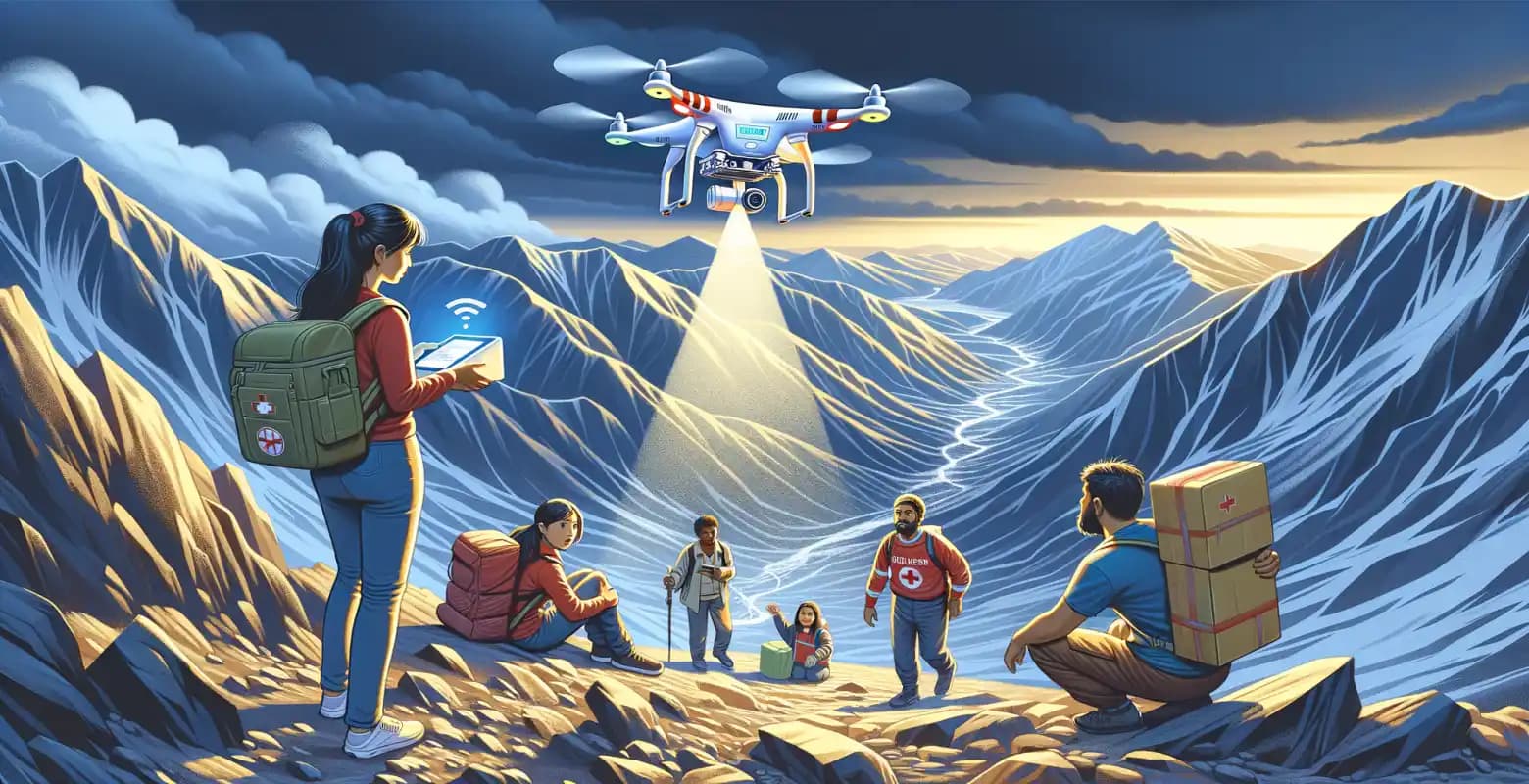
Search and Rescue of Missing PersonsDrones can quickly cover large areas, which is extremely useful when searching for missing persons in hard-to-reach places such as mountains, forests, or water areas. Equipped with thermal imaging cameras, drones can detect body heat, significantly increasing the chances of quickly finding the missing persons, even at night or in adverse weather conditions.
Assessment of Threats and DamagesDuring natural disasters such as earthquakes, floods, or forest fires, drones can quickly provide an aerial view, allowing rescue services to assess the situation and take appropriate actions. This enables the rapid identification of the most affected areas and the planning of effective evacuation or humanitarian aid.
Delivery of Materials and EquipmentIn situations where traditional transportation methods are hindered, drones can be used to deliver medicines, water, food, or medical equipment to isolated areas. This allows reaching people in need of assistance quickly, which is crucial in crisis situations where every minute counts.
Technical Aspects and Challenges
Although drones offer many benefits, their use in rescue operations also poses some challenges. One of them is ensuring a stable connection with the operator, which can be problematic in difficult terrain conditions. Drones must also be equipped with appropriate navigation and sensor systems to operate effectively in various weather conditions.
Furthermore, there are legal issues related to the use of drones, such as regulations concerning privacy and flight safety. It is also necessary to train operators so that they can effectively and safely operate these devices in crisis situations.
The Future of Drones in Rescue Operations
Drone technology is developing rapidly, allowing us to anticipate that their role in rescue operations will increase. Modern drones are becoming increasingly autonomous, meaning that in the future, they may be able to carry out more complex missions without the constant supervision of an operator. The development of artificial intelligence and machine learning may also contribute to increasing the efficiency of drones in data analysis and decision-making in real-time.
As technology becomes more accessible, drones are expected to be increasingly integrated with other rescue systems, creating more complex and effective solutions. They can become part of intelligent rescue networks capable of quickly responding to various threats, minimizing losses, and speeding up rescue operations.
Summary
Drones have become invaluable tools in rescue operations, thanks to their versatility, speed, and ability to operate in hard-to-reach places. Their technological development and increasing availability make them increasingly used in crisis situations worldwide. Despite certain challenges, such as legal and technical aspects, the future of drones in rescue operations looks promising. Technological innovations and growing integration with other rescue systems can significantly increase the effectiveness of rescue operations, helping to save lives and minimize losses in the face of disasters.
It is worth following the development of this technology and its applications because drones can become a key element of modern rescue systems, bringing benefits both to rescue services and to people in need of assistance.