

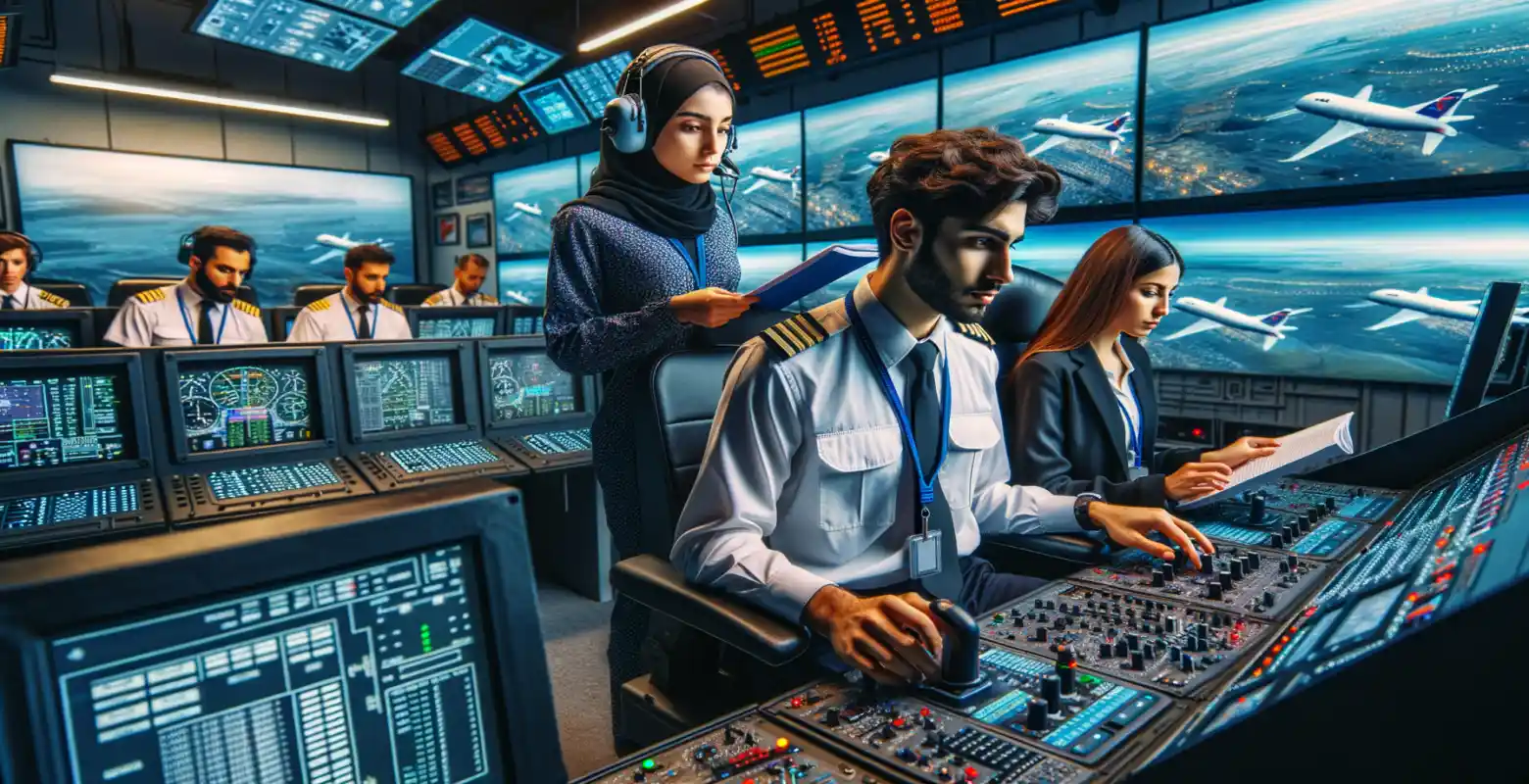
Flight simulators in pilot training
Introduction
Flight simulators play a crucial role in pilot training, offering a safe and controlled environment for learning and honing piloting skills. In the era of dynamic technological development and increasing demand for qualified pilots, simulators have become an essential element of aviation education. They not only allow pilots to prepare for various flight scenarios but also minimize the risks associated with actual training flights. In this article, we will take a closer look at how flight simulators are used in pilot training, the benefits they bring, and the challenges and future trends that can be observed in this field.
History and Development of Flight Simulators
The origins of flight simulators date back to the early 20th century when the first simulators were mainly used for military purposes. The initial devices were quite primitive, based on mechanical solutions aimed at simulating basic aircraft movements. Over the years, with the advancement of computer technology, simulators became more sophisticated, offering realistic flight condition reproductions.
In the 1970s and 1980s, thanks to the development of digital and computer technology, simulators began to offer more detailed cockpit reproductions and better graphics. Modern flight simulators, such as those used by airlines and the military, provide almost full immersion, allowing pilots to experience flight conditions in a virtual environment that faithfully reflects reality.
Advantages of Using Flight Simulators
Flight simulators offer a range of benefits that make them an indispensable tool in pilot training:
Safety:One of the most important aspects of using simulators is their ability to provide a safe training environment. Pilots can practice complex maneuvers, deal with emergencies, and challenging weather conditions without the risks associated with actual flights.
Cost-effectiveness:Simulators allow for significant cost reduction in training. Using real aircraft for training purposes is much more expensive, especially considering fuel costs, maintenance, and the potential risk of damage.
Versatility:Modern simulators can simulate various aircraft models, allowing pilots to gain experience in operating multiple types of aircraft without physically transitioning from one to another.
Repeatability:Simulators enable repeated practice of challenging scenarios, leading to better skill mastery and the reinforcement of theoretical knowledge in practice.
Challenges Associated with the Use of Flight Simulators
Despite the many advantages, using flight simulators also comes with certain challenges:
Initial Costs:The purchase and maintenance of advanced simulators can be costly, especially for smaller flight schools.
Technical Limitations:Although modern simulators are highly realistic, there are still technical limitations that may affect training quality. For example, simulators may not fully replicate the physical sensations associated with actual flight, such as G-forces or vibrations.
Need for Updates:Aviation technology is evolving rapidly, so simulators need to be regularly updated to reflect the latest changes in navigation systems and avionics.
Future Trends in Flight Simulation
The development of Virtual Reality (VR) and Augmented Reality (AR) technologies opens up new possibilities for flight simulators. With these technologies, it is possible to create an even more immersive experience that can closely resemble real flight like never before. The simulators of the future may also utilize advanced artificial intelligence algorithms that can better respond to pilots' actions and simulate diverse flight scenarios.
Additionally, the advancement of network technologies may enable remote training, where pilots from different locations can participate in flight simulations together, which is particularly important in the context of globalization and international cooperation.
Summary
Flight simulators are invaluable tools in pilot training, offering a safe, efficient, and cost-effective environment for learning and honing piloting skills. Despite certain challenges associated with them, their importance in the aviation industry is undeniable. As technology continues to advance, simulators will play an increasingly important role in preparing pilots for increasingly demanding tasks. Therefore, investments in the development and modernization of simulators are crucial for the future of aviation training.

Number of comments: 0