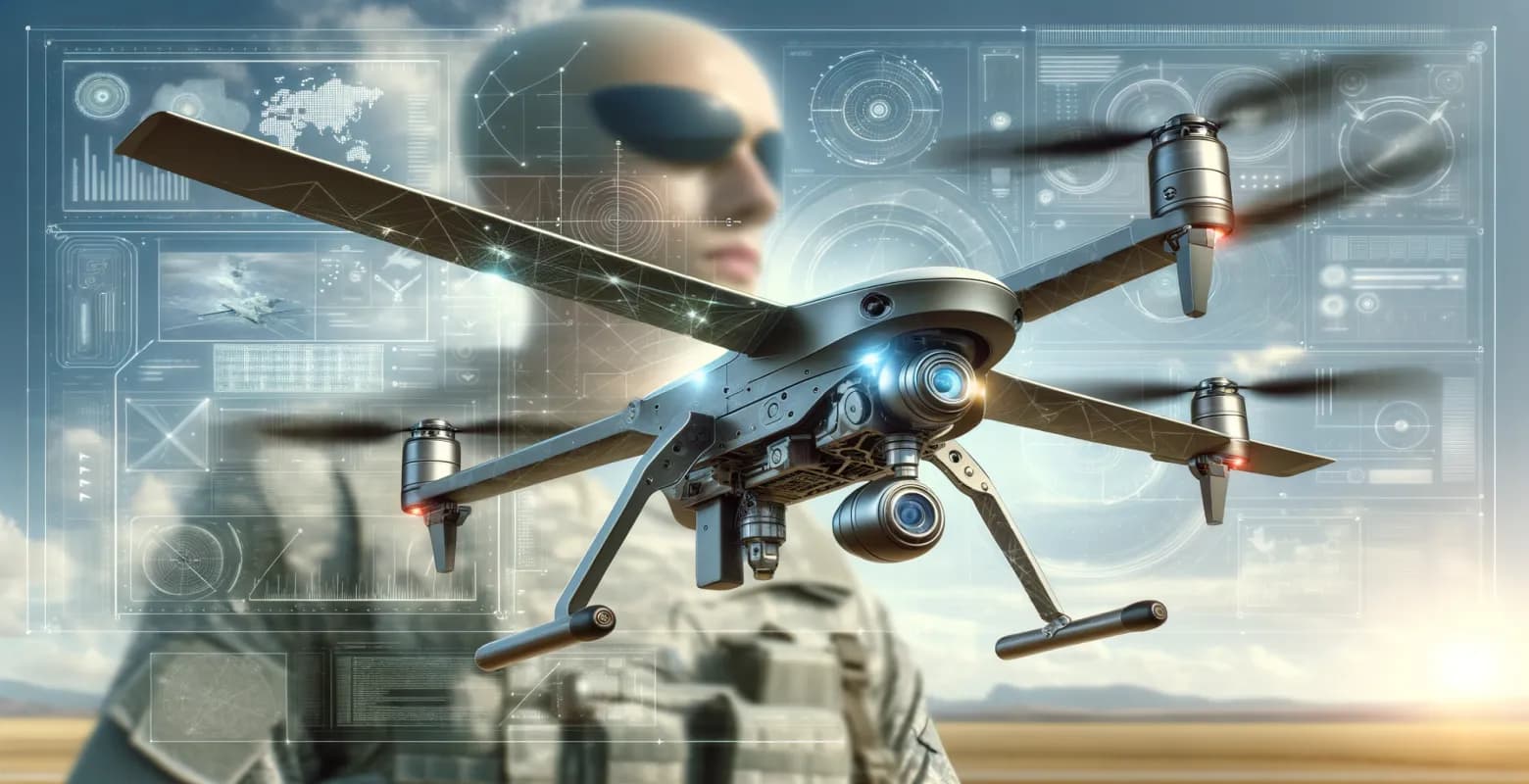
Modern technologies for military drones
Introduction
In today's rapidly evolving world of technology, military drones have become a key element of modern armed forces. Thanks to advanced technologies, these unmanned aerial platforms play an increasingly important role in military operations worldwide. Their significance is growing not only due to the ability to conduct activities in hard-to-reach places but also because of the capability to eliminate threats without risking the lives of pilots. In this article, we will take a closer look at the modern technologies used in military drones, their advantages, challenges, and future trends.
Advanced Navigation and Control Systems
One of the key elements of military drones is advanced navigation and control systems. Modern drones utilize GPS technology and inertial navigation systems, allowing for precise determination of position and flight direction. This enables them to perform complex maneuvers and operate in highly challenging terrains.
Another important aspect is flight automation. With modern algorithms and artificial intelligence, drones can autonomously plan routes and avoid obstacles. These systems are continuously developed to ensure maximum mission efficiency and safety.
Recognition and Sensory Systems
Modern military drones are equipped with advanced recognition and sensory systems. High-resolution cameras, thermal sensors, and LIDAR systems allow for precise reconnaissance and monitoring of the battlefield situation. Thanks to these technologies, drone operators can obtain a detailed real-time picture of the situation.
Additionally, drones are increasingly being equipped with electro-optical and radar systems, enabling the detection and identification of targets even in challenging atmospheric conditions or at night. These capabilities significantly enhance the effectiveness of military operations.
Stealth Technologies and Signature Reduction
As drones become more common on the battlefield, the need to hide them from enemy detection systems also grows. Stealth technologies play a crucial role in this aspect. Military drones are designed to minimize their radar, acoustic, and thermal signatures.
Materials commonly used in building stealth drones are composites that absorb radar waves. Additionally, special coatings and fuselage shaping help reduce detectability by enemy radars. These technologies are continually evolving to meet new battlefield challenges.
Application of Artificial Intelligence and Machine Learning
Artificial intelligence (AI) and machine learning (ML) play an increasingly important role in the development of military drones. With AI, drones can analyze vast amounts of data collected during missions and make real-time decisions. Machine learning algorithms improve target identification precision and flight route optimization.
AI also enables autonomous mission execution, significantly reducing the operators' workload. In the future, drones may become fully autonomous, allowing for the completion of complex tasks without direct human supervision.
Integration with Other Combat Systems
Modern military drones are often integrated with other combat systems to create cohesive and effective combat systems. This integration includes linking drones with artillery systems, ground units, and naval forces. Such an approach allows for better resource utilization and synchronization of actions on the battlefield.
Cooperation between different branches of the armed forces has become a key element of modern military operations. With drones, it is possible to conduct integrated operations in real-time, significantly increasing operational effectiveness.
Challenges and Technological Limitations
Despite numerous advantages, military drones also face a range of challenges and technological limitations. One of the main issues is communication security. Ensuring the security of data transmitted between the drone and the operator is crucial to prevent interception by the enemy.
Another challenge is the limited flight time, dependent on battery capacity or fuel. Although battery technology is advancing, it still poses a limitation for prolonged missions. Additionally, drones are susceptible to GPS signal interference, which can hinder their operations under specific conditions.
The Future of Military Drones
The future of military drones looks very promising. The development of technologies such as AI, blockchain, and advanced materials will further increase their efficiency and autonomy. It is also predicted that drones will be increasingly used in rescue and humanitarian missions, expanding their applications beyond traditional military operations.
One potential direction of development is the concept of drone swarms, where many small units act together as a single organism. This approach allows for the execution of complex tasks with greater flexibility and resilience to the loss of individual units.
Summary
Modern technologies for military drones are an integral part of contemporary armed forces. With advanced navigation systems, sensors, stealth technologies, and the application of artificial intelligence, drones have become indispensable tools in military operations. Despite existing challenges and limitations, their development is dynamic, and the future looks promising.
As these technologies evolve, drones will play an increasingly important role not only in combat operations but also in rescue and humanitarian missions. Therefore, continued investment in research and development in this field is crucial to ensure the safety and effectiveness of future operations.