

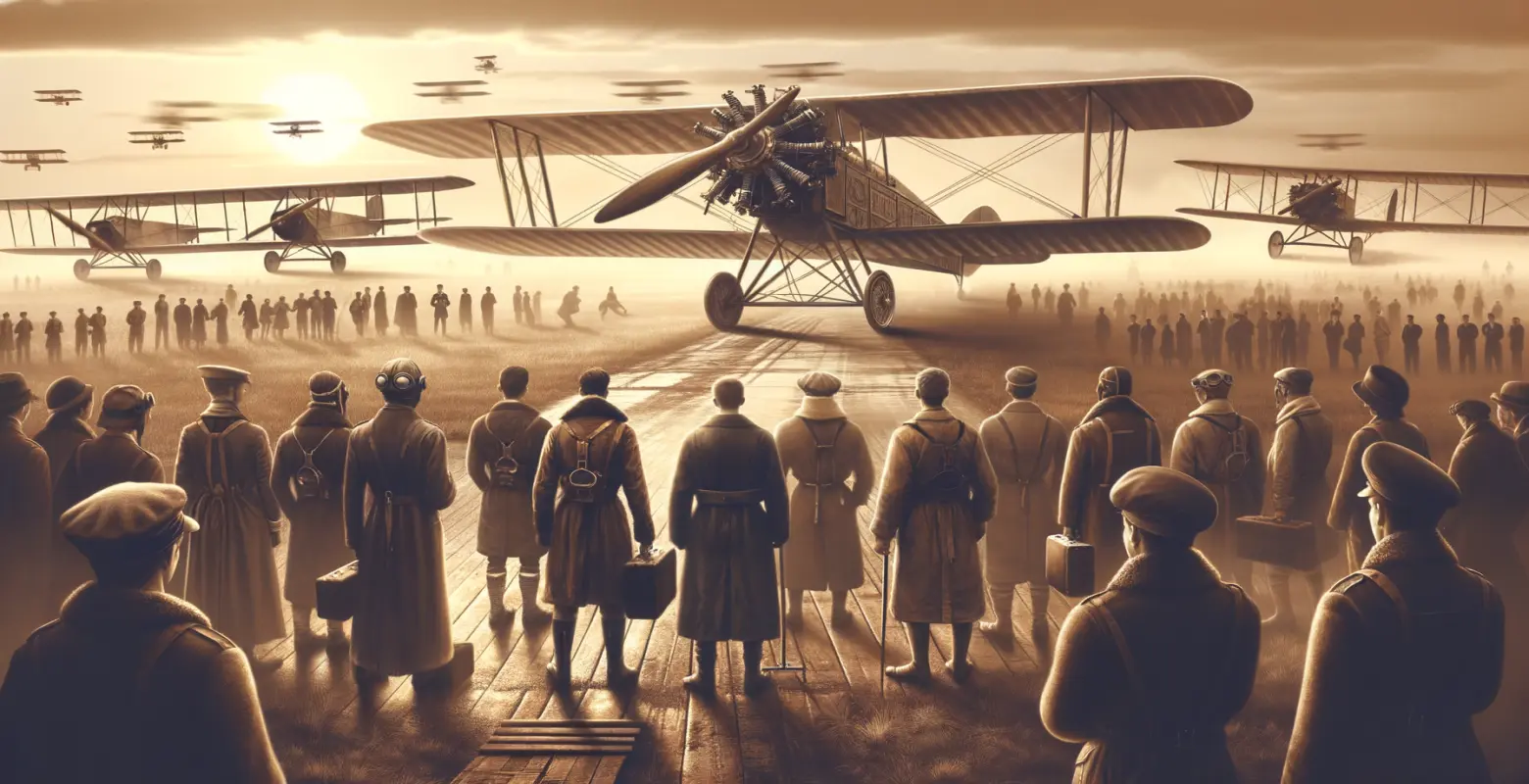
Forgotten flights of aviation pioneers
Introduction
Aviation is a field that has fascinated people around the world for over a hundred years. The beginnings of this incredible history are full of remarkable figures and events, often overshadowed by the glory of major achievements such as the first flight by the Wright brothers or Charles Lindbergh's transatlantic flight. The forgotten flights of aviation pioneers are a topic deserving attention, not only because of their contributions to the development of this field, but also due to the inspiring stories and determination that can still serve as a source of learning and motivation. In this article, we will explore these lesser-known yet immensely important moments in the history of aviation.
The beginnings of aviation: first steps and forgotten pioneers
The first attempts at flying date back to ancient times, but real aviation development began in the 19th century. In 1804, George Cayley, an English engineer, constructed the first glider model capable of lifting off the ground. Although his works are relatively unknown today, he laid the scientific foundation for aviation, paving the way for future achievements.
Another significant yet often overlooked pioneer was Otto Lilienthal, a German engineer known as the "father of aviation." Between 1891 and 1896, Lilienthal made around 2000 flights on gliders he designed, proving that controlled flights were possible. His works and publications had a significant impact on subsequent generations of aviation engineers, including the Wright brothers.
Flights that changed history but are rarely spoken of
Many flights that were crucial for the development of aviation have been forgotten or overshadowed by other events. An example is the flight of Alberto Santos-Dumont, a Brazilian pioneer who in 1906 conducted the first documented flight of a heavier-than-air aircraft in Europe. His 14-bis aircraft soared to a height of 6 meters and flew 220 meters, officially recorded by the Aero Club de France.
Another example is Bessie Coleman, the first African-American woman to earn a pilot's license in 1921. Despite her achievements being relatively obscure today, Coleman broke many racial and gender barriers, performing in airshows and inspiring future generations of aviators. Her determination and passion for aviation remain admirable.
Technical challenges and innovations of early flights
Early flights were not only daring endeavors but also posed significant technical challenges. Designers and pilots had to tackle numerous difficulties such as the lack of suitable materials, limited understanding of aerodynamics, and lack of experience in operating flying machines.
One of the innovators of that time was Glenn Curtiss, an American pioneer who in 1908 constructed the first aircraft with ailerons, enabling lateral control of the aircraft. His inventions were crucial for improving the stability and maneuverability of airplanes.
Louis Blériot, a French designer and aviation pioneer, also deserves recognition. In 1909, he became the first to fly over the English Channel in his monoplane Blériot XI, a significant technical achievement demonstrating that airplanes could be used for inter-country travel.
The significance and impact of forgotten flights on modern aviation
The forgotten flights of aviation pioneers had a profound impact on the development of this field. Thanks to their experiments and acquired experiences, modern aircraft were developed, and technologies were advanced, facilitating travel for millions of people worldwide.
Examples such as the work of Frank Whittle, a British engineer who developed the first operational jet engine in the 1930s, illustrate how past innovations influenced modern aviation. Although his work was initially underappreciated, he is now recognized as one of the fathers of jet aviation.
Conclusion
The forgotten flights of aviation pioneers are a fascinating subject that demonstrates how many individuals contributed to the development of this field, even though their achievements are not always widely known. Their stories are filled with passion, courage, and determination, which can serve as inspiration for future generations.
Understanding the past and appreciating the contributions of forgotten pioneers is crucial for further advancements in aviation. We encourage further exploration of this topic to better understand the stories of those who paved the way for the modern achievements in aviation.



Number of comments: 0