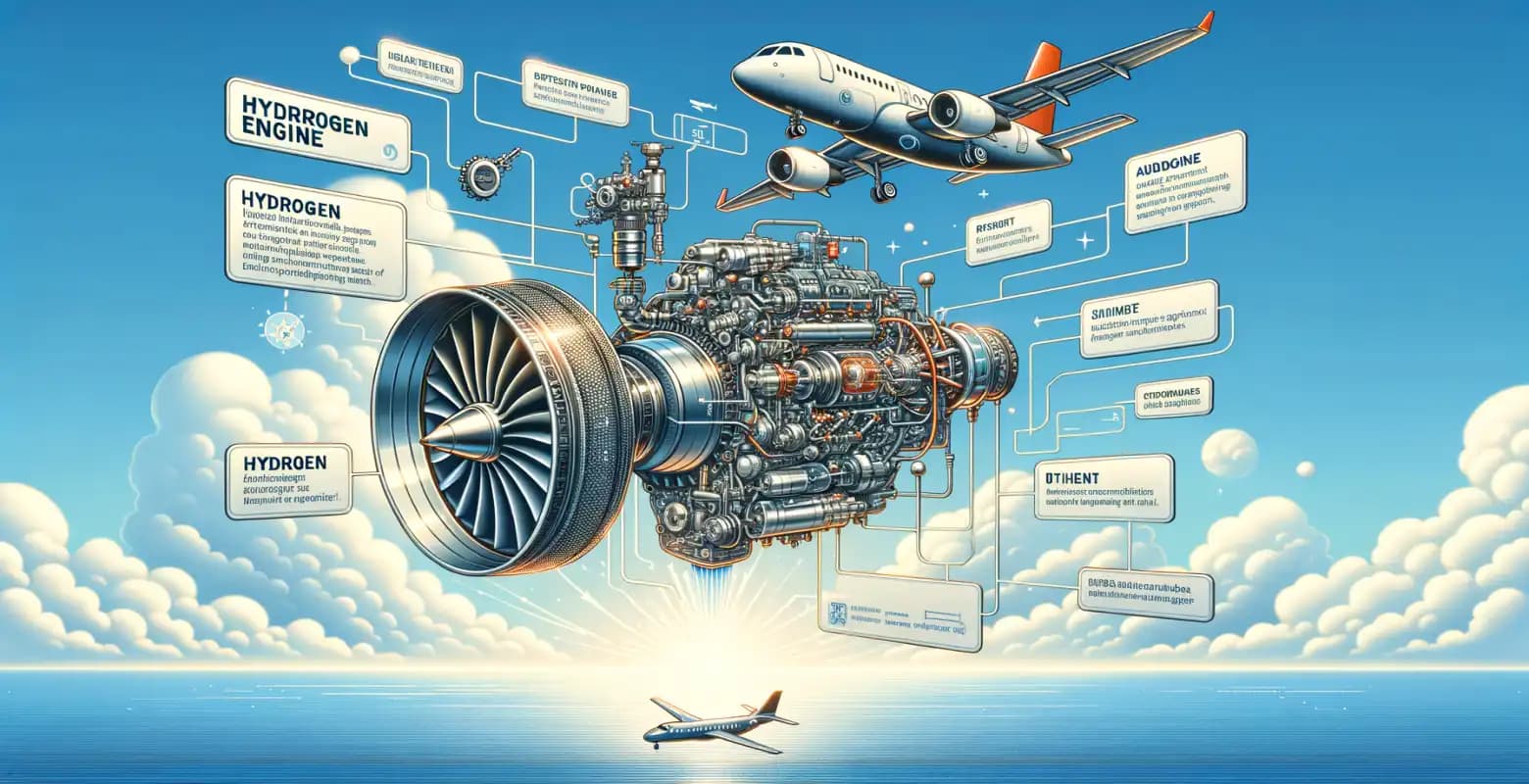
Hydrogen engine technology in aviation
Introduction
In the era of growing concerns about climate change and environmental pollution, the aviation industry is facing the challenge of reducing carbon dioxide and other harmful emissions. One of the most promising solutions is the introduction of hydrogen engine technology into aviation. Hydrogen, as a fuel, offers the possibility of significantly reducing emissions of harmful substances, making it an attractive alternative to traditional fossil fuels. In this article, we will examine how hydrogen engine technology can change the face of aviation, what its main challenges, benefits, and future development directions are.
Hydrogen Engine Technology: Basics
Hydrogen engines in aviation are based on the use of hydrogen as a fuel, which can be used in two main forms: as gaseous hydrogen burned in turbine engines or as a source of energy in fuel cells. Burning hydrogen in turbine engines is similar to burning traditional fuels, with the difference that the main product of combustion is primarily water vapor, not carbon dioxide. Fuel cells, on the other hand, convert hydrogen into electrical energy through an electrochemical reaction, allowing for the powering of electric engines.
Historical Background and Technological Development
The idea of using hydrogen as a fuel is not new. As early as the 1930s, hydrogen was used in airships, such as the famous Hindenburg. However, it was only in recent decades that this technology began to be seriously considered in the context of commercial aviation. In recent years, major aviation companies such as Airbus have started intensive work on the development of hydrogen-powered aircraft. In 2020, Airbus presented the ZEROe concept, which aims to introduce hydrogen aircraft into service by 2035.
Advantages of Using Hydrogen in Aviation
Hydrogen has enormous potential as an aviation fuel for several reasons. Firstly, it is a zero-emission fuel. During hydrogen combustion, the only by-product is water, significantly reducing its environmental impact. Secondly, hydrogen has a high energy density, meaning it can store more energy per unit mass compared to traditional aviation fuels. This makes it particularly attractive for long-distance flights.
Challenges and Limitations
Despite numerous advantages, hydrogen engine technology faces several challenges. One of the main issues is hydrogen storage and transport. Hydrogen must be stored at low temperatures or high pressures, requiring advanced infrastructure. Furthermore, producing hydrogen in an environmentally friendly manner, for example, through water electrolysis using renewable energy, is still relatively costly. Other challenges include the need to adapt airports to handle hydrogen aircraft and ensure safety in case of potential accidents.
The Future of Hydrogen Technology in Aviation
Despite difficulties, the aviation industry is determined to introduce hydrogen as the main source of energy. In the coming years, intensive work is expected on the development of new hydrogen storage and production technologies. Companies like Airbus are already investing in research and development to accelerate this process. Additionally, governments worldwide are increasing funding for hydrogen-related projects, which may expedite the implementation of this technology.
Summary
Hydrogen engine technology in aviation has the potential to revolutionize the way we travel, making flights more environmentally friendly and sustainable. Although there are many challenges ahead, technological progress and growing environmental awareness can significantly accelerate the development of this technology. Introducing hydrogen into aviation is not only a response to global environmental challenges but also a step towards a more sustainable future for the entire aviation industry. We encourage you to follow further progress in this field and support initiatives for sustainable development.