

The airlines of the future: what awaits us?
Introduction
Aviation plays a key role in the global economy, enabling fast transportation of goods and people over vast distances. As technology advances, the airlines of the future will need to face new challenges and leverage new opportunities. Faced with growing passenger expectations, climate change, and rapidly evolving technologies, the aviation industry stands on the brink of a revolution. In this article, we will look at what changes may await airlines in the coming decades and what innovations may impact the way we travel.
New Propulsion Technologies
One of the most important aspects of aviation development is new propulsion technologies. Traditional jet engines, while efficient, are a significant source of greenhouse gas emissions. In response to environmental challenges, many airlines are investing in the development of alternative propulsion sources.
Electric engines are one of the most promising technologies. Although currently mainly used in small aircraft and drones, in the future, they may become the foundation for larger, commercial aircraft. Companies such as Airbus and Boeing are already testing prototypes of hybrid drives that combine traditional engines with electric propulsion. This solution can significantly reduce CO2 emissions and operational costs.
Also, biofuels are gaining importance as an alternative to fossil fuels. The use of biofuels can not only reduce the carbon footprint but also help balance the demand for aviation fuels. Blended fuels are already being tested in some regions, which may become the standard in the future.
Automation and Artificial Intelligence
Automation and Artificial Intelligence (AI) are another key areas that will impact the future of airlines. AI can revolutionize many operational aspects, from flight management to customer service.
More and more functions in the cockpit are being automated, allowing pilots to focus on more complex tasks. In the future, with the development of AI, further automation can be expected, perhaps even to the level of fully autonomous flights. Although full automation is still distant, systems supporting pilots' decisions in crisis situations are already being tested.
Customer service can also change with AI. Chatbots and virtual assistants can improve passenger experiences by offering faster and more efficient responses to their inquiries. Additionally, AI can help personalize services by adapting offers and messages to passengers' individual needs.
Changes in Cabin Configuration and Passenger Service
As passenger needs evolve, airlines will need to adapt their cabins and onboard services. Comfort and convenience will become even more important in an era of intense competition.
One possible solution is modular cabins, which will allow flexible adaptation of space to the specific needs of each flight. For example, during peak business hours, more space can be allocated to business classes, and during holiday flights to economy classes.
Furthermore, the development of IoT (Internet of Things) technology will enable more personalized service onboard. Passengers will be able to use mobile applications to order meals, entertainment, or even manage the climate in their zone.
Impact of Climate Change on Aviation
Climate change is one of the biggest challenges for the future of aviation. Airlines must deal with growing pressure to reduce their emissions and operate more ecologically.
One of the key elements of emission reduction strategies is investing in more efficient aircraft and alternative energy sources, such as biofuels and electric propulsion mentioned earlier. Optimization of flight routes and the implementation of more efficient airport procedures can also contribute to emission reductions.
Governments and international organizations also play a significant role in shaping policies that promote sustainable aviation development. Initiatives such as CORSIA (Carbon Offsetting and Reduction Scheme for International Aviation) aim to offset CO2 emissions through investments in ecological projects.
Future of Airports
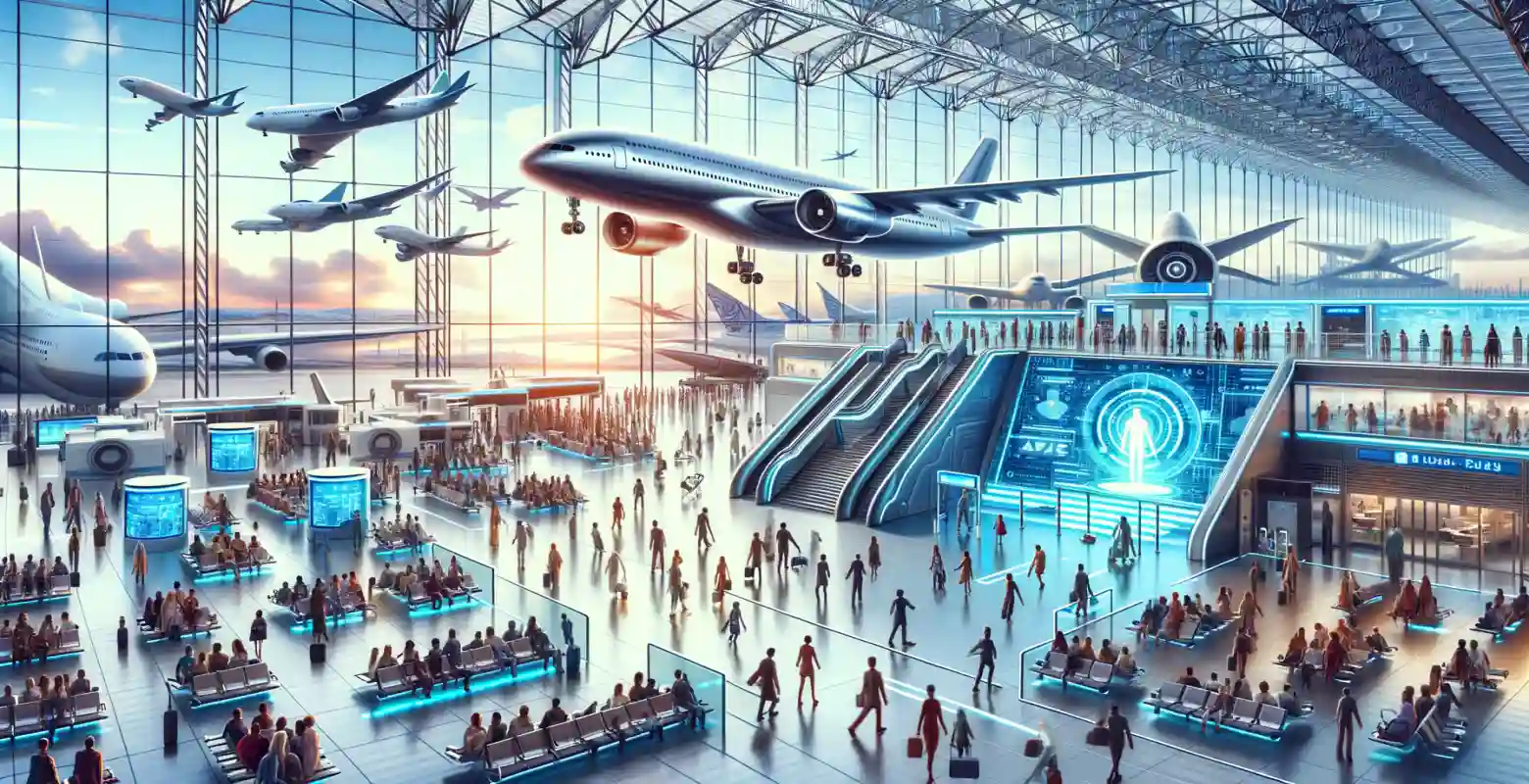
Airports of the future will have to meet growing demands for efficiency and sustainable development. As the number of passengers increases, airport infrastructure will need to adapt to new realities.
One direction of development is digitization of airport processes. Automated gates, facial recognition systems, and self-check-ins are just some of the technologies that can make travel smoother and less stressful for passengers.
Airports will also need to implement ecological solutions, such as solar panels, waste management systems, or green roofs, to reduce their environmental impact. In the cities of the future, airports can also become important transportation hubs, connecting various public transport modes.
Summary
The airlines of the future will have to face many challenges, but at the same time, they have the opportunity to leverage new technologies that can revolutionize the industry. From innovative propulsion systems to advanced automation and sustainable development, the future of aviation promises to be incredibly exciting. For passengers, this means more comfortable, safe, and environmentally friendly journeys. For the aviation industry, it is a chance for further development and adaptation to a rapidly changing world.



Number of comments: 0