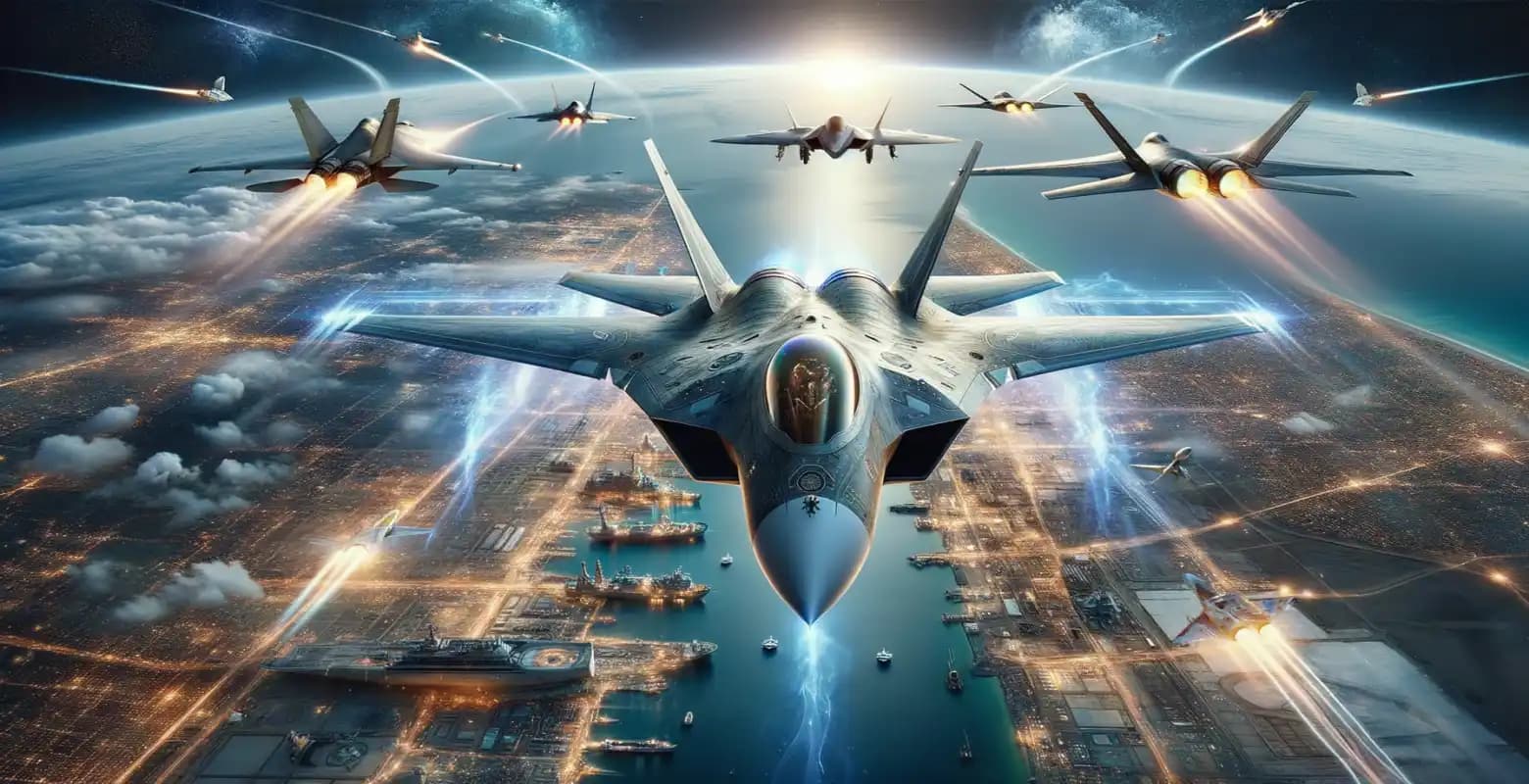
The most advanced fighter jets in the world
Introduction
In today's rapidly changing world, military technology plays a key role in shaping global relations and power balances. Among the most important elements of this technology are fighter jets, which are not only a symbol of military power but also advanced engineering and innovation. In this article, we will take a closer look at the most advanced fighter jets in the world, analyzing their significance, capabilities, and impact on contemporary conflicts. With this knowledge, we will understand how modern aviation technology shapes the future of defense and what challenges lie ahead.
F-35 Lightning II: King Among Fighter Jets
The F-35 Lightning II, produced by Lockheed Martin, is one of the most advanced multirole fighter jets in the world. Designed as part of the Joint Strike Fighter program, the F-35 aims to meet the needs of various armed forces in different countries. Its key feature is the ability to evade radar detection through stealth technology, making it extremely difficult to locate by the enemy.
Advantages of F-35: This fighter jet offers advanced avionics systems, sensor integration, and the ability to conduct network-centric operations. It can act as a command platform for other units, making it a key element in contemporary military operations.
Challenges: Despite numerous advantages, the F-35 faces issues related to production and maintenance costs. There are also challenges associated with its reliability, although the manufacturer is continually working on resolving them.
Sukhoi Su-57: Russian Competitor
The Sukhoi Su-57, also known as PAK FA, is a Russian fifth-generation fighter jet designed to compete with American aircraft such as the F-22 and F-35. The Su-57 combines stealth capabilities, supermaneuverability, and advanced electronic systems.
Advantages of Su-57: This fighter jet is equipped with powerful engines that allow for high speeds and complex maneuvers. It is also capable of carrying a wide range of weapons, increasing its combat versatility.
Challenges: The Su-57 is still in the development phase, and its serial production faces difficulties related to funding and technology. Additionally, Russia must address logistical and integration issues associated with new technologies.
Chengdu J-20: Chinese Response to US Dominance
The Chengdu J-20 is a Chinese fifth-generation fighter jet that is part of an ambitious program to modernize the People's Liberation Army Air Force. Its goal is to balance the military forces with the US in the Asia-Pacific region.
Advantages of J-20: The J-20 stands out for its stealth capabilities and modern avionics systems, allowing it to operate in enemy-access-denied airspace. The Chinese military places great emphasis on the development of radar and electronic technologies, making this fighter jet a formidable tool in their arsenal.
Challenges: Although the J-20 is an impressive achievement, it lacks full integration with some advanced weapon systems. Additionally, the Chinese armed forces must overcome production and pilot training challenges.
Eurofighter Typhoon: European Technological Alliance
The Eurofighter Typhoon is an example of successful European cooperation in the field of aviation technology. Produced by a consortium of companies from the UK, Germany, Italy, and Spain, the Typhoon is a versatile multirole fighter jet.
Advantages of Typhoon: The Eurofighter Typhoon is characterized by excellent maneuverability and speed capabilities. It is capable of performing a wide range of missions, from air defense to ground attacks. Its modern electronic and sensory systems provide an edge in aerial combat.
Challenges: Although the Typhoon is a respected fighter jet, its development and production have been costly. Furthermore, differences in requirements among the participating countries often complicate its modernization and integration.
Dassault Rafale: French Masterpiece
The Dassault Rafale is a French multirole fighter jet that combines advanced technology with elegant design. Since its introduction into service, the Rafale has gained a reputation as a reliable and versatile combat aircraft.
Advantages of Rafale: This fighter jet is known for its excellent maneuverability and ability to operate in various combat conditions. Its advanced radar systems and the ability to carry a diverse range of armaments make it a valuable asset for any military.
Challenges: Challenges facing the Rafale are mainly related to its price and competition in the multirole fighter market. France must compete with other manufacturers, such as the US and Russia, posing marketing challenges.
Summary
Modern fighter jets play a crucial role in the defense strategy of many countries, and their development is driven by technological advancements and evolving operational needs. F-35, Su-57, J-20, Typhoon, and Rafale are examples of the most advanced fighter jets that shape the future of air forces. The challenges associated with their production and integration are significant, but the benefits of possessing them outweigh these difficulties. Understanding these advanced machines helps to better grasp global trends in security and military technology.
With the continuous development of aviation technology, we can expect fighter jets to further evolve, offering even greater combat and operational capabilities. It is worth keeping track of these changes to stay up to date with the latest advancements in this field.