

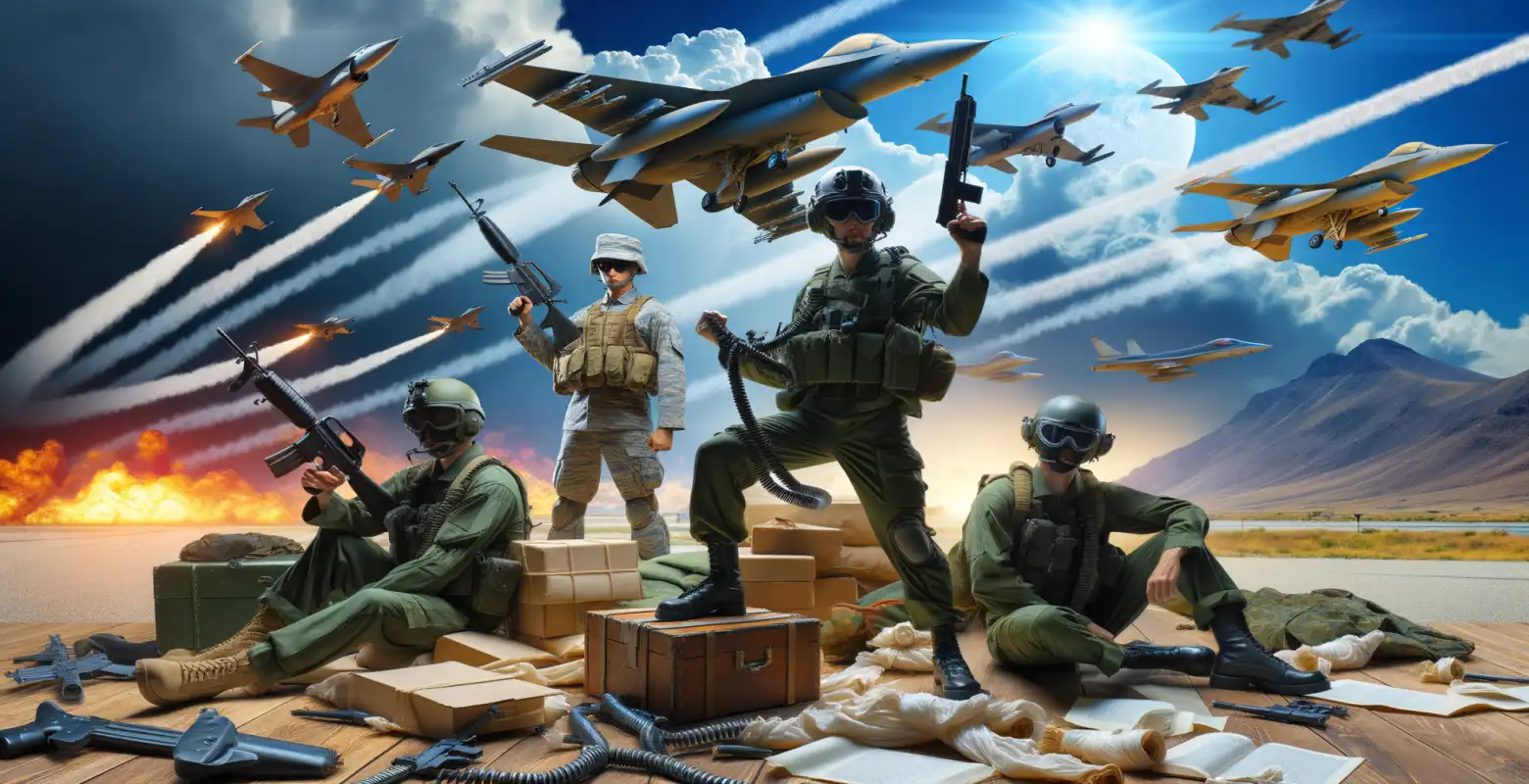
Challenges of military pilot training
Introduction
Military pilot training is a complex and demanding process that plays a crucial role in ensuring national security. Military pilots must be exceptionally well-prepared to meet the numerous challenges associated with carrying out military missions, which often take place in difficult and unpredictable conditions. This topic is particularly significant in the context of the dynamically changing geopolitical situation worldwide and the increasing role of technology in military operations. In this article, we will examine the challenges faced by training centers, as well as the importance and future of military pilot training.
Historical Background of Military Pilot Training
Military pilot training has a long and rich history dating back to the early 20th century. During World War I, aviation was just beginning to play a significant role on the battlefield, leading to the need for training new pilots. At that time, training was much less formalized than it is today, with the primary goal being to teach pilots the basics of flying and operating aircraft of that era.
After World War II, with the development of aviation technology, military pilot training became more advanced and specialized. The introduction of jet aircraft and the advancement of radar technology required pilots to have significantly greater skills and technical knowledge. Subsequent decades brought further changes and progress, which in turn led to the increased complexity of training programs.
Modern Challenges in Military Pilot Training
Technological InnovationsContemporary military aviation relies heavily on advanced technologies, posing one of the main challenges in pilot training. Modern combat aircraft are equipped with complex navigational systems, precision weaponry, and various flight management systems that require pilots to possess not only flying skills but also the ability to quickly learn and operate sophisticated electronic systems.
The introduction of flight simulators has significantly increased the efficiency of training, allowing pilots to practice in realistic conditions without the risk of damaging equipment or endangering lives. However, to fully utilize the potential of these technologies, instructors must be adequately trained in their operation and in tailoring simulation scenarios to the actual training needs.
Complexity of Military Operations
Modern military operations are not only more technically complex but also require pilots to have a wide range of skills, such as teamwork, understanding of military strategy, and the ability to make quick decisions in stressful situations. Contemporary conflicts often have an asymmetric nature, meaning that pilots must be prepared for various operational scenarios, including humanitarian missions, evacuations, or counterterrorism operations.
Training involves not only flight instruction but also intensive theoretical courses covering military strategy, tactics, and international law. This kind of preparation is essential for pilots to effectively operate in complex situations that require not only technical skills but also strategic thinking and interpersonal abilities.
Psychological Aspects of Training
Military pilot training requires not only physical but also psychological preparedness. Pilots must be resilient to stress, able to make decisions under time pressure and in uncertain situations. Therefore, one of the key elements of training is developing coping mechanisms for stress and building psychological resilience.
As part of their training, pilots undergo psychological tests and regular assessments of their mental state to ensure they can meet the demands of working in extreme conditions. Psychological support and coaching are integral parts of the training process, helping pilots better cope with professional and personal challenges that may affect their performance.
Logistical and Financial Challenges
Military pilot training is a costly and time-consuming process. The high costs are related not only to the purchase and maintenance of aircraft but also to ensuring the necessary human resources, such as qualified instructors and technical personnel. Additionally, many countries face budget constraints that may affect the quality and scope of training programs.
Training logistics also involve organizing numerous practical exercises that require coordinated cooperation among multiple military units. Maintaining the operational readiness of training personnel and ensuring the continuity of activities in the face of financial and logistical challenges pose significant challenges for many armies worldwide.
The Future of Military Pilot Training
Given the rapidly changing technologies and military tactics, the future of military pilot training will require further development and adaptation. The increasing importance of drones and autonomous combat systems may lead to a decrease in the number of pilots needed to operate traditional aircraft while increasing the demand for specialists in remote control and management of unmanned units.
Innovations in augmented and virtual reality may also revolutionize the way pilots are trained, offering more immersive and realistic training experiences. The introduction of artificial intelligence into training programs can also help personalize the learning process, adapting it to the individual needs and skills of each pilot.
Summary
Military pilot training is a key element in maintaining armed forces at the highest level of combat readiness. Despite the numerous challenges involved in this process, it is essential for ensuring national security and effectively responding to threats. Contemporary training programs must continually evolve to meet the requirements of modern battlefields and rapidly changing technologies. Investing in the development and improvement of military pilot training remains a priority for many countries that recognize its strategic importance. In the future, technology and innovations will play an increasingly significant role in this process, offering new opportunities and challenges.


Number of comments: 0