

How do you prevent mid-air collisions?
Introduction
Air collisions are one of the greatest threats to aviation safety, which can lead to catastrophic consequences. In the era of intensive aviation development, both commercial and private, ensuring safe air travel has become a priority for airlines, air traffic controllers, and regulatory bodies worldwide. Preventing air collisions not only protects the lives of passengers and crews but also safeguards against financial losses and reputational damage for airlines. In this article, we will examine how the air collision prevention system works, what technologies are used, and what challenges and opportunities lie ahead for the aviation industry in this context.
Historical Background and Technological Development
In the early years of aviation, when the number of aircraft in the air was relatively small, air traffic control was carried out manually and visually. However, with the increasing number of flights and higher traffic volume, the need to introduce more advanced airspace management methods became evident. In the 1950s and 1960s, the first radar systems were introduced to monitor the positions of aircraft and prevent collisions.
Over time, these technologies became increasingly advanced. In the 1980s, Traffic Collision Avoidance Systems (TCAS) were introduced, which are now standard equipment on most passenger aircraft. TCAS is an autonomous system that monitors the airspace around the aircraft and warns pilots of potential collision threats, suggesting avoidance maneuvers if necessary.
Modern Collision Prevention Technologies
Currently, a variety of advanced technologies are used in preventing air collisions. In addition to TCAS, which is already a standard, new systems are being developed and implemented:
ADS-B (Automatic Dependent Surveillance–Broadcast): ADS-B is a technology that allows for the automatic transmission of information about the aircraft's position, speed, and altitude to other nearby units and ground control stations. This enables air traffic controllers and other aircraft to precisely track movements in real-time airspace.
Next-Generation Radar Systems: Thanks to advancements in radar technology, current radars offer significantly higher resolution and detection range, allowing for more precise tracking of objects in the air.
Vision and Sensor Systems: Modern aircraft are equipped with advanced camera and sensor systems that allow for visual monitoring of the airspace around the aircraft. Such technologies are particularly useful during takeoff and landing, when the risk of collision is highest.
Role of Air Traffic Controllers
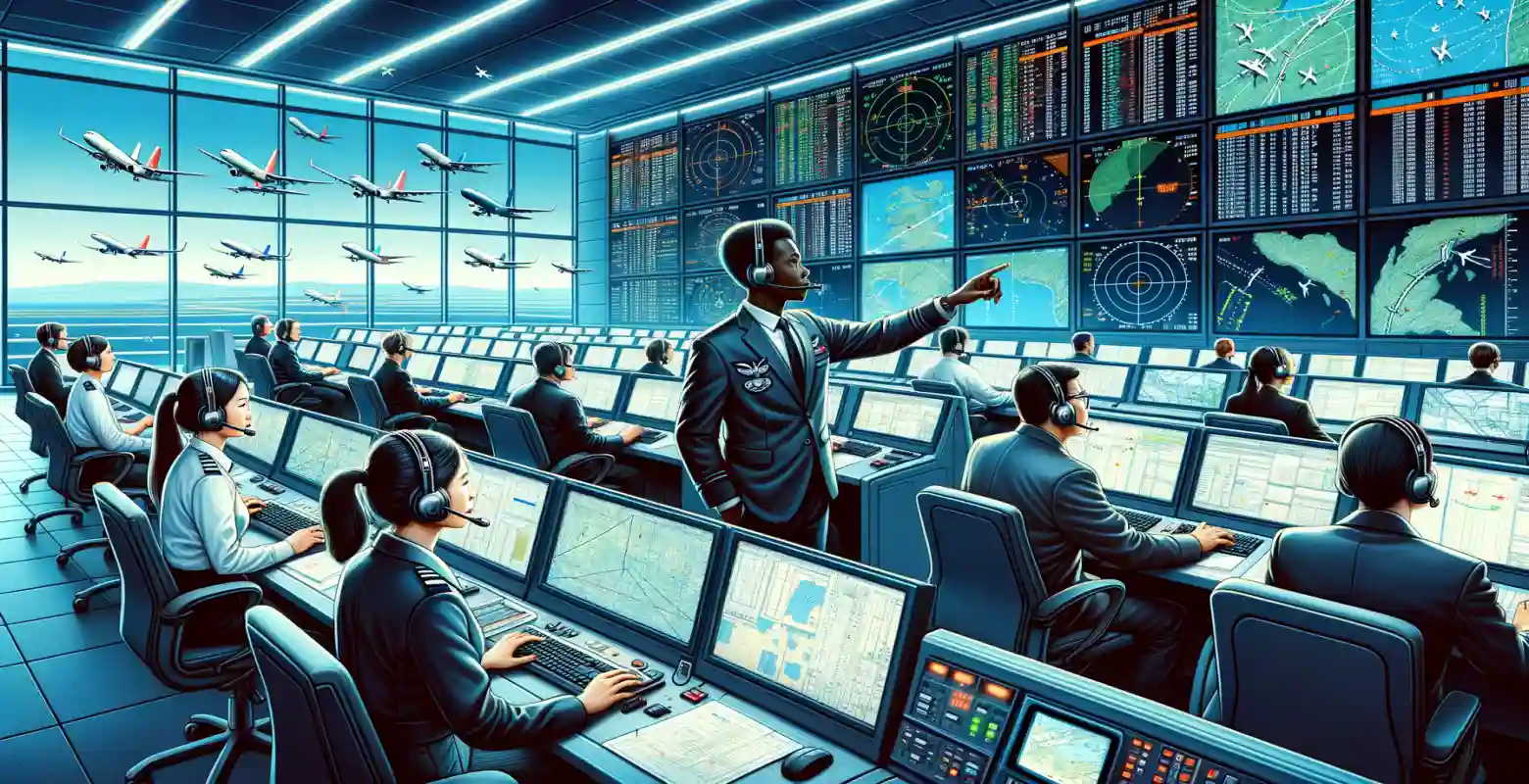
While technologies have greatly increased flight safety, air traffic controllers still play a crucial role in preventing air collisions. They manage traffic in congested airspace, ensuring proper separation between aircraft and supervising airspace.
Controllers utilize advanced software and radar systems that provide them with data on the positions and movements of all units in a given sector. This allows them to make quick and accurate decisions to prevent potential collisions.
Challenges in Collision Prevention
Despite advanced technologies and systems, preventing air collisions is not without challenges. One of the biggest problems is the constantly increasing number of flights, leading to airspace congestion, especially around major airports.
Another challenge is the integration of drones and other new forms of air transport with traditional air traffic. Introducing new flying units requires the development of new rules and procedures to ensure the safe coexistence of different types of aircraft.
The Future of Air Collision Prevention
The technology of preventing air collisions is constantly evolving. In the future, we can expect the introduction of even more advanced autonomous systems that will be able to manage air traffic independently without human intervention.
The development of artificial intelligence and machine learning can contribute to the creation of systems capable of predicting potential threats and making decisions in fractions of seconds. Such technologies can significantly enhance the safety and efficiency of airspace management.
Summary
Preventing air collisions is an incredibly important element in ensuring aviation safety. Thanks to advanced technologies such as TCAS, ADS-B, as well as modern radar and vision systems, effective monitoring and management of air traffic are possible. Despite numerous challenges, such as the growing number of flights or the integration of drones, the aviation industry continually strives to improve safety and efficiency. The development of autonomous technologies and artificial intelligence opens up new possibilities for ensuring even greater safety in the future.
For passengers and aircraft crews, understanding that air travel is one of the safest means of transportation is crucial, and continuous investments in new technologies and procedures only enhance this safety. It is worth following progress in this field to be aware of how technology contributes to protecting our lives in the skies.

Number of comments: 0