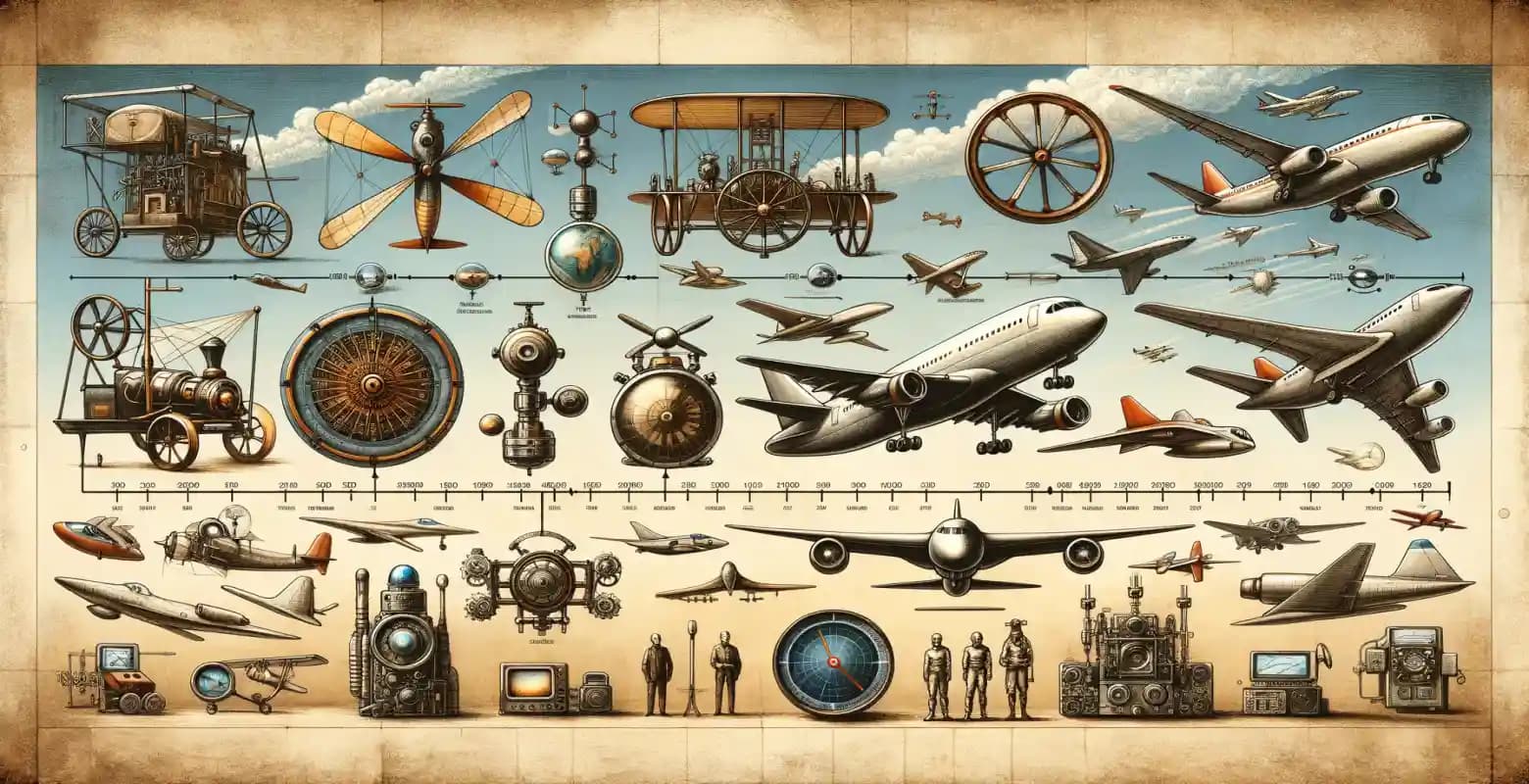
The most groundbreaking inventions in the history of aviation
Introduction
Aviation is a field that has undergone incredible evolution since its inception, changing the way we perceive travel, transportation, and global communication. From the first attempts to take flight to the modern, technologically advanced machines, aviation has become a pillar of contemporary civilization. This article aims to explore the most groundbreaking inventions in the history of aviation that have shaped the industry and influenced our daily lives. Understanding these key innovations is not only fascinating from a historical perspective but also essential for the future of aviation, which still faces many challenges and opportunities.
Early Aviation: Balloons and First Flight Attempts
The beginnings of aviation date back to the late 18th century, when the Montgolfier brothers presented their hot air balloon in 1783. This event marked a new era in the history of aviation, demonstrating that flight in the air was possible. Although balloons were not controllable, they represented an important step towards understanding aerostatics. In the following years, the invention of hydrogen balloons enabled longer and more controlled flights.
Internal Combustion Engine and Development of Aircraft
A groundbreaking event in the history of aviation was the introduction of the internal combustion engine. The Wright brothers, recognized as aviation pioneers, made the first successful flight with an aircraft powered by an internal combustion engine in 1903. Their invention, the Flyer I, revolutionized aviation by introducing the concept of a heavier-than-air machine that could be controlled in flight. This event marked the rapid development of aviation technology in the 20th century.
Introduction of Jet Propulsion
Jet propulsion was another milestone in the history of aviation. The first jet engine was constructed by Frank Whittle in 1937. Its application in military aviation during World War II revolutionized the speeds and capabilities of military aircraft. After the war, this technology found its way into civil aviation, leading to the creation of the first commercial jet aircraft, such as the de Havilland Comet and the Boeing 707.
Supersonic Aircraft: Concorde and Its Legacy
The Concorde, introduced in 1969, was one of the most technologically advanced passenger aircraft. By being able to exceed the speed of sound, the Concorde shortened transatlantic flight times to just 3.5 hours. Although its operation ended in 2003 due to high costs and noise levels, the Concorde remains a symbol of technological innovation and luxury in aviation.
Avionics and Flight Automation
The development of avionics, electronic onboard systems, revolutionized the way aircraft are piloted. Systems such as autopilot, GPS, and modern navigation systems have increased the safety and efficiency of flights. Automation has not only made the work of pilots easier but also improved coordination in air traffic, enabling the handling of a greater number of flights simultaneously.
Composite Materials and Aerodynamics
The introduction of composite materials, such as carbon fiber, has changed the construction of modern aircraft. These materials have made aircraft lighter, more durable, and more fuel-efficient. Advances in aerodynamics have also allowed for the design of aircraft with better airflow, contributing to the improvement of flight efficiency.
Unmanned Flights and Drones
Significant progress has been made in the field of unmanned flights in recent decades. Drones, initially used mainly for military purposes, have found wide applications in the civilian industry, from photography to package delivery. Unmanned aerial vehicles open up new possibilities in exploration, environmental monitoring, and rescue operations.
Space Flights and the Future of Aviation
Aviation and astronautics are increasingly intertwining. Private companies such as SpaceX, Blue Origin, and Virgin Galactic are working on developing commercial space flights, which could become a new direction for the development of aviation. Furthermore, research on hypersonic aircraft may lead to the creation of new, super-fast means of transportation.
Conclusion
The history of aviation is a story of constant pursuit of pushing technological and physical boundaries. Groundbreaking inventions, such as the Wright brothers' first airplane, jet engines, or modern avionics systems, have not only changed the way we travel but also contributed to globalization and economic development. The future of aviation still appears full of challenges and opportunities, especially in the context of sustainable development and space exploration. Each of the mentioned inventions has contributed to where we are today, and future innovations will shape the world of tomorrow.
Community Discussion (1)
Discover competitive prices for personal and business jet rentals tailored to your needs. Enjoy luxury, comfort, and privacy with affordable private jet solutions. Book your private jet today for seamless and exclusive air travel at unbeatable rates!Call Us: +91 988 609 9678 Email: customerservice@flyblade.in Visit Us: http://www.privatecharters.in Let us make your journey extraordinary. Reach out today!