

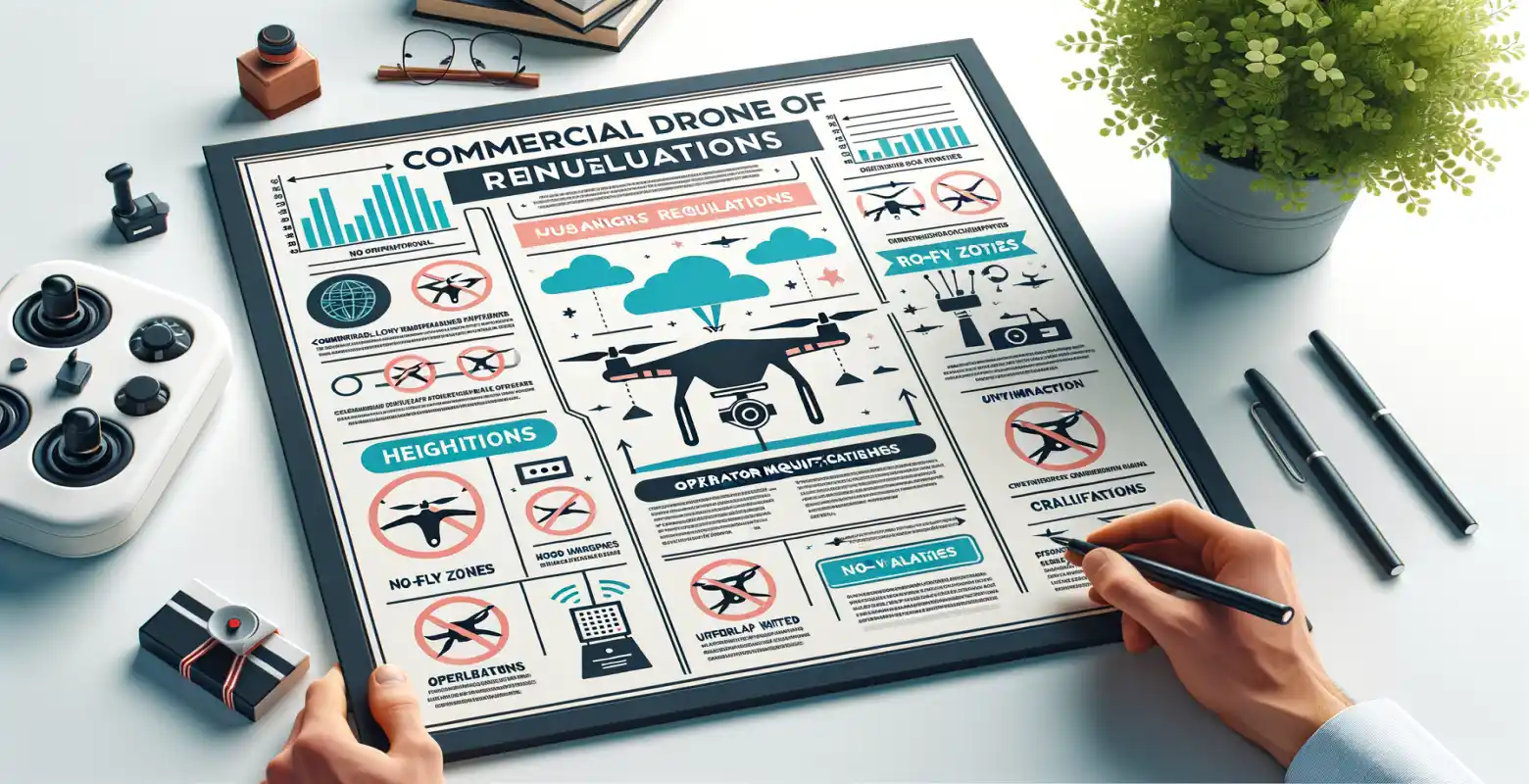
What are the latest regulations regarding commercial drone flights?
Introduction
In recent years, drones have become not only a popular tool in the hands of enthusiasts but also a key element in many commercial industries. From photography and filming, through monitoring agricultural crops, to package delivery – drones open up new possibilities in various sectors of the economy. However, with the increasing use of commercial drones, there is a need to introduce appropriate regulations that will ensure safety and compliance with legal requirements. In this article, we will look at the latest regulations concerning commercial drone flights, discussing their significance, challenges, and future trends.
Legal regulations regarding commercial drones
Regulations concerning commercial drone flights are constantly being updated to keep pace with the dynamic development of this technology. In the European Union, including Poland, the main regulatory body is the European Union Aviation Safety Agency (EASA), which introduces uniform regulations aimed at ensuring safety in airspace.
Basic requirements and categories of operations
Since January 2021, new EU regulations have been in place, dividing drone operations into three risk categories: open, specific, and certified. The open category pertains to low-risk operations and does not require prior authorization, but operators must meet certain conditions, such as maximum drone weight (up to 25 kg) and flight altitude (up to 120 m).
The specific category requires the operator to obtain permission because it includes higher-risk flights, for example, near public places or in controlled airspace. The certified category applies to the most risky operations, such as transporting people or goods, and requires certification similar to that used for manned aircraft.
Training and operator certification
In addition to adjusting operations to the appropriate categories, operators of commercial drones must also undergo proper training. Depending on the category of operation, this training may include both theory and practice, and may culminate in an exam.
Certification and registration
Operators of drones weighing over 250 grams must register in the national database, and each drone must be marked with a unique registration number. The registration process is simple and can be done online on the Civil Aviation Authority (CAA) website.
Challenges related to regulations
The implementation of new regulations brings various challenges. First and foremost, not all operators are aware of the applicable regulations and the need to comply with them. Additionally, the rapid advancement of drone technology sometimes outpaces the ability of regulatory authorities to introduce appropriate regulations.
Safety and privacy
Safety is one of the main reasons for introducing regulations. Uncontrolled drone flights can pose a threat to air traffic and people on the ground. Additionally, drones equipped with cameras can infringe on privacy, necessitating additional regulations regarding the protection of personal data.
Benefits of regulations for the commercial industry
Despite the challenges, regulations also bring numerous benefits. Primarily, they provide operators with clear guidelines, increasing safety and trust in drone technology within society. Harmonized regulations throughout the European Union enable operators to conduct cross-border operations more easily.
Promoting innovation and trust
Regulations also promote innovation by creating a stable legal environment that encourages investment in new technologies and solutions. With increased trust in drones, companies can consider their application in new areas such as logistics or precision agriculture.
Future trends in drone regulations
As drone technology continues to evolve, further changes in regulations can be expected. Increasing automation and growing technological capabilities will require the adaptation of regulations to meet new challenges and ensure safety.
Integration with intelligent transportation systems
In the future, drones may become part of larger intelligent transport systems, which will require even more advanced regulation and international cooperation. The ability to automatically coordinate drone flights with other airspace participants will be crucial for maintaining safety and operational efficiency.
Summary
Regulations regarding commercial drone flights are crucial for the development of this technology and its safe implementation in various sectors of the economy. They not only ensure safety but also promote innovation and trust in drones as business tools. As technology continues to advance, regulations will need to evolve to meet new challenges and opportunities. Therefore, it is important for drone operators to stay up to date with current regulations and actively participate in shaping them.
We invite you to continue monitoring changes in regulations and adapting to them to fully harness the potential that drone technology brings.


Number of comments: 0