

What are the new professional specializations in the aviation industry?
Introduction
The aviation industry is one of the most dynamically developing sectors of the economy, which constantly creates new career opportunities. Contemporary technological and environmental changes, such as the development of sustainable aviation and integration of advanced technologies, generate demand for new professional specializations. In this article, we will explore the latest professional specializations in the aviation industry, why they are important, and the challenges and opportunities associated with these new roles.
New Technologies and Their Impact on Professional Specializations
Technological progress is one of the main drivers of change in the aviation industry. New technologies, such as artificial intelligence, automation, and data analysis, affect all aspects of aviation operations. As a result, new professional specializations emerge.
AI and Automation Engineers: As airlines and aircraft manufacturers increasingly rely on automation, there is a growing demand for engineers specializing in AI. Their task is to design, implement, and maintain advanced systems that improve operational efficiency and flight safety.
Data Analysts in Aviation: Utilizing data analysis allows for optimizing flight routes, fuel management, and passenger behavior analysis. These specialists help airlines make informed decisions based on data, which is crucial for maintaining competitiveness in the market.
Sustainable Aviation and New Professional Roles
Facing global challenges related to climate change, aviation must strive for sustainable development. This leads to the emergence of new professional roles focused on environmental protection.
Sustainability Specialists in Aviation: Their task is to develop and implement strategies that reduce the aviation carbon footprint. This includes work on alternative fuels, energy efficiency, and CO2 emissions reduction.
Engineers in Alternative Fuels: They research and develop new types of fuels, such as biofuels or hydrogen, which can replace traditional aviation fuels and contribute to emissions reduction.
Aviation Security in the Digital Era
Digitization brings new challenges in terms of aviation security, which in turn affects the demand for specialists in this field.
Cybersecurity Specialists in Aviation: An increasing number of aviation systems are connected to networks, which increases the risk of cyber attacks. Cybersecurity specialists work on securing aviation infrastructure from potential threats.
Crisis Management Experts: In the case of large-scale emergencies, such as cyber attacks or system failures, specialists are needed who can react quickly and effectively, minimizing the impact on aviation operations.
Challenges and Future Trends in the Aviation Industry
The development of new professional specializations is associated with both challenges and opportunities. On the one hand, this requires investments in education and training to prepare employees for new roles. On the other hand, it creates opportunities for individuals seeking a career in a dynamically developing industry.
Educational and Training Challenges: Education must keep up with rapidly changing industry requirements. Introducing new teaching programs that focus on current technologies and sustainable development is crucial for preparing future specialists.
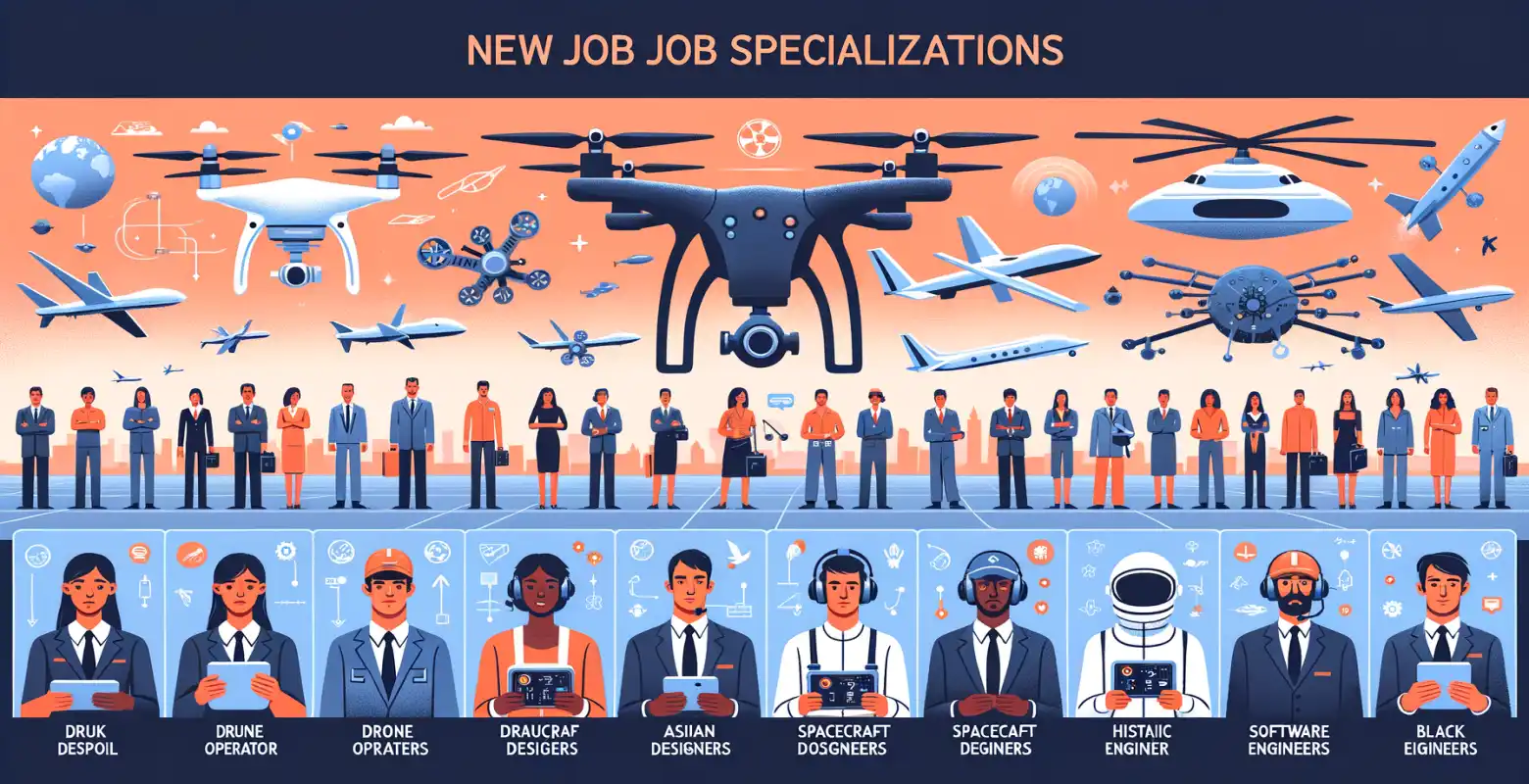
Future Trends: In the future, further development of autonomous technologies can lead to the emergence of new roles related to the control and monitoring of unmanned systems. Additionally, the development of urban air mobility (UAM) will require specialists in air traffic management in urban spaces.
Summary
New professional specializations in the aviation industry are a response to changing technological and environmental needs. Specialists in AI, data analysis, sustainable development, cybersecurity, and crisis management play a crucial role in shaping the future of aviation. Investments in education and training are essential to meet these challenges and harness the potential of new technologies. For young professionals and those seeking new career challenges, the aviation industry offers many exciting career development opportunities.



Number of comments: 0