

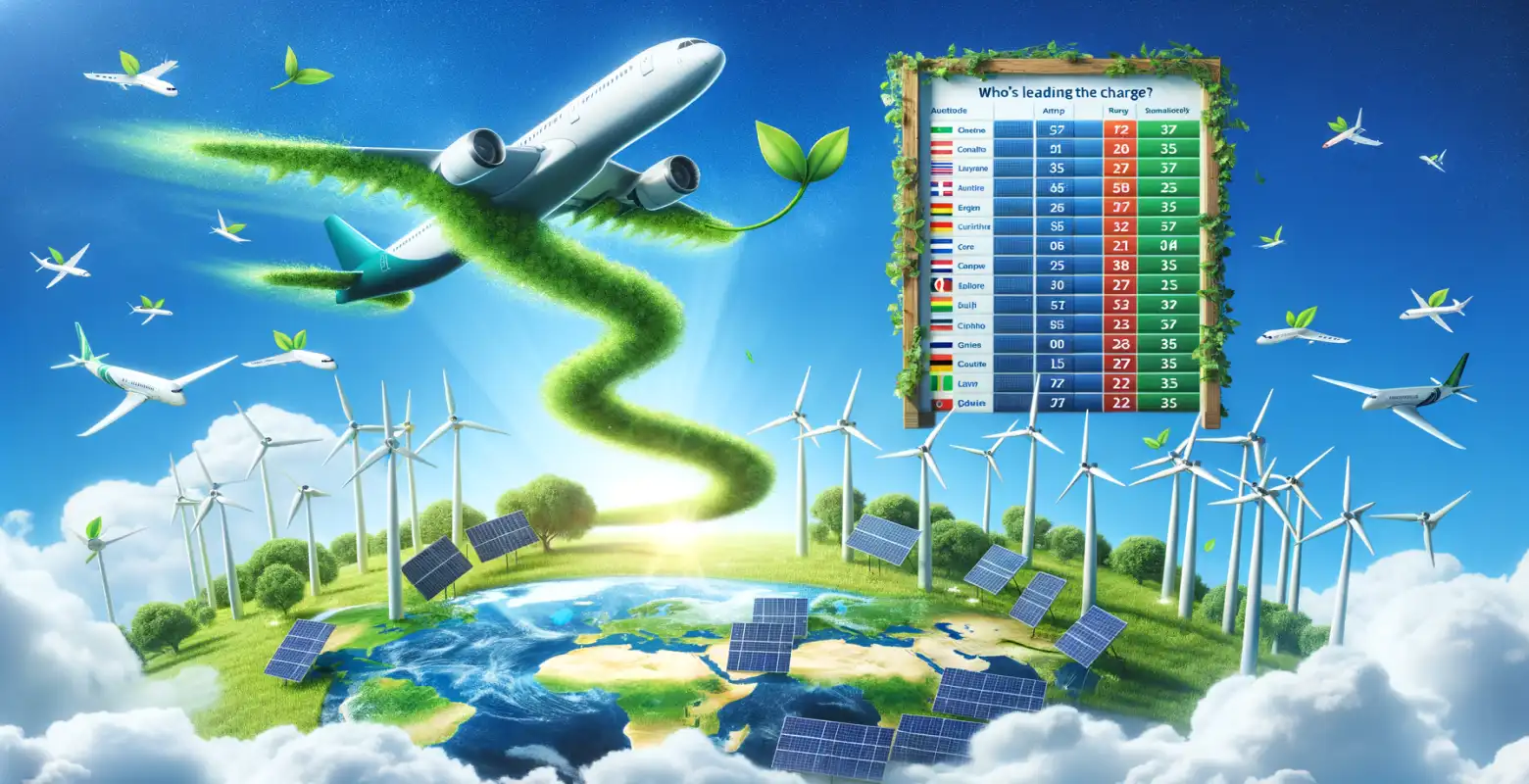
Airlines and sustainable development - who is the leader?
Introduction
Airlines play a crucial role in the global economy, enabling fast transportation of people and goods worldwide. However, the aviation industry is also one of the major emitters of carbon dioxide, which has a significant impact on the environment. As environmental awareness grows, both airlines and passengers are faced with the challenge of reducing the carbon footprint of air travel. In this context, the question of "Airlines and Sustainable Development – Who is the Leader?" gains particular importance. In this article, we will examine which airlines are making the greatest efforts towards sustainable development, what technologies and strategies are being implemented, and what challenges and opportunities are associated with this process.
Sustainable Development in Aviation: Definition and Importance
Sustainable development in the context of aviation refers to practices and technologies that minimize the negative impact of flights on the environment, while maintaining economic and social efficiency. This includes reducing CO2 emissions, noise reduction, efficient fuel management, and investments in new technologies, such as electric aircraft or alternative fuels. The importance of sustainable development is not only a matter of social responsibility but also a regulatory requirement, due to increasing pressures from governments and international organizations.
Historical Approach to Sustainable Aviation
The beginnings of interest in sustainable aviation date back to the 1960s and 1970s when attention was drawn to the problem of aircraft noise and air pollution. In the following decades, with technological advancements and regulatory changes, airlines began investing in more efficient engines and lighter construction materials. The introduction of turbofan engines, such as the CFM56, led to a significant reduction in fuel consumption and CO2 emissions. However, the real breakthrough came in the early 21st century, with increasing pressure to reduce greenhouse gas emissions and develop new technologies.
Technological Innovations in Aviation
One of the key areas of innovation is sustainable aviation fuels (SAF). These fuels, produced from biomass or waste, can reduce CO2 emissions by up to 80% compared to traditional aviation fuels. Airlines such as KLM, Lufthansa, and British Airways are intensively investing in the development and testing of SAF. Another innovation is electric and hybrid aircraft, which, although still in development, promise a significant reduction in emissions and noise. Companies like Airbus and Boeing are working on prototypes that could revolutionize the industry in the coming years.
Leaders in Sustainable Aviation Development
Different airlines adopt different approaches to sustainable development. Among the leaders, Scandinavian Airlines (SAS) stand out, as they have committed to achieving carbon neutrality by 2050. SAS is investing in fleet modernization, increasing operational efficiency, and developing SAF. Another example is Qatar Airways, which is collaborating with Rolls-Royce on the development of lower-emission engines. Delta Air Lines, the world's largest airline, has invested billions of dollars in fleet modernization and the introduction of new technologies, leading to a significant reduction in their carbon footprint.
Challenges and Barriers in Pursuing Sustainable Aviation
Despite numerous successes, the aviation industry faces many challenges in achieving full sustainable development. High costs of implementing new technologies, limited availability of sustainable fuels, and the need for global cooperation and regulation are significant barriers. Additionally, the COVID-19 pandemic has caused significant financial losses in the industry, which may delay investments in sustainable development. However, initiatives like CORSIA (Carbon Offsetting and Reduction Scheme for International Aviation) demonstrate that a global approach to emissions reduction is possible and necessary.
The Future of Sustainable Aviation
The future of sustainable aviation lies in further technological development and international cooperation. New generations of electric-powered aircraft and more efficient air traffic management technologies are expected to emerge in the coming decades. Investments in research and development, as well as passenger education and environmental awareness, will be crucial for further progress. Airlines that take a proactive approach to sustainable development can gain a competitive advantage and contribute to a more environmentally friendly future of aviation.
Summary
Sustainable development in aviation is not just a trend but a necessity in the face of growing environmental awareness and regulatory requirements. Airlines such as SAS, Qatar Airways, and Delta are leading the race towards a more ecological future by investing in new technologies and alternative fuels. Despite many challenges, such as high costs and the need for global cooperation, the aviation industry has the opportunity to play a key role in combating climate change. For passengers, this means the possibility of choosing more environmentally friendly travel, and for the entire sector, the chance to develop in line with the principles of sustainable development.



Number of comments: 0