

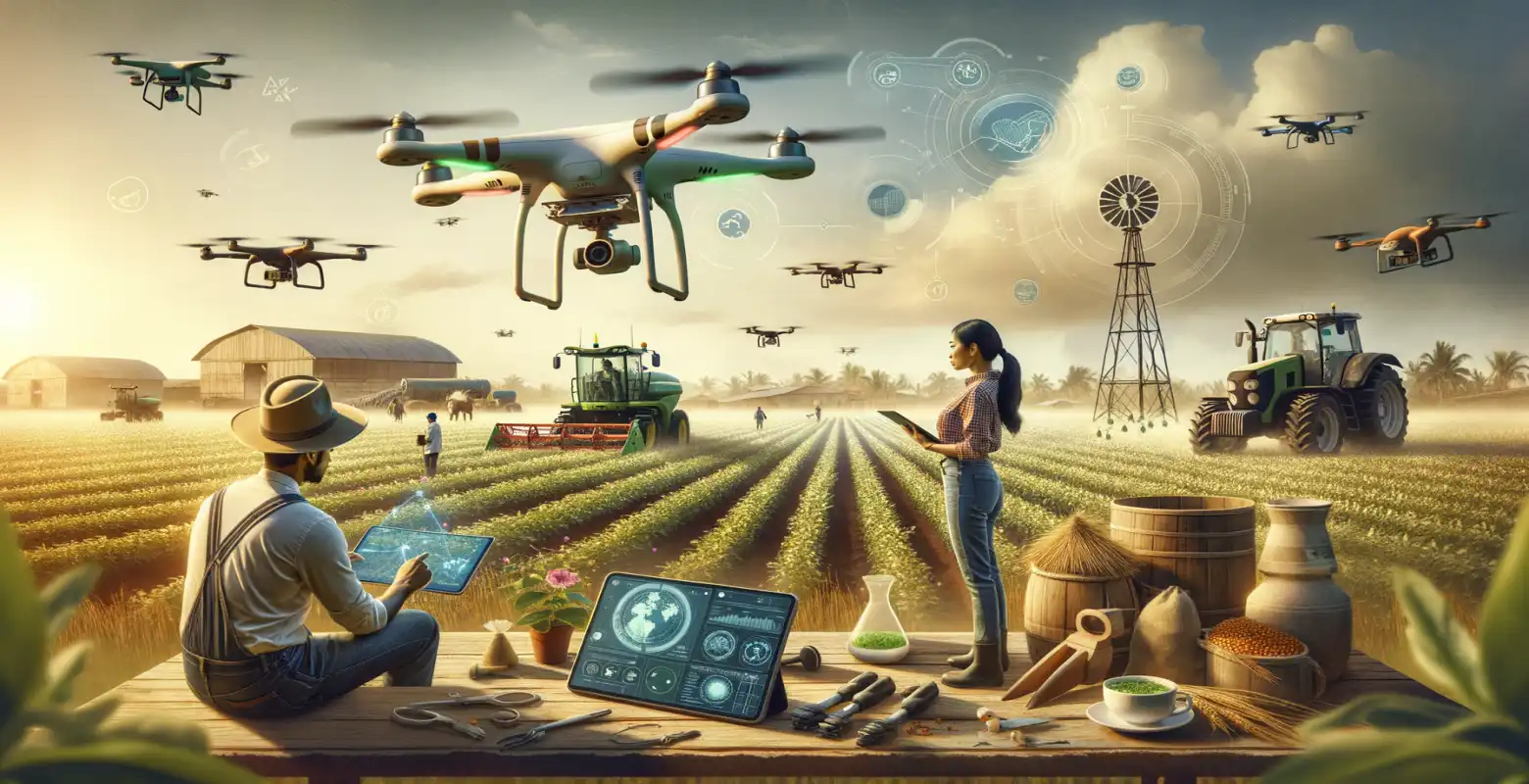
Drones in agriculture - how does technology support farmers?
Introduction
Drones, also known as Unmanned Aerial Vehicles (UAVs), have become an integral part of modern agriculture. In the era of digitalization and dynamic technological development, drones offer farmers new possibilities in terms of crop monitoring, precise resource management, and optimization of production processes. Their application not only increases efficiency but also contributes to sustainable development and environmental protection. In this article, we will examine how drones support farmers, what benefits they bring, and what challenges are associated with their implementation.
History and Development of Drone Technology in Agriculture
The use of drones in agriculture is not a completely new phenomenon. The beginnings of their application date back to the 1980s when simple models were experimented with for crop monitoring. However, it was only in the last two decades, thanks to technological progress, that drones have become widely available and more advanced.
Over the years, drones have undergone significant evolution. The initial models were relatively primitive and limited in their capabilities. Today's drones are equipped with advanced navigation systems, high-resolution cameras, and multispectral sensors, allowing for precise monitoring of plant and soil conditions.
Applications of Drones in Agriculture
Crop Monitoring
One of the main applications of drones in agriculture is monitoring crop conditions. With multispectral cameras, drones can capture images in various spectral ranges, allowing for the detection of issues such as nutrient deficiencies, diseases, or pests before they become visible to the naked eye.
Plant Health Assessment
Drones can provide detailed data on plant health through the analysis of the Normalized Difference Vegetation Index (NDVI). This index allows for the assessment of plant photosynthetic activity, which is crucial for determining their condition.
Terrain Mapping
Drones are also used to create precise terrain maps. With advanced GPS technologies and photogrammetry, it is possible to create three-dimensional field models that assist in agricultural work planning and irrigation optimization.
Benefits of Using Drones
Increased Production Efficiency
Drones enable quick and accurate data collection, leading to better resource management, such as fertilizers or water. This allows farmers to make more informed decisions, leading to increased production efficiency.
Time and Cost Savings
Traditional crop monitoring methods are time-consuming and costly. Drones can cover large areas in a short time, providing detailed information, which results in a significant reduction of operational costs.
Environmental Protection
Precise resource management using drones allows for a reduction in the use of fertilizers and pesticides, which has a positive impact on the environment. Reduced chemical consumption means less soil and groundwater pollution.
Challenges and Limitations
Implementation Costs
One of the main challenges associated with the use of drones in agriculture is the costs of their purchase and maintenance. Advanced models equipped with necessary sensors and software can be expensive, posing a barrier for many smaller farms.
Legal Regulations
Another challenge is the legal regulations regarding drone use. Many countries have strict regulations concerning airspace, which may limit farmers' operational freedom.
Technical Requirements
Handling and analyzing data collected by drones require specialized knowledge and skills. Farmers need to be properly trained, which involves additional costs and time.
The Future of Drones in Agriculture
The use of drones in agriculture has a bright future ahead. With technological advancements, drones will become increasingly affordable and functionally advanced. It can be expected that their role in agriculture will grow, contributing to further automation of processes and precision farming.
Drones can become a key element in the development of Agriculture 4.0, which is based on the integration of modern information and communication technologies with traditional cultivation methods. They will also play an important role in addressing global challenges such as climate change and increasing food demand.
Summary
Drones in agriculture are not just a passing trend but an important step towards modern and sustainable agriculture. Thanks to drones, farmers can monitor crops with unprecedented precision, save time and resources, while also caring for the natural environment. Despite certain challenges associated with their implementation, the potential of drones is immense, and their role in the future will only continue to grow. Therefore, it is worth investing in the development of this technology and educating farmers so they can fully utilize its capabilities.


Number of comments: 0