

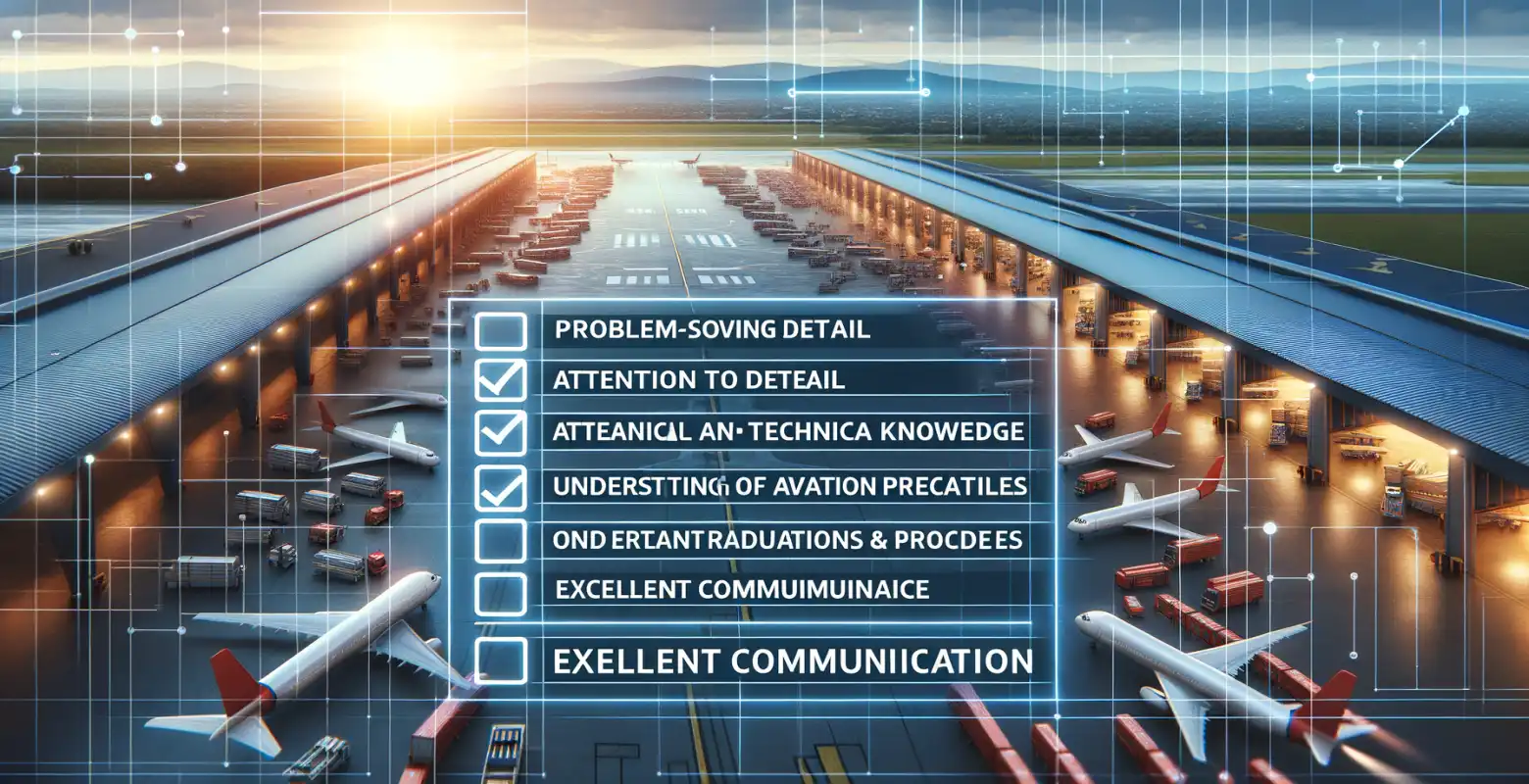
What are the key skills required for technical positions in aviation?
Introduction
Aviation is one of the most dynamically developing industries in the world. Technology and innovations in this field are constantly evolving, requiring employees to have advanced technical skills. In today's world, where safety and efficiency are key, these skills are essential to meet the demands of modern aviation. In this article, we will look at what key skills are required in technical positions in aviation, what challenges specialists face, and what trends may influence the future of this industry.
Knowledge of Aviation Systems
Aviation systems are the heart of every aircraft. Technical specialists must have a deep knowledge of navigational, communication, hydraulic, and electrical systems. This knowledge includes both theoretical understanding of how these systems work and practical skills in their operation and maintenance. Knowledge of aviation systems is crucial because failures in these systems can lead to serious flight safety risks.
Individuals working in aviation must be familiar with the latest technologies and have the ability to quickly adapt to newly implemented systems. For example, the introduction of fly-by-wire systems, which replace traditional mechanical controls with electronic signals, requires engineers to have a thorough understanding of electronics and computer science.
Analytical Skills and Problem Solving
Aviation is a field where problem-solving is part of daily routine. Engineers and technicians must be able to quickly and effectively diagnose problems and find solutions, often under time pressure. Analytical thinking skills are essential for interpreting data from various sensors and systems, allowing for the identification of potential malfunctions.
Problem-solving also requires creativity and innovation. Specialists must be open to new ideas and approaches that can improve the efficiency and safety of aviation operations. The ability to work in a team is equally important, as many problems require collaboration with other experts.
Knowledge of Regulations and Safety Standards
Safety is a top priority in aviation, so knowledge of regulations and standards is essential. Technical employees must be aware of international and national regulations regarding aviation safety, such as FAA (Federal Aviation Administration) or EASA (European Union Aviation Safety Agency) regulations.
Knowledge of regulations also includes the ability to conduct inspections and audits in line with safety requirements. Specialists must be able to accurately document and report any non-conformities and take appropriate corrective actions. Familiarity with ISO standards, such as ISO 9001 or AS9100, is an additional advantage that enhances an employee's value in the job market.
Communication Skills
Although communication skills may not seem crucial in technical work, they play a significant role. Specialists must be able to effectively communicate with other team members, pilots, as well as managers and clients. Clear and concise information sharing is necessary for efficient problem-solving and ensuring safety.
Additionally, the ability to prepare accurate technical reports and conduct presentations is often required, especially in higher positions. In an international environment, knowledge of foreign languages, such as English, is almost mandatory, enhancing communication and collaboration opportunities with foreign partners.
Knowledge of Computer Technology and Software
In today's aviation world, computer technology and software play a crucial role in flight management and aircraft maintenance. Technical specialists must be proficient in handling advanced computer systems that support diagnostics and flight control. Knowledge of CAD (Computer-Aided Design) and CAM (Computer-Aided Manufacturing) programs is often required for designing and producing aircraft parts.
With the advancement of technology, the importance of cybersecurity is also growing. Specialists must be aware of cyber threats and possess skills to protect aviation systems from such risks. Knowledge of IT and the ability to work with large databases are also increasingly valued in the industry.
Adaptation to New Technologies and Trends
Aviation is an industry that is constantly evolving, so adapting to new technologies and trends is essential. An example could be the development of satellite technologies replacing traditional navigation systems, or the introduction of unmanned aircraft (drones) requiring a new approach to airspace management.
The development of technologies related to alternative fuels and sustainable development is also changing the requirements for technical specialists. The ability to learn quickly and adapt to a changing technological environment is crucial to remain competitive in the job market.
Challenges and Future of the Aviation Industry
Working in aviation involves many challenges, such as the need for continuous skill improvement and adaptation to technological changes. The increasing importance of automation and artificial intelligence may change the way technical specialists work, requiring them to acquire new competencies.
At the same time, the future of the aviation industry is full of possibilities. The growing demand for flights, the development of space technologies, and the pursuit of more environmentally friendly solutions create new prospects for technical specialists. Therefore, it is worth investing in skill development and being open to new challenges to fully utilize the potential of this dynamic industry.
Summary
Technical positions in aviation require a wide range of skills from specialists, from knowledge of advanced aviation systems to analytical skills, and the ability to adapt to new technologies. Understanding safety regulations, communication skills, and proficiency in computer technology are other key aspects that determine success in this industry.
Aviation is a field full of challenges but also enormous opportunities, especially in the context of future trends and innovations. Therefore, it is worth investing in the development of skills and staying up-to-date with technological advancements to meet the demands of the modern job market and contribute to the development of this fascinating industry.


Number of comments: 0