

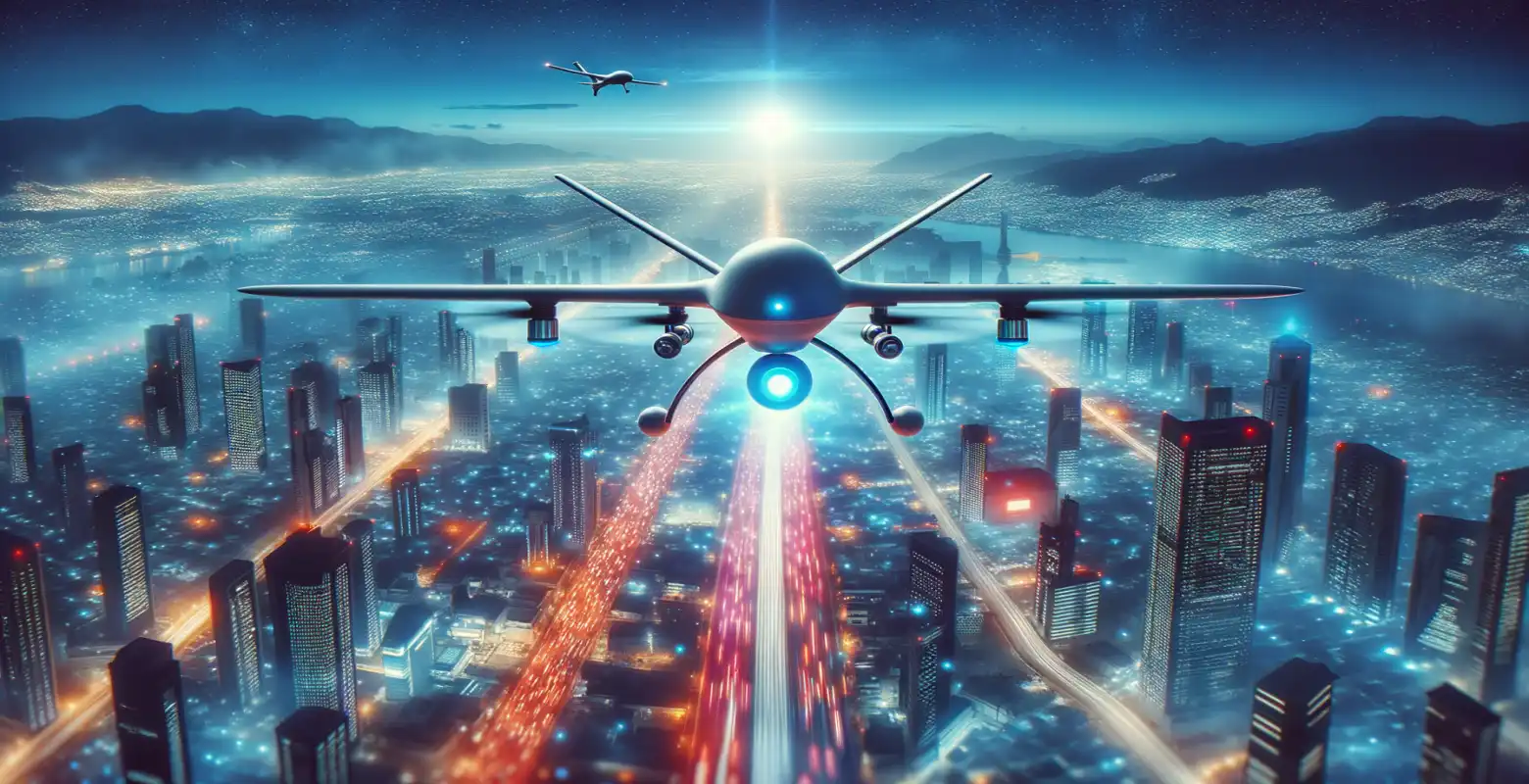
Autonomous flights - how close are we to the era of unmanned aircraft?
Introduction
Autonomous flights are one of the most fascinating achievements of modern technology. With an increasing number of drones and aircraft capable of operating without direct human involvement, we are approaching an era where unmanned flights could become commonplace. This is an extremely important and current topic because this technology holds the promise of revolutionizing transportation, logistics, and military operations. In this article, we will examine how close we are to this future, what challenges lie ahead, and what possibilities may open up for us.
History of Autonomous Flights
The beginnings of autonomous flight technology date back to the early 20th century when the first experiments with autopilots became possible due to advances in electronics and engineering. In 1912, Lawrence Sperry invented the first operational autopilot, which allowed aircraft to maintain stability during flight. Since then, this technology has evolved, leading to the development of increasingly sophisticated navigation and flight control systems.
In recent decades, the advancement of computers, sensors, and artificial intelligence algorithms has accelerated the development of autonomous flight systems. Drones, initially used mainly for military applications, have become common in civilian applications such as aerial photography, precision agriculture, and industrial inspections.
Technology Behind Autonomous Flights
Autonomous flights rely on a combination of advanced technologies, including artificial intelligence, sensors, GPS systems, and real-time data processing. Artificial intelligence enables the analysis of sensor data and real-time decision-making, which is crucial for safe and efficient flight.
Lidar and radar systems allow autonomous drones and aircraft to navigate in the environment, avoiding obstacles and detecting changes in the surroundings. By integrating data from various sources such as cameras, vision sensors, and satellite data, it is possible to create precise 3D maps of the environment, further enhancing operational safety.
Challenges Associated with Autonomous Flights
Despite impressive technological progress, the widespread implementation of autonomous flights faces a number of challenges. One of the main issues is ensuring safety. In the event of an autonomous system failure, the consequences can be catastrophic. Therefore, testing and certification of such systems are extremely rigorous.
Another challenge is the integration of autonomous flying units with existing air traffic. Implementing appropriate legal regulations and operational procedures is essential to ensure a safe airspace. Worldwide efforts are underway to develop standards and regulations that will enable the safe coexistence of traditional and autonomous aircraft.
Benefits of Autonomous Flights
Despite challenges, autonomous flights offer many benefits. Primarily, they can significantly increase the efficiency of aviation operations. With the ability to operate continuously and in challenging weather conditions, autonomous drones and aircraft can perform tasks that would be impossible or uneconomical for manned aircraft.
In the logistics sector, autonomous drones can expedite deliveries and reduce operational costs. Companies such as Amazon and Google are already testing drone deliveries, which could revolutionize the way goods are delivered to customers.
The Future of Autonomous Flights
The future of autonomous flights looks promising, but its realization requires further investments in research and development. As technology advances, we can expect autonomous flights to become more common in various sectors, from urban transportation to space exploration.
One of the most exciting directions of development is autonomous air taxis, which could revolutionize urban transportation. Several companies, including Uber and Airbus, are working on flying taxi projects that could enter the market within the next decade.
Summary
Autonomous flights are one of the most exciting fields of modern technology with the potential to revolutionize many aspects of our lives. Despite safety and regulatory challenges, technological progress in artificial intelligence and automation is bringing us closer to an unmanned era. The introduction of autonomous aviation systems can bring significant benefits in terms of efficiency, safety, and air transport accessibility. Further research, development, and international cooperation are key to ensuring that the future of autonomous flights becomes a reality.



Number of comments: 0