

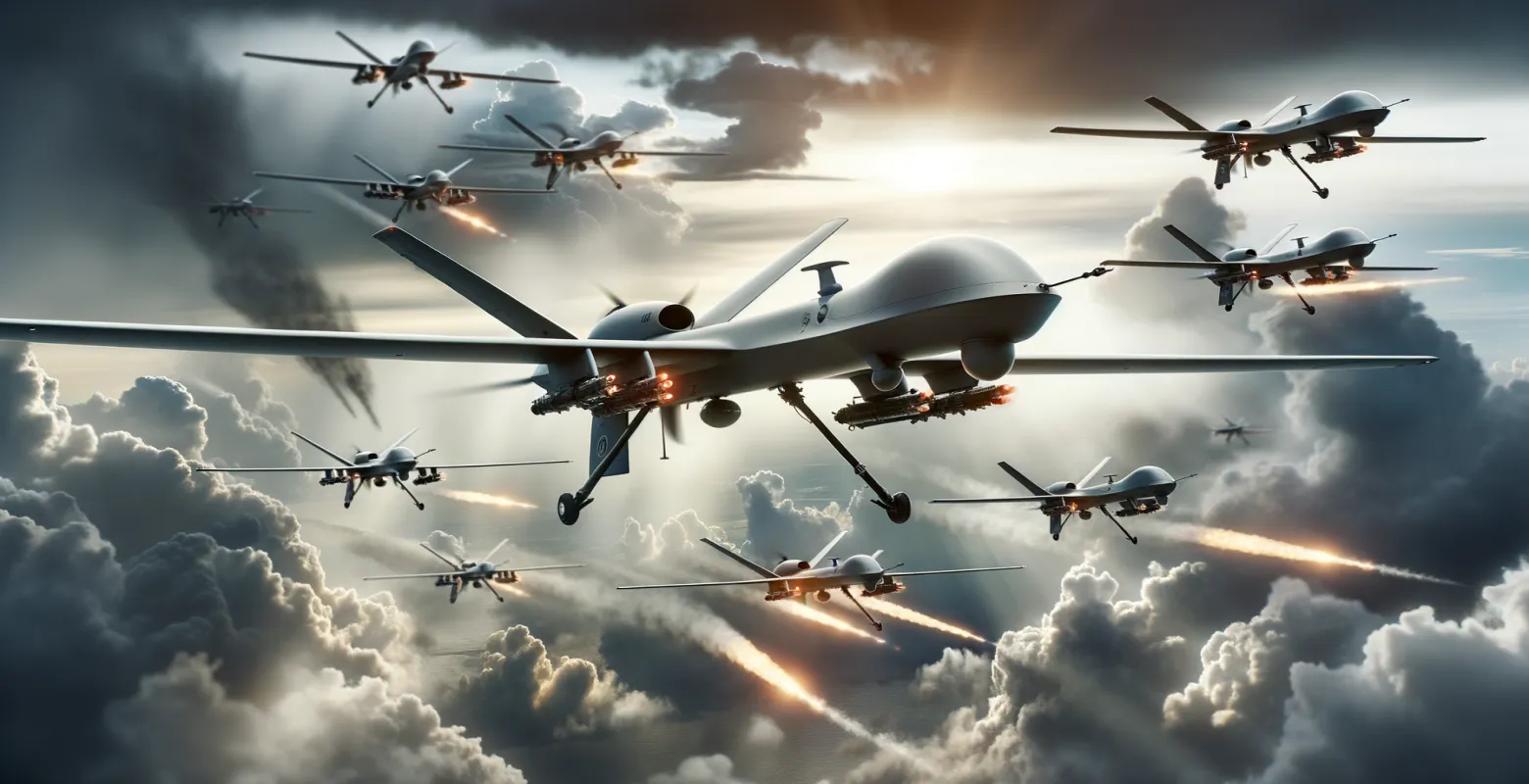
Combat drones - the future of military aviation
Introduction
Combat drones, also known as Unmanned Aerial Vehicles (UAVs), are one of the most advanced tools in the arsenal of modern armed forces. Their increasing popularity and technological development make them an integral part of contemporary military operations. In an era of dynamic changes in the global security environment, combat drones offer new capabilities that can both support and transform traditional military strategies. Before delving into details, it is worth understanding why combat drones are so significant and what importance they hold for the future of military aviation.
History and Development of Combat Drones
Although drones may seem like a modern invention, they have their roots in the 20th century. The first attempts to create unmanned aerial vehicles date back to the period of World War I, when various forms of remotely controlled aircraft were experimented with. However, the real development of drone technology began in the 1980s when the first models capable of conducting reconnaissance and surveillance missions emerged.
In the 1990s and early 21st century, advancements in communication technology and miniaturization allowed drones to play an increasingly significant role in military operations. A pivotal moment was the use of Predator drones by the United States Air Force during conflicts in the Middle East, demonstrating their effectiveness in combat and reconnaissance missions.
Technical Aspects of Combat Drones
Combat drones vary in terms of size, range, armament, and purpose. Popular models like the MQ-9 Reaper are capable of carrying various types of weaponry, including missiles and precision bombs, making them extremely versatile combat tools.
Drone technology is based on advanced satellite navigation systems, communication systems, and stealth technology, enabling them to evade detection by enemy radar systems. Artificial intelligence is also a crucial element, allowing drones to autonomously make decisions during missions.
Advantages of Using Combat Drones
One of the greatest advantages of combat drones is their ability to operate in challenging and dangerous conditions without risking the lives of pilots. This allows them to be utilized for reconnaissance missions in high-risk areas and for precise attacks on high-value targets.
Drones are also more cost-effective to operate than traditional military aircraft, enabling more frequent and longer missions. Their ability to conduct operations for many hours continuously is a key factor in long-distance operations.
Challenges and Limitations of Combat Drones
Despite numerous advantages, combat drones also face certain challenges and limitations. One of them is communication interference, which can lead to loss of control over the drone. There is also a risk of cyberattacks that could take control of the drone or disrupt its operations.
Another challenge is the legal and ethical implications of using drones in military operations. Decisions made by autonomous systems may raise controversies regarding accountability for wartime actions and their impact on civilian populations.
The Future of Combat Drones and Their Impact on Military Aviation
The future of combat drones looks promising, and their technological development shows no signs of slowing down. It is anticipated that in the coming years, drones will become increasingly autonomous, reducing the need for direct operator supervision. The introduction of drone swarms, capable of cooperating in groups, will enhance their effectiveness in combat missions.
The development of drone technology will also influence military strategies and the organization of armed forces. The ability to conduct unmanned operations may change mission planning and reduce the need for physical presence on the battlefield, consequently reducing risks for military personnel.
Summary
Combat drones are a crucial element in the future of military aviation, offering new capabilities in combat and reconnaissance operations. Despite challenges related to security and ethics, the technological advancement of drones brings benefits in terms of increased operational efficiency and safety. Further investments in research and development of drones will undoubtedly have a significant impact on shaping the future of global security strategies.



Number of comments: 0