

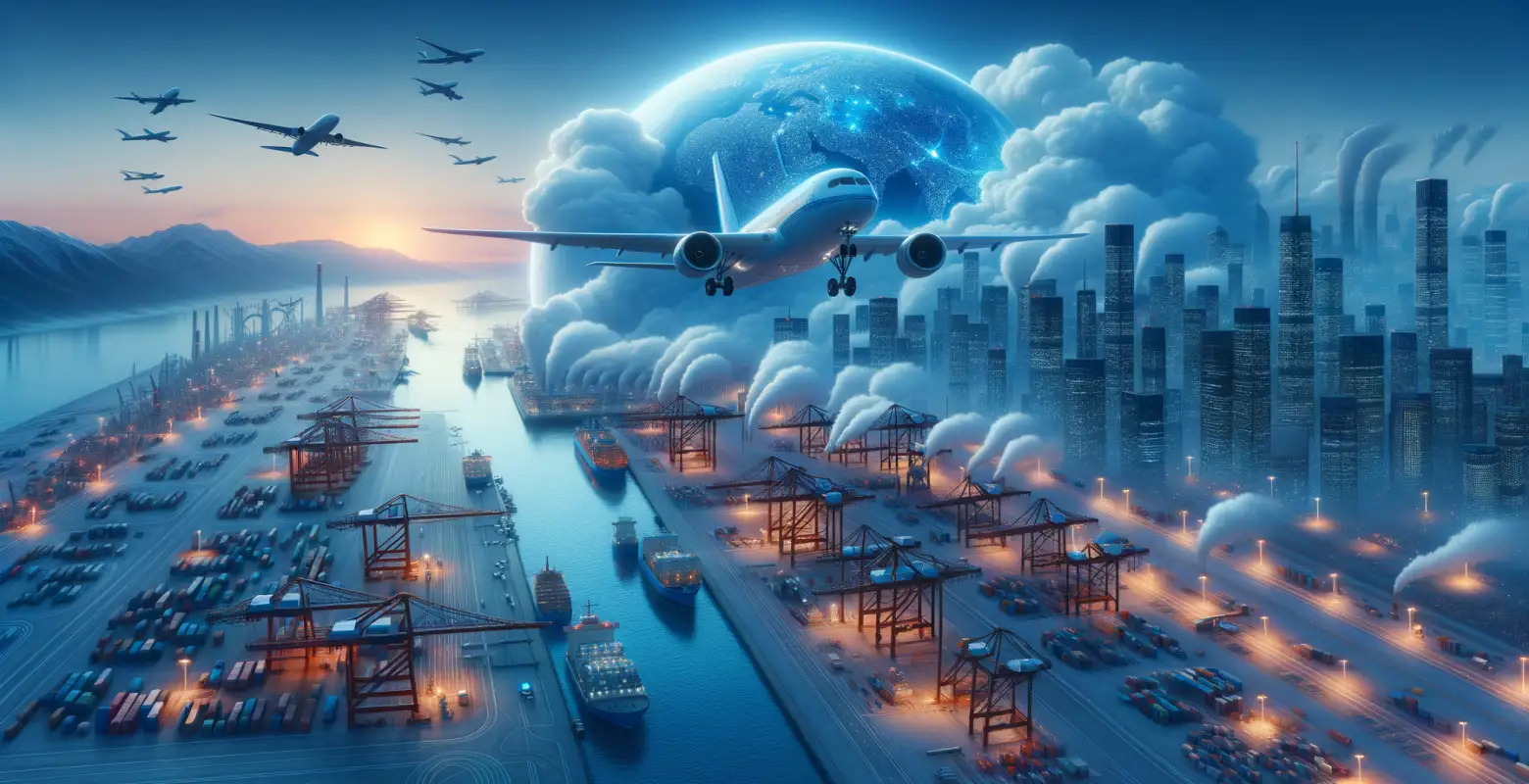
The impact of climate policy on the development of civil aviation
Introduction
The impact of climate policy on the development of civil aviation is a topic that is gaining importance in the context of global efforts to limit greenhouse gas emissions. Civil aviation, being a key element of the global economy and mobility, is also one of the sectors that significantly contribute to carbon dioxide emissions. In recent years, growing ecological awareness and international agreements, such as the Paris Agreement, are setting new standards and challenges for the aviation industry. In this article, we will examine how climate policy influences the development of this sector, what potential challenges and benefits are, and what trends can be observed in the future.
Climate policy and aviation emissions
Climate policy worldwide focuses on reducing greenhouse gas emissions, and civil aviation is one of the sectors that must comply with these requirements. According to the International Civil Aviation Organization (ICAO), this sector accounts for approximately 2-3% of global CO2 emissions. Therefore, various initiatives have been introduced to reduce the carbon footprint of aviation.
The CORSIA Initiative (Carbon Offsetting and Reduction Scheme for International Aviation) is one of the key actions to limit emissions. CORSIA requires airlines to offset their emissions by purchasing carbon credits, aiming to achieve carbon neutrality by 2050. This program is an example of how international regulations influence the operational strategy of airlines.
Technological innovations as a response to climate challenges
The aviation industry is heavily investing in the development of new technologies aimed at reducing emissions and increasing fuel efficiency. Next-generation aircraft, such as the Boeing 787 Dreamliner or Airbus A350, are designed for higher energy efficiency. By using lighter composite materials and modern engines, these aircraft consume less fuel, resulting in lower emissions.
Aviation biofuels is another area gaining importance. Biofuels, as an alternative to traditional fossil fuels, can significantly reduce CO2 emissions. Although their production and use are currently limited by high costs, technological advancements and increased scale could make them more competitive in the future.
Challenges facing the aviation industry
Despite numerous initiatives and technological progress, the aviation industry faces many challenges. The costs of implementing new technologies and adapting to climate regulations are significant, which can affect ticket prices and flight availability. Furthermore, the COVID-19 pandemic has shown how sensitive the aviation sector is to global crises, further complicating investments in green technologies.
Airspace management is another challenge. Optimizing flight routes and better airspace management can contribute to reducing fuel consumption and emissions. The implementation of modern air traffic management systems, such as SESAR in Europe or NextGen in the USA, aims to improve efficiency and reduce environmental impact.
Benefits of implementing climate policy
Despite challenges, climate policy also brings benefits to the aviation sector. Adapting to new requirements can be an impetus for innovation and the adoption of more sustainable business practices. By contributing to emission reductions, the aviation industry can improve its reputation and gain the trust of customers who are increasingly choosing eco-friendly services.
Increased competitiveness is another benefit. Airlines that are the first to introduce modern, environmentally friendly technologies can gain a competitive advantage in the market. Cost efficiency resulting from lower fuel consumption and the ability to offer innovative services attract both investors and passengers.
The future of civil aviation in the context of climate policy
The future of civil aviation is closely linked to the development of climate and technological policies. It is expected that in the coming decades, we will see further development of electric and hybrid aircraft that could revolutionize the way we travel. The development of infrastructure for new technologies, such as charging stations for electric aircraft, will be crucial for their success.
International cooperation will also play a significant role. Global problems require global solutions, and cooperation between governments, international organizations, and the private sector is essential for effectively implementing climate policy in aviation.
Summary
The impact of climate policy on the development of civil aviation is a complex and multifaceted issue. Faced with increasing environmental requirements, this sector must confront numerous challenges, but at the same time has the opportunity for growth through innovation and the implementation of sustainable practices. Adapting to new climate regulations can bring benefits to both the environment and the industry itself, contributing to its long-term development and competitiveness. In this rapidly changing reality, key will be further investment in new technologies, international cooperation, and understanding the needs of modern travelers.



Number of comments: 0