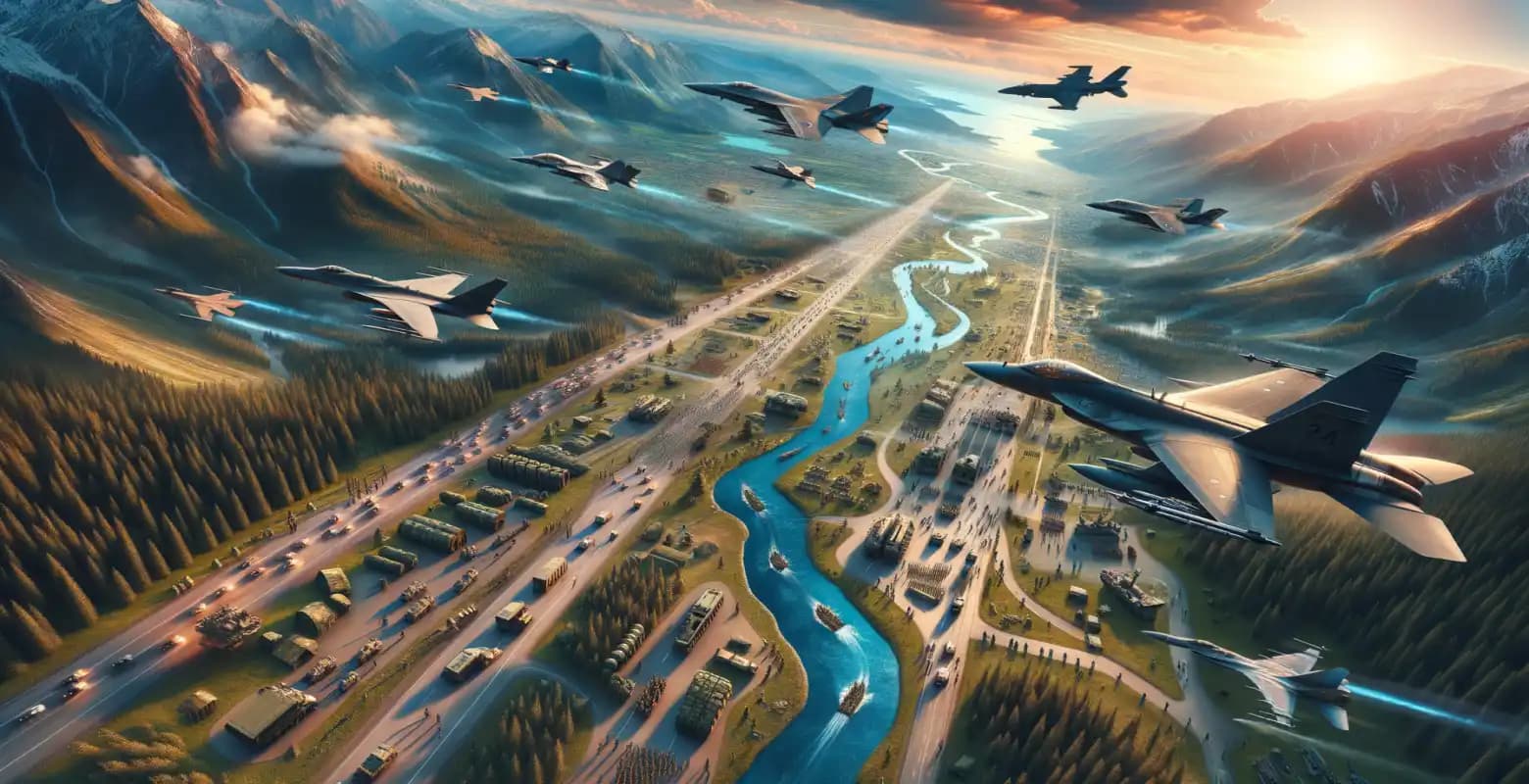
Review of the latest military exercises involving the air force.
Introduction
The contemporary security environment is more dynamic and complex than ever before. Faced with escalating geopolitical tensions and rapidly evolving technologies, countries around the world are intensifying their efforts to modernize their armed forces and enhance their combat capabilities. Military exercises involving air forces are a key element of these efforts, allowing for the testing of new strategies, equipment, and cooperation with allies. In this article, we will examine the latest military exercises involving air forces, analyzing their purpose, course, and significance for international security.
The Latest Military Exercises: Overview and Significance
Military exercises are comprehensive maneuvers aimed at preparing the armed forces for real combat scenarios. In recent months, we have witnessed an increase in the number and intensity of exercises involving air forces, in response to changing security challenges. For example, in August 2023, NATO organized the "Air Defender 2023" exercises, in which a total of 25 countries participated. These maneuvers were aimed at strengthening defensive capabilities in the Baltic Sea region and were the largest of their kind in several decades.
These exercises allow for the testing of the latest technologies, such as fifth-generation aircraft and missile defense systems. Their significance lies not only in assessing operational readiness but also in enhancing international cooperation. Joint maneuvers build trust among allies and enable the exchange of experiences and best practices.
Technological Innovations in Air Forces
One of the key aspects of contemporary military exercises is the testing of new technologies. In recent years, the air forces of many countries have invested significant resources in the development of stealth technology, combat drones, and advanced radar systems. For example, during the Red Flag exercises in the United States, electronic warfare systems are tested, which can disrupt enemy communication and protect own units.
Drones are becoming an increasingly important element of air forces, offering the ability to conduct reconnaissance and strike missions without risking the lives of pilots. Their use during exercises allows for the assessment of effectiveness in various combat scenarios and integration with manned aviation units.
Challenges and Benefits of Contemporary Military Exercises
While military exercises bring many benefits, they are not without challenges. One of the main issues is the cost of organizing such maneuvers, which can reach millions of dollars. Additionally, there is a risk of escalation of international tensions, especially when exercises take place near the borders of a potential adversary.
However, the benefits of military exercises are invaluable. They not only increase combat readiness but also identify and eliminate operational weaknesses. Furthermore, joint exercises with allies strengthen cooperation and coordination at the international level, which is crucial in the face of global threats.
Future Trends: What Lies Ahead?
Looking to the future, we can expect a further increase in the importance of military exercises involving air forces. The development of technologies such as artificial intelligence and autonomous combat systems will change the way maneuvers are conducted. In the coming years, we can anticipate a greater emphasis on integrating different combat domains, including cyberspace and outer space.
Exercises like "Defender Europe" demonstrate that the future of air forces will be based on even greater international cooperation and the use of advanced technologies to protect common interests. In the face of new threats, the flexibility and adaptability of air forces will remain crucial.
Summary
Military exercises involving air forces play a crucial role in ensuring international security. They enable the testing of new strategies and technologies, as well as strengthening cooperation with allies. Despite the challenges associated with organizing such maneuvers, their importance for maintaining global stability is undeniable.
In the rapidly changing security environment, countries around the world must continue to invest in modernizing their armed forces and developing technologies that will enable them to effectively respond to future threats. Maintaining combat readiness and international cooperation will remain key elements of defense strategies in the 21st century.