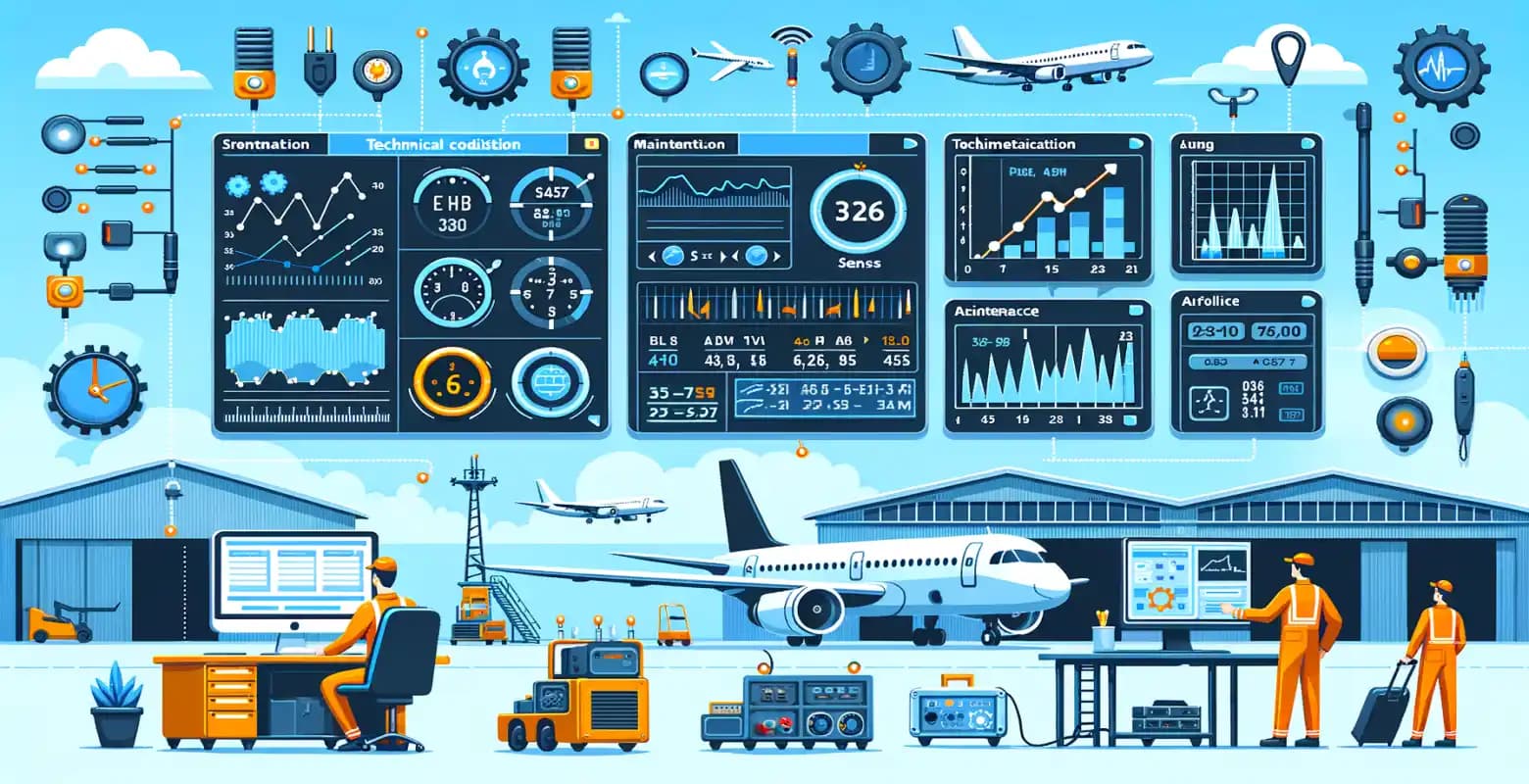
What technologies monitor the technical condition of airplanes?
Introduction
Safety and reliability are key aspects in aviation, and technologies monitoring the technical condition of aircraft play a crucial role in this. Thanks to advanced diagnostic systems, airlines can better manage their fleets, minimizing the risk of failures and increasing operational efficiency. In the era of globalization and increasing air traffic, the importance of these technologies is growing, making them an extremely significant topic for both the aviation industry and travelers. In this article, we will examine what technologies are currently used to monitor the technical condition of aircraft, what advantages they have, and what challenges they face in the future.
Sensor Technologies and Aircraft Health Monitoring
One of the most basic elements of monitoring the technical condition of aircraft are sensors. Modern aircraft are equipped with hundreds of sensors that monitor various aspects of their operation. These sensors can measure temperature, pressure, vibrations, fuel consumption levels, and many other parameters. Data from sensors is transmitted to central computer systems, which analyze them in real-time.
Examples of sensor applications: Jet engines use sensors to monitor temperature and pressure at various stages of the combustion process. In case of deviations from the norm, these systems can automatically report the issue to maintenance personnel, allowing for quick corrective actions.
Aircraft Health Management Systems (AHMS)
Aircraft Health Management Systems (AHMS) are advanced analytical tools that integrate data from various sensors and other sources to create a comprehensive picture of the aircraft's technical condition. AHMS utilizes predictive analysis algorithms that allow for forecasting potential failures before they occur.
Advantages of AHMS: The main benefits of using AHMS include reducing unplanned downtime, optimizing maintenance schedules, and increasing safety. This enables airlines to better manage their resources and minimize operational costs.
Wireless Technologies and IoT
The development of wireless technologies and the Internet of Things (IoT) has opened new possibilities for monitoring the technical condition of aircraft. Through IoT, aircraft can communicate with ground servers in real-time, transmitting diagnostic data without the need for landing.
Examples of IoT applications: Airlines can use IoT-based systems to monitor fuel consumption, allowing for flight route optimization and cost reduction. Furthermore, wireless technologies enable remote updates of onboard software, increasing operational flexibility.
Utilizing Artificial Intelligence in Diagnostics
Artificial intelligence (AI) plays an increasingly important role in the technical diagnostics of aircraft. With advanced machine learning algorithms, these systems can analyze vast amounts of data, identifying patterns and anomalies that may indicate potential technical issues.
Advantages of AI in diagnostics: AI-based systems can automatically generate diagnostic reports, significantly speeding up the process of issue identification and resolution. Additionally, AI can be used for simulation and testing of various operational scenarios, increasing safety and reliability.
Challenges Associated with Implementing Modern Technologies
Despite numerous benefits, the implementation of modern aircraft monitoring technologies comes with certain challenges. One of the main issues is the cost of implementing and maintaining advanced diagnostic systems. Moreover, integrating new technologies with existing onboard systems can be complex and time-consuming.
Other challenges: As technologies become increasingly advanced, there is a growing need to ensure adequate cybersecurity measures. Protecting diagnostic data from potential threats becomes a priority for airlines.
The Future of Aircraft Monitoring Technologies
In the future, we can expect further development of technologies monitoring the technical condition of aircraft. One direction of development is the integration of diagnostic systems with big data technologies, allowing for even more precise data analysis and forecasting potential issues. Additionally, the development of drone technologies may contribute to more efficient monitoring of the external condition of aircraft.
Trends for the future: As technologies become more integrated, we can also expect increased automation of maintenance processes, which in turn will lead to further reduction of operational costs and increased efficiency.
Summary
Technologies monitoring the technical condition of aircraft play a key role in ensuring safety and operational efficiency in aviation. With advanced sensor systems, AHMS, IoT, and artificial intelligence, airlines can better manage their fleets, minimizing the risk of failures and optimizing costs. Although the implementation of these technologies poses some challenges, their development and implementation are inevitable in the context of the growing demands of the aviation market. In the future, we can expect further integration of these technologies with innovative solutions, contributing to even greater safety and efficiency in the aviation industry.