

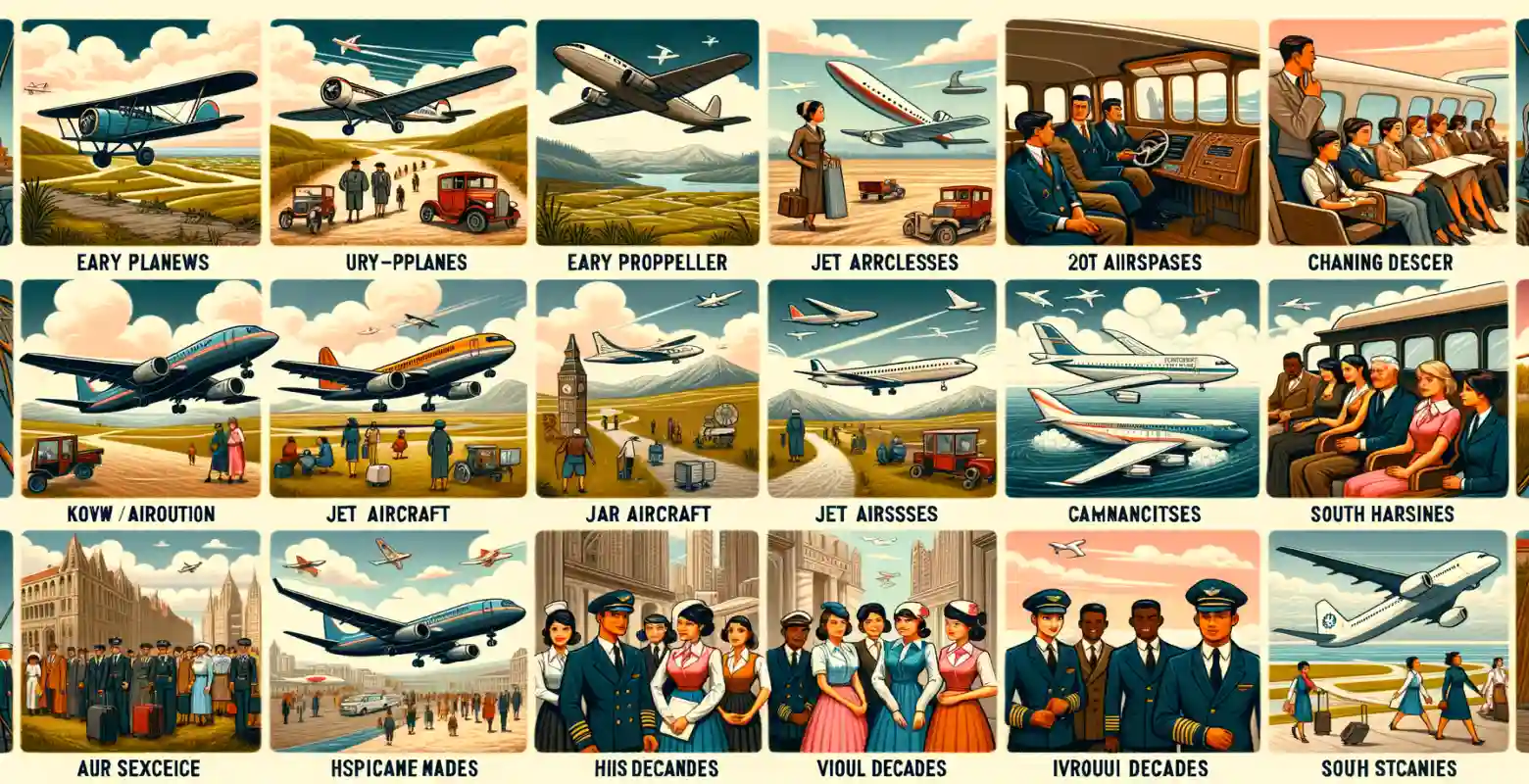
How did aviation change travel in the 20th century?
Introduction
Aviation is one of the most fascinating and dynamically developing areas of technology in the 20th century. With its advancement, our approach to travel has also changed. It revolutionized the way we move around the world, reducing the time needed to cover long distances and connecting cultures and economies in a way previously unattainable. In this article, we will examine how aviation has influenced travel in the 20th century, what its beginnings were, what challenges it faced, and what perspectives it opened up for future generations. Understanding this process is crucial to appreciate how much our lives have changed thanks to the wings of airplanes.
Beginnings of Aviation: From Dreams to Reality
The first decades of the 20th century were a period of intensive research and experiments in aviation. The Wright brothers, widely recognized as aviation pioneers, made the first successful flight with a gasoline-powered airplane in 1903. This event marked the beginning of a new era in transportation history. Soon after, military aviation began to develop, especially during World War I, contributing to rapid technological progress. After the war, many military technologies found application in civil aviation, allowing for the development of the first airlines.
Development of Commercial Aviation
The 1920s and 1930s brought rapid development in commercial aviation. The first airlines, such as KLM and Lufthansa, started offering regular connections between major cities. Airplanes, initially small and uncomfortable, became increasingly technologically advanced. The introduction of aircraft like the Douglas DC-3 in the 1930s revolutionized air travel, offering greater capacity and comfort to passengers and increasing the operational efficiency of airlines.
Impact of World War II on Aviation
World War II had a significant impact on the development of aviation. The need for rapid movement of troops, supplies, and equipment made aviation a key element of wartime strategies. After the war, many technologies developed during the conflict, such as jet aircraft and radar, found application in civil aviation. The jet age truly began in the 1950s, when aircraft like the Boeing 707 and Sud Aviation Caravelle started operating international passenger flights.
Jet Age: A New Quality of Travel
The 1950s and 1960s were the era of jet aircraft in aviation. The introduction of planes like the Boeing 707, Douglas DC-8, or Concorde made air travel faster, more accessible, and comfortable. Jets could cover long distances without the need for frequent stops, significantly reducing travel time between continents. As a result, transatlantic flights became commonplace, and the world began to "shrink" in the eyes of travelers.
Impact of Aviation on Globalization
The development of aviation had a huge impact on globalization. Thanks to fast and relatively inexpensive air travel, geographic barriers began to lose their significance. It became possible to quickly move goods, people, and information on an unprecedented scale. International tourism began to flourish, and people from different cultures had the chance to get to know and understand each other better. Aviation also contributed to the development of international trade, enabling the rapid transport of high-value goods.
Challenges and Issues Related to Aviation
Despite the many benefits that aviation has brought, it has not been without challenges. One of the main problems is the impact of aviation on the environment. Airplanes emit large amounts of carbon dioxide, contributing to global warming. Additionally, noise from aviation operations is a problem for residents living near airports. Modern aviation faces the challenge of reducing its carbon footprint, which requires investments in new technologies such as hybrid airplanes or biofuels.
Future of Aviation: New Technologies and Trends
The future of aviation is inseparably linked to the development of new technologies. There is increasing emphasis on ecological solutions that will help reduce the negative impact of aviation on the environment. Electric aircraft, hybrid technologies, and biofuels are just some of the directions in which contemporary aviation is evolving. Moreover, innovations such as supersonic passenger aircraft or flying taxis may soon become a reality, further changing the way we travel.
Summary
Aviation in the 20th century revolutionized travel, enabling fast and comfortable movement over long distances. From humble beginnings, through dynamic post-war development, to contemporary environmental protection challenges, aviation constantly transforms our lives and how we perceive the world. While the industry faces numerous challenges, the future of aviation seems to be as exciting as its past. It is important that we remember to responsibly develop this technology so that we can enjoy its benefits while also protecting our planet.


Number of comments: 0