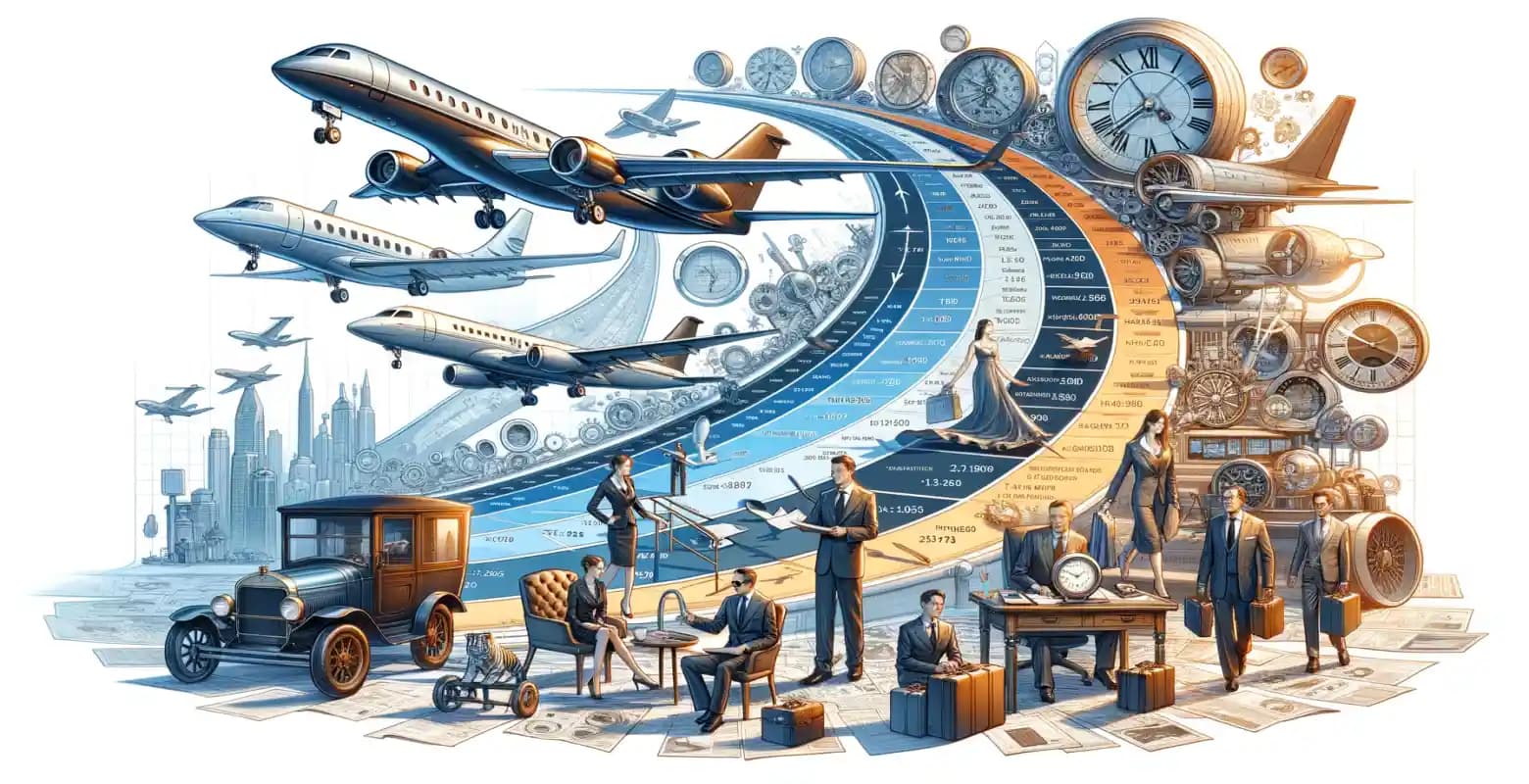
The history of the development of private aviation
Introduction
Private aviation, although not as commonly discussed as commercial or military aviation, plays a crucial role in the global transportation system. From the early 20th century, when the first flying machines gained popularity, to modern times, where luxurious jets and helicopters are symbols of status, private aviation has come a long way. In this article, we will explore the history of private aviation, its technical and social aspects, and future trends that may impact this industry.
Beginnings of Private Aviation
The history of private aviation dates back to the early 20th century, when aviation pioneers such as the Wright brothers began experimenting with flying machines. However, it was Charles Lindbergh, who solo flew across the Atlantic in 1927, who became an icon, inspiring many to take an interest in aviation. During those times, airplanes were a luxury only available to the wealthiest individuals, and their use was mainly limited to recreation and short trips.
In the 1930s, private aviation began to develop with the introduction of new, more reliable and economical aircraft. Companies like Piper and Cessna started producing single-engine airplanes that became more accessible to the average citizen. During this period, private aviation began to gain popularity in the United States and Europe.
Private Aviation after World War II
After World War II, there was a rapid development in aviation technology, which also influenced private aviation. Many military pilots started flying privately after completing their service, contributing to the popularization of this form of aviation. The 1950s and 1960s were times when machines like the Beechcraft Bonanza or Piper PA-28 appeared on the market, becoming icons of private aviation.
During this period, the development of airports and infrastructure supporting civil aviation also contributed to the increasing popularity of private aircraft. Airports began to offer hangars, technical services, and pilot training, making it easier to own and maintain a personal aircraft.
The Era of Jets and Luxury in Private Aviation
The 1970s and 1980s saw the development of private aviation towards luxury and prestige. The emergence of business jets such as Learjet, Gulfstream, or Dassault Falcon revolutionized this market segment. Private jets became symbols of success and wealth, and owning them became a dream for many entrepreneurs and celebrities.
With advancements in aviation technology, private jets began to offer increased range, comfort, and safety. Transcontinental flights became possible, allowing owners of these machines to travel from one end of the world to the other without layovers. This made private aviation an attractive option for those who valued time and convenience.
Contemporary Private Aviation
Currently, private aviation is more accessible than ever before. Thanks to technological advancements and increased competition, the costs of aircraft production and operation have decreased, leading to greater availability of private flights. Modern solutions such as fractional ownership and private jet rentals make private aviation more flexible and accessible.
Modern technologies such as GPS, advanced navigation systems, and autopilots have increased safety and travel comfort. Private aviation has also become more environmentally friendly with the introduction of hybrid and electric-powered aircraft. Companies like Airbus and Boeing are investing in zero-emission aircraft development, which could revolutionize aviation in the coming years.
Challenges and Future of Private Aviation
Despite many advantages, private aviation faces several challenges. One of the main issues is environmental pollution and CO2 emissions. Although hybrid and electric aircraft are becoming increasingly popular, their mass-scale implementation is still limited by costs and technology availability.
Another challenge is regulation and safety. Private aviation must comply with strict regulations aimed at ensuring the safety of aviation operations. However, the growing number of private flights poses new requirements for air traffic control systems and airport infrastructure.
Looking into the future, private aviation may benefit from further technological advancements, such as autonomous aviation systems or advanced composite materials. The development of drones and VTOL (Vertical Take-Off and Landing) aircraft could also bring changes to how we perceive air transport.
Summary
Private aviation plays a key role in the global transportation system, offering not only convenience and time-saving benefits but also the ability to reach locations inaccessible to commercial aviation. Its development over the years demonstrates how technology and innovation can transform our lives. From a future perspective, private aviation faces many challenges but also significant opportunities. As technology continues to evolve, we can expect even greater accessibility and sustainable development in this exciting field.