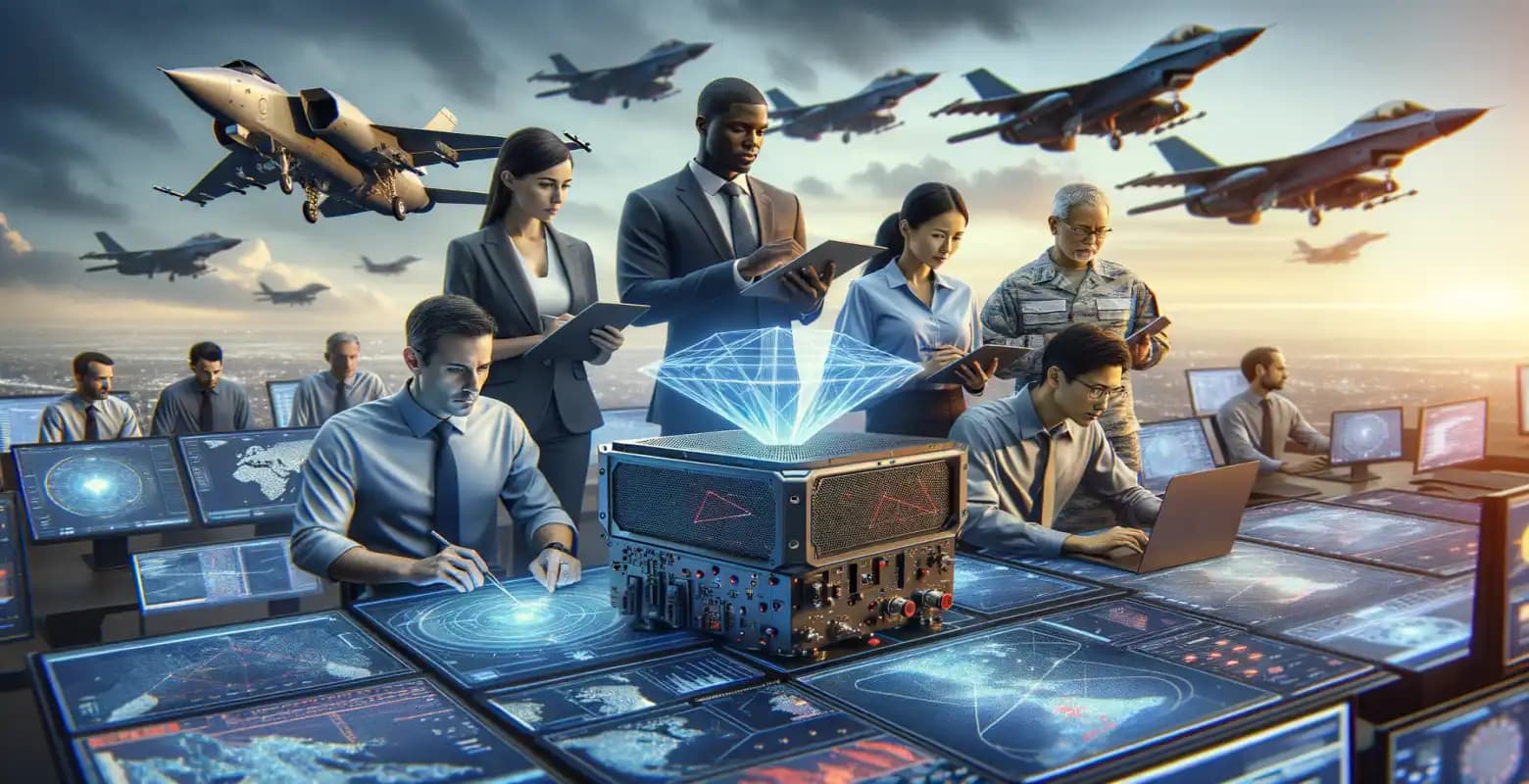
New innovations in radar technology for military aviation
Introduction
Radar technology plays a key role in military aviation, providing essential tools for navigation, threat detection, and conducting combat operations. In the era of dynamic technological development, innovations in radar technology are becoming the foundation of modern military strategy. In this context, new advancements in radar technology can significantly impact the effectiveness and safety of military operations. In this article, we will examine the latest trends and innovations in radar technology for military aviation, analyzing their significance and potential challenges.
History of Radar Technology in Military Aviation
The history of radars dates back to the early 20th century, when initial experiments with radio waves laid the foundation for this technology. A breakthrough moment was the utilization of radars during World War II, when they became a crucial element of defensive strategy. Since then, radar technology has come a long way, evolving from simple detection systems to advanced multifunctional systems.
Modern military radars employ technologies such as AESA (Active Electronically Scanned Array), which enables simultaneous tracking of multiple targets and adaptive beam management. These innovations not only increase the range and precision of radars but also enhance their resistance to interference and enemy detection.
New Technologies in Military Radars
In recent years, significant progress has been made in radar technology, encompassing both hardware and software. One of the key areas is the development of quantum radars, which leverage principles of quantum mechanics to obtain more precise and reliable data. Although this technology is still in the research phase, it has the potential to revolutionize how radars detect and track objects.
Another significant direction of development is the integration of artificial intelligence and machine learning with radar systems. This allows for faster and more precise data processing, leading to improved tactical decisions in real-time.
Advantages of New Radar Technologies
Modern radar technologies offer a range of benefits that can significantly enhance the effectiveness of military operations. Firstly, increased detection precision and range enable early threat detection and faster responses. Secondly, advanced radar systems are more resilient to electronic interference, which is crucial in today's combat environment where electronic warfare plays an increasingly significant role.
Additionally, integration with artificial intelligence systems allows for the automation of many analytical processes, relieving operators and reducing the risk of human error. All of these factors contribute to increased safety and efficiency in military actions.
Challenges Associated with Implementing New Technologies
Despite numerous benefits, the introduction of new radar technologies comes with certain challenges. Primarily, the development and implementation of advanced radar systems are costly, which may pose a barrier for many countries. Furthermore, the rapid pace of technological advancement requires continuous updating of knowledge and skills of personnel operating these systems.
Another challenge is securing new systems against cyber-attacks. In the age of digitalization, radar systems are becoming increasingly vulnerable to hacking attacks, necessitating investments in advanced security measures and cyber protection strategies.
The Future of Radar Technology in Military Aviation
Looking towards the future, further development of radar technology can be expected to focus on greater integration with other military systems, as well as on continued miniaturization and increased energy efficiency. Quantum radars, though still in development, may become the standard within the next decades, offering unprecedented precision and reliability.
Another direction is the development of stealth technologies aimed at reducing the detectability of own aircraft by enemy radars. Key innovations in materials and construction will be crucial in further enhancing stealth technology.
Summary
In conclusion, new innovations in radar technology have the potential to significantly impact the future of military aviation. Improvement in precision, increased resistance to interference, and integration with advanced analytical systems are just some of the benefits that the development of this technology brings. Despite challenges related to costs and security, investments in new radar technologies are crucial for maintaining strategic advantage in the modern combat environment. Further development and implementation of these technologies will require close collaboration between the defense industry, science, and governments to fully harness their potential.