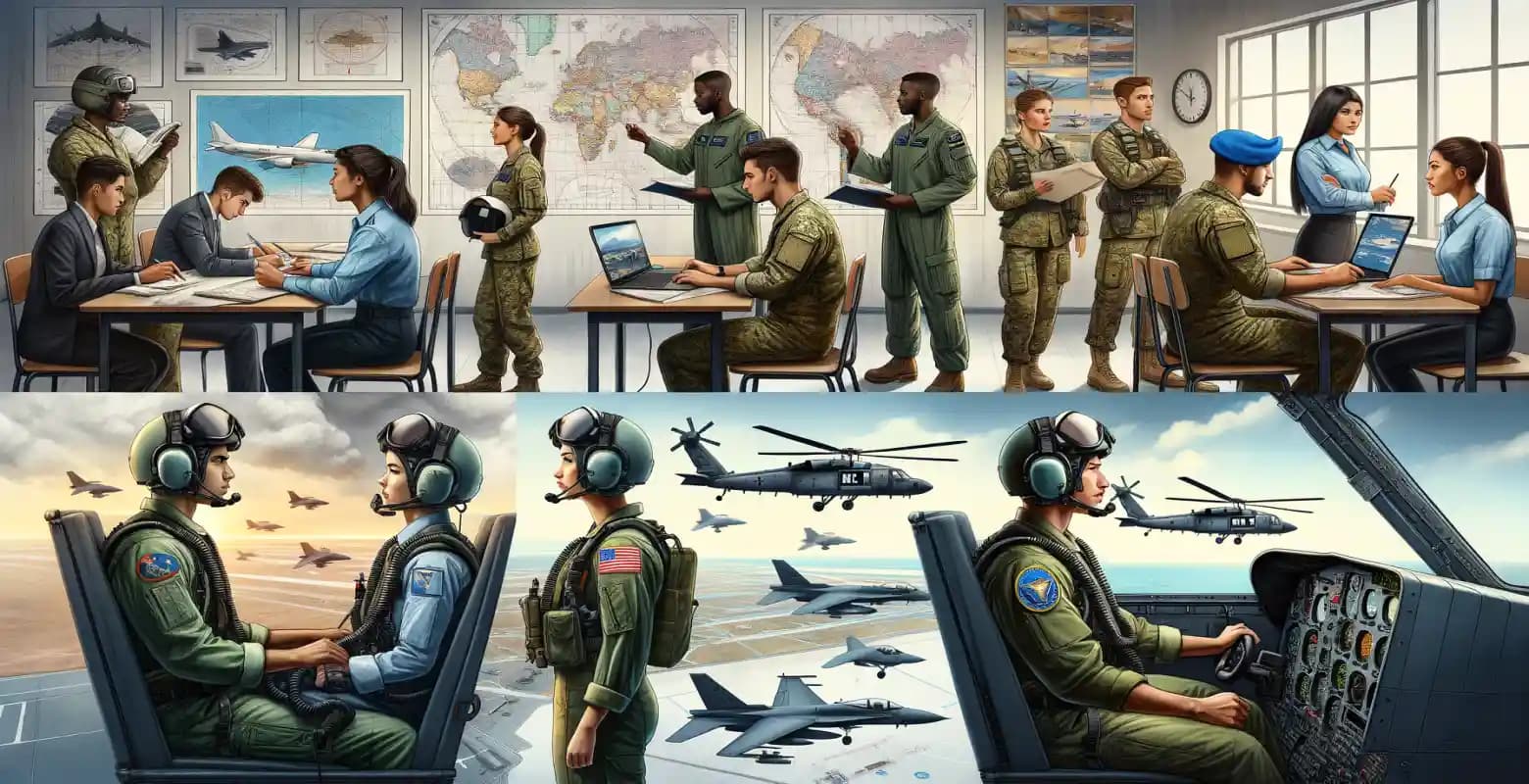
What are the stages of military pilot training?
Introduction
Military pilots training is an extremely complex and demanding process that plays a key role in ensuring national security. Preparing pilots for combat, transport, or reconnaissance missions requires not only advanced technical skills but also excellent psycho-physical condition. Therefore, the process of military pilot training is rigorous and consists of many stages that allow for comprehensive preparation for service. In this article, we will look at the various phases of this process, discussing their significance and the challenges that future pilots face.
Basic requirements and candidate selection
The training of military pilots begins with the selection of candidates. In order to apply to become a military pilot, candidates must meet a number of requirements regarding health, education, and physical fitness. Typically, they are required to have completed high school with good grades in science subjects, as well as to undergo rigorous medical examinations. Candidates must also demonstrate appropriate physical and mental fitness, the ability to work under stress, and the ability to make quick decisions.
Theoretical training
After the selection stage, candidates begin intensive theoretical training. This stage includes learning the principles of aerodynamics, meteorology, navigation, as well as knowledge of aircraft systems and safety procedures. Theoretical training is the foundation on which later practical learning is based. Candidates also learn aviation law regulations and the principles of conducting operations in various operational conditions.
Practical training and simulations
After completing theoretical learning, future pilots move on to practical training. This stage involves flight simulations on advanced simulators that faithfully reproduce the conditions in the air. Simulations allow for the safe practice of different scenarios, including emergency situations, without risking the lives of pilots and equipment. Simulators are also used for learning crew cooperation and coordination of actions in complex missions.
Training on training aircraft
The next stage is training on training aircraft, which allows pilots to gain experience in real aviation conditions. Pilots learn basic maneuvers, landing and take-off techniques, as well as flying at different altitudes and in various weather conditions. This stage requires precision and concentration from pilots, as any mistake can have serious consequences.
Specialized training
After acquiring the necessary skills on training aircraft, pilots are directed to specialized training tailored to the type of missions they will perform. This training includes learning to operate a specific type of aircraft they will be flying, as well as specialized techniques such as air refueling, night flights, or operations using weapons. Pilots also learn to cooperate with other military units and perform missions in a complex operational environment.
Advanced combat training
The final stage of training is advanced combat training, which prepares pilots for real operational missions. This stage includes exercises involving the use of weapons, air combat simulations, and tactical training. Pilots also learn teamwork and coordination of actions with other units, such as ground forces or the navy. Advanced combat training aims to prepare pilots to effectively operate in combat situations and react quickly to changing conditions on the battlefield.
Challenges and the future of military pilot training
Military pilot training is an extremely complex and costly process, and its effectiveness has a direct impact on national security. One of the main challenges is the rapid development of aviation technologies, which requires continuous updating of training programs and the introduction of new teaching methods. Another challenge is maintaining a high level of candidate selection and providing them with adequate psychological and physical support throughout the training process. In the future, military pilot training will need to increasingly integrate new technologies, such as artificial intelligence and drones, which requires further development of training infrastructure and human resources.
Summary
Military pilot training is a complex process that requires candidates to have not only excellent technical skills but also the right psychological and physical characteristics. Going through the various stages of training, from theory to advanced combat training, allows for comprehensive preparation for serving in the military aviation. In an era of dynamic technological and geopolitical changes, effective military pilot training becomes a key element in ensuring security and the effectiveness of military operations. Therefore, continuous improvement of training programs and adaptation to new challenges are essential to maintain the high quality and combat readiness of military pilots.