

Drones and nature conservation - how does technology support environmental monitoring?
Introduction
In the era of dynamic technological development, drones are gaining popularity not only in the entertainment and delivery sectors, but also in environmental protection. These remotely controlled devices offer new possibilities for monitoring nature that were previously difficult to achieve. At a time when climate change and environmental degradation are becoming increasingly challenging, the use of drones in nature conservation is of particular importance. In this article, we will look at how drones support environmental monitoring and the benefits that result from it.
Application of Drones in Nature Monitoring
Drones offer a wide range of applications in environmental monitoring. With their advanced camera and sensor systems, they can provide detailed data from hard-to-reach places. They are used for:
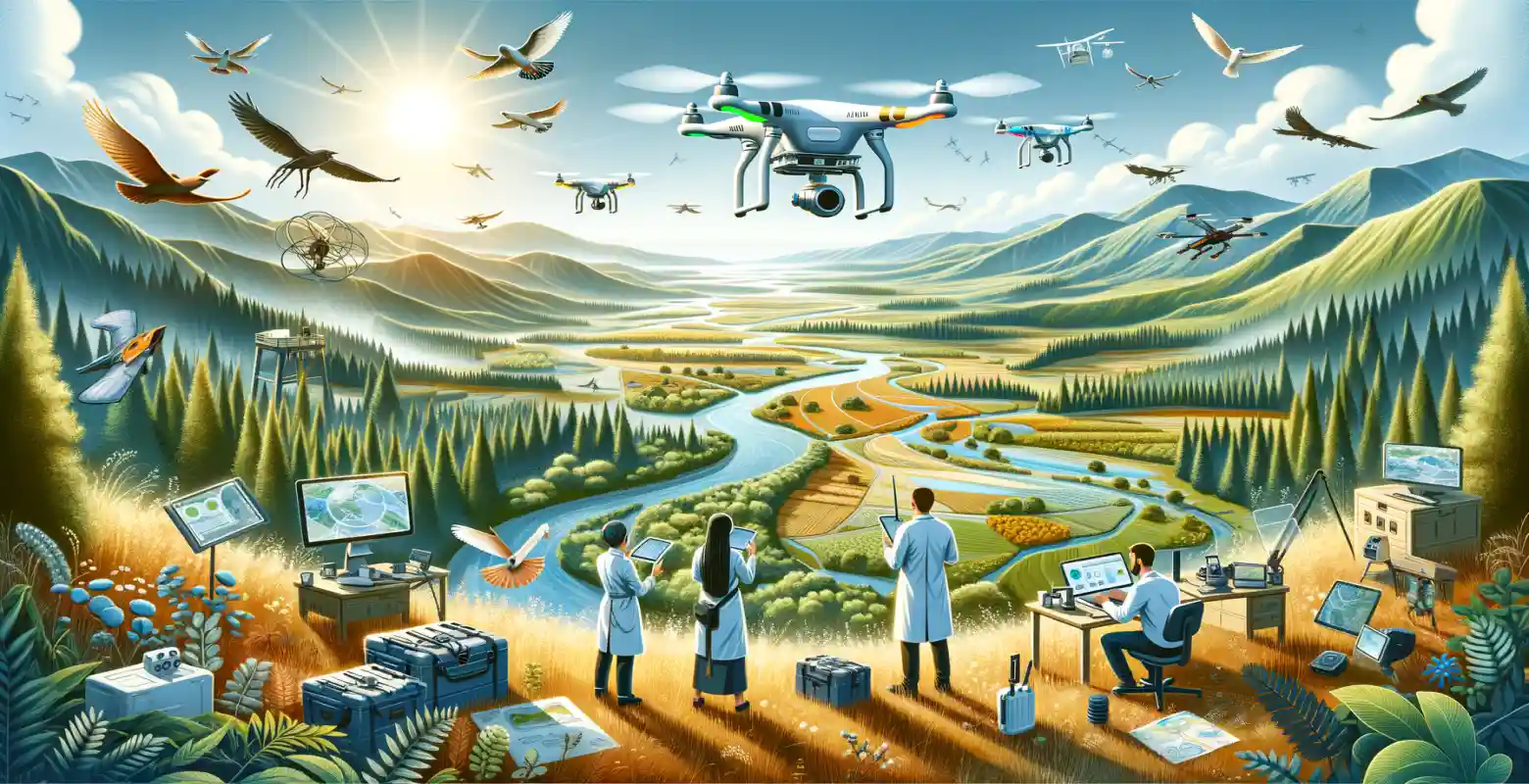
Wildlife monitoring: Drones allow researchers to track animal populations without disturbing their natural habitat. This enables a better understanding of their behaviors and needs, which is crucial for the protection of endangered species.
Forest assessment: Drones can quickly and accurately map large forested areas, which is invaluable in combating illegal tree felling or wildfires. Through aerial imagery and analysis, threats can be more easily detected and preventive actions taken.
Technical Aspects of Drones in Environmental Protection
Drones used in nature conservation are equipped with advanced technologies that allow data collection on an unprecedented scale. The equipment includes:
Thermal and multispectral cameras: These enable the study of plant health and identification of environmental stress. Thermal cameras are also useful in detecting nocturnal animals.
GPS and GIS systems: These enable precise determination of the location and coordinates of collected data, facilitating their analysis and interpretation.
Benefits of Drone Usage
Drones offer many benefits in the context of environmental protection. They primarily enable:
Cost reduction: Traditional monitoring methods, such as helicopters or airplanes, are costly and time-consuming. Drones allow for more economical data collection.
Increased accuracy: With advanced sensor systems, drones can provide high-resolution data, increasing the precision of analyses.
Technological and Regulatory Challenges
Despite numerous advantages, the use of drones in nature conservation also presents some challenges. These include:
Technical issues: Drones are sensitive to atmospheric conditions, such as wind or rain, which may limit their utility in certain situations.
Legal regulations: In many countries, regulations regarding drone use are restrictive, which may hinder their application in environmental research. Collaboration with authorities is necessary to create regulations conducive to nature conservation.
The Future of Drones in Environmental Protection
The use of drones in environmental protection is sure to evolve. It is anticipated that in the future, drones will be even more integrated with other technologies, such as artificial intelligence and machine learning, enabling even more precise analysis of collected data.
Automation and AI: Automated drones equipped with AI can autonomously collect and analyze data, significantly speeding up the monitoring and decision-making process.
Summary
Drones are a powerful tool in the hands of ecologists and researchers involved in environmental protection. Their ability to quickly and accurately collect data from hard-to-reach places makes them indispensable allies in the fight to preserve our planet. Although there are challenges associated with their use, the potential benefits outweigh these difficulties. It is therefore worth investing in the development of drone technology and promoting their application in nature conservation.
We encourage you to continue following technological advancements and engaging in actions for environmental protection to collectively contribute to a better future for our planet.


Number of comments: 0