

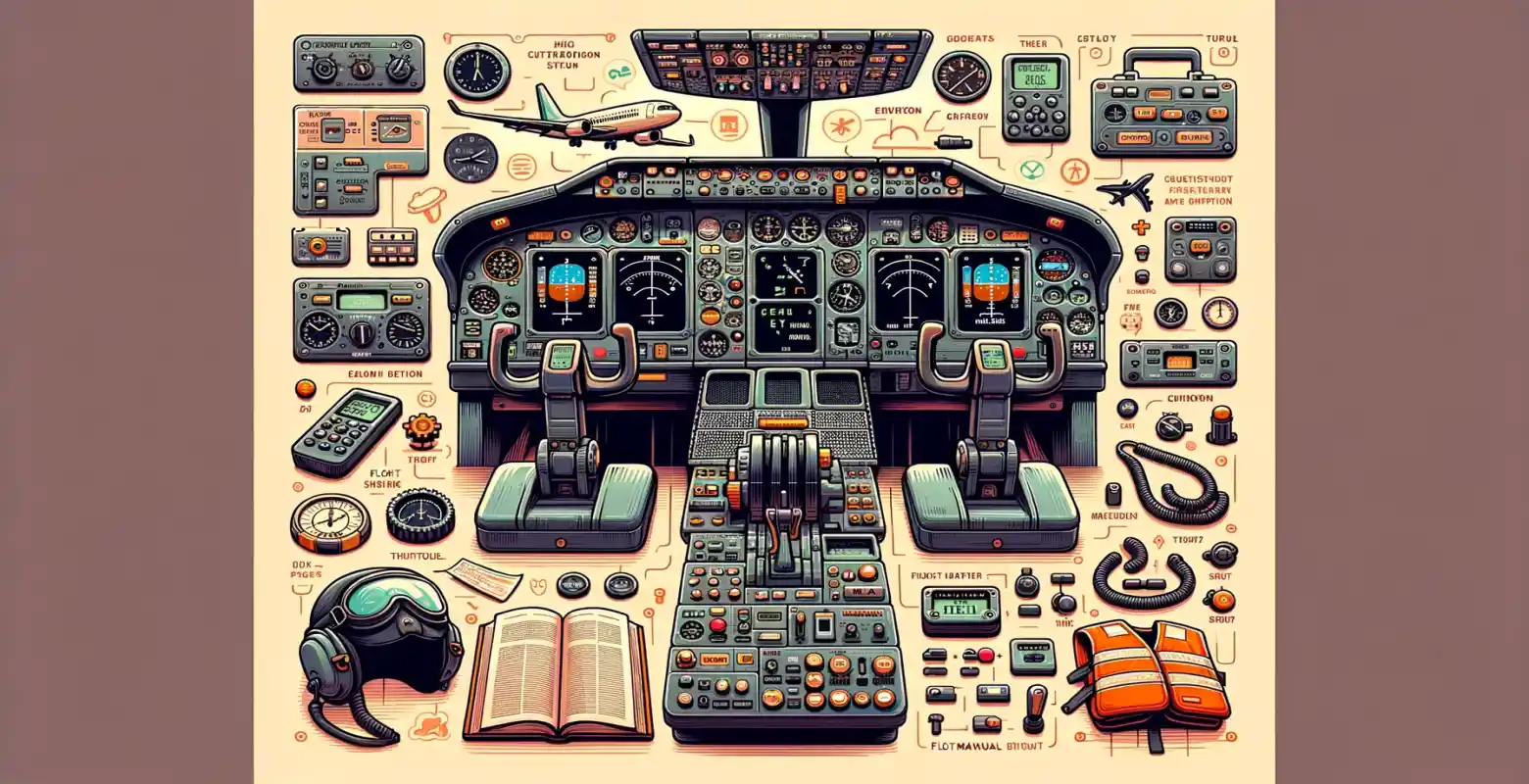
What do you need to know before your first flight as a pilot?
Introduction
The decision to become a pilot is a step that opens the door to the extraordinary world of aviation. Whether you dream of flying professionally or as a hobby, the first steps in this field can be both exciting and overwhelming. Obtaining a pilot's license is not just a matter of learning to fly, but also understanding the complexity of regulations, navigational techniques, and safety in the air. In this article, we will discuss the key aspects you need to know before your first flight as a pilot. This will better prepare you for this adventure and make you feel more confident at the controls of an airplane.
Basic requirements and training
Before taking the controls of an airplane, you must meet several basic requirements. The first step is to acquire the necessary education and training. In Poland, to start training as a civil aircraft pilot, you must be at least 16 years old, and to obtain a Private Pilot License (PPL(A)), you need to be 17 years old. You also need to obtain a Class II medical certificate confirming your fitness for flying.
Pilot training consists of theoretical and practical parts. The theoretical part includes learning subjects such as meteorology, navigation, aviation law, and flight principles. After completing this part and passing exams, you can proceed to the practical part, which involves at least 45 hours of training flights. Learning radio communication and operational procedures at airports is also crucial.
Flight Safety
Safety is a crucial aspect of every flight. Before your first flight, you must understand the basic principles of aviation safety. These include pre-flight checks, which involve inspecting the aircraft's technical condition and equipment. Every pilot must be aware of the limitations of the aircraft they are piloting and the weather conditions that may affect the flight.
Having situational awareness in the air is also important. It means being able to understand what is happening around you, both in the cabin and in the airspace. This allows you to make the right decisions and respond to changing conditions.
Psychology and cockpit stress
Aviation also requires psychological preparation. The first flight as a pilot can be stressful, so it's important to learn to manage emotions and stress. Relaxation techniques such as breathing control and visualization can help maintain calmness and focus.
It's also valuable to understand aviation psychology, including phenomena like "hypoxia" (oxygen deficiency) and "spatial disorientation". Acquiring knowledge about these phenomena helps you better prepare for them and react if necessary.
Navigation and flight planning
Navigation is a key skill that every pilot must master. Before a flight, it's essential to plan the route, considering factors such as weather conditions, airspace, and potential restricted areas. Modern navigation systems like GPS make this task easier, but understanding traditional navigation methods using maps and a compass is also important.
Flight planning also involves calculating fuel consumption, determining navigational points, and preparing alternative plans for unforeseen circumstances. A well-planned flight enhances safety and travel comfort.
Communication and cooperation with air traffic control
Communication with air traffic control (ATC) is an essential part of every flight. Maintaining clear and efficient communication is crucial for ensuring safety in the airspace. Before your first flight as a pilot, you must master basic aviation phraseology and radio communication rules.
Cooperating with ATC includes reporting your position, changes in course or altitude, and following landing instructions. Good communication with ATC helps avoid collisions and manage air traffic in busy areas.
Summary
The first flight as a pilot is a moment that stays in memory for a long time. Preparation for this event requires acquiring the necessary knowledge and skills that will increase your safety and confidence at the controls of an airplane. Understanding the basic principles of training, safety, navigation, communication, and flight psychology is the key to success in this field.
Aviation is an exciting adventure that opens up new possibilities and allows you to see the world from a completely different perspective. If you are considering becoming a pilot, remember that it is a demanding process but also one that brings immense satisfaction. Ensure your safety and continually expand your knowledge so that each flight is a pleasure and a safe experience for you.


Number of comments: 0