

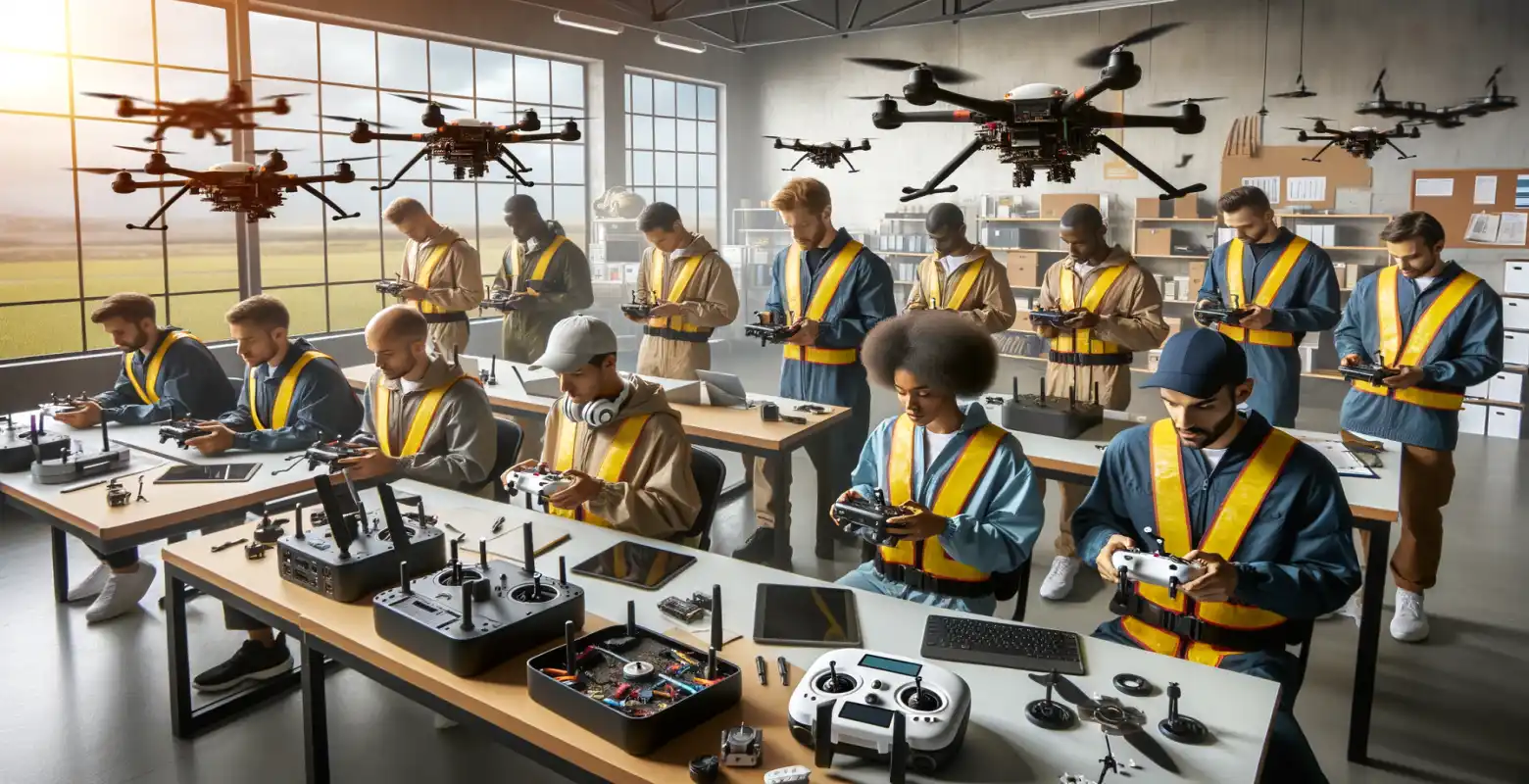
What does the training for commercial drone pilots look like?
Introduction
In today's world, drones have become an integral part of many industries, from photography and filming, through agriculture, to logistic services. Their increasing popularity has led to a growing demand for qualified commercial drone pilots. Drone pilot training is essential to ensure the safety and efficiency of operations using these devices. In this article, we will take a closer look at the process of training commercial drone pilots, the requirements, benefits, and challenges associated with this profession.
History and Development of Drone Technology
Over the past decades, drones have come a long way in technological development. Initially used mainly for military purposes, they have found applications in civilian and commercial sectors over time. The development of sensor technology, cameras, and navigation systems has enabled the creation of advanced drones capable of autonomously performing complex tasks or under operator supervision. The increasing interest in commercial drones has led to the need for appropriate training programs and legal regulations.
Basic Requirements and Qualifications
To become a commercial drone pilot, certain formal and legal requirements must be met. In Poland, according to the regulations of the Civil Aviation Authority (ULC), drone operators with a mass exceeding 250 grams must have the appropriate license. The process of obtaining a license includes both theoretical and practical training. Candidates must be familiar with airspace regulations, safety rules, and drone technical operations. Passing both the theoretical and practical exams is necessary to obtain the certificate.
Theoretical Training Process
The theoretical training for drone pilots focuses on several key aspects. Trainees learn about aviation law, air traffic rules, and airspace classification. Understanding meteorological principles, which affect flight safety, is also essential. Additionally, the training covers navigation knowledge, flight control system operation principles, and equipment maintenance. Introduction to professional ethics and privacy protection guidelines also plays an important role.
Practical Training
After completing the theoretical part, future drone pilots move on to practical training. Here, they learn how to operate drones in real conditions. The training includes learning take-offs and landings, drone maneuvering, and responding to emergencies. Instructors emphasize the ability to handle crisis situations, such as loss of control over the device or technical failures. Learning teamwork and communication with other operators and air traffic control is also crucial.
Examination and Certification
The training process concludes with an exam comprising theoretical and practical parts. Passing both exam sections is a requirement for obtaining a drone operator certificate. Certification confirms qualifications and authorization to carry out commercial flights. It is worth noting that the certificate is valid for a specified period and requires regular renewal through participation in additional training and tests.
Benefits of Becoming a Commercial Drone Pilot
Working as a commercial drone pilot brings many benefits. Firstly, it offers the opportunity to work in a rapidly growing industry that provides a wide range of career possibilities. Drones are used in various sectors, opening doors to careers in fields such as filming, technical inspections, precision agriculture, or even emergency services. Moreover, the profession of a drone pilot is often well-paid and provides the opportunity to work independently or within larger enterprises.
Challenges and Responsibilities
Despite numerous advantages, being a commercial drone pilot also comes with certain challenges. Firstly, adherence to regulations and safety standards is crucial to avoid incidents and ensure safe flight operations. Drone operators must stay up to date with the latest regulations and technologies. Additionally, this work requires a high level of responsibility and precision, especially when performing tasks in challenging weather conditions or urbanized areas.
Future of the Commercial Drone Industry
The commercial drone industry continues to evolve, with a promising future ahead. The use of drones in logistics, such as package delivery, is becoming increasingly feasible, and the potential of autonomous technologies opens up new possibilities. Drones can become an integral part of smart cities, contributing to improving residents' quality of life through environmental monitoring, traffic management, or infrastructure supervision. Therefore, the demand for qualified pilots will grow, and training programs will evolve to meet new market challenges and needs.
Summary
Training commercial drone pilots is a key element in the development of this dynamic industry. It requires a combination of theoretical knowledge, practical skills, and understanding of aviation law regulations. Despite the challenges that come with this job, it also offers many career opportunities in various economic sectors. As drone technology continues to advance, the role of pilots will become increasingly important, and training will need to keep pace with these changes. If you are considering a career in this field, now is a great time to start your drone adventure and become part of the future of commercial aviation.


Number of comments: 0