

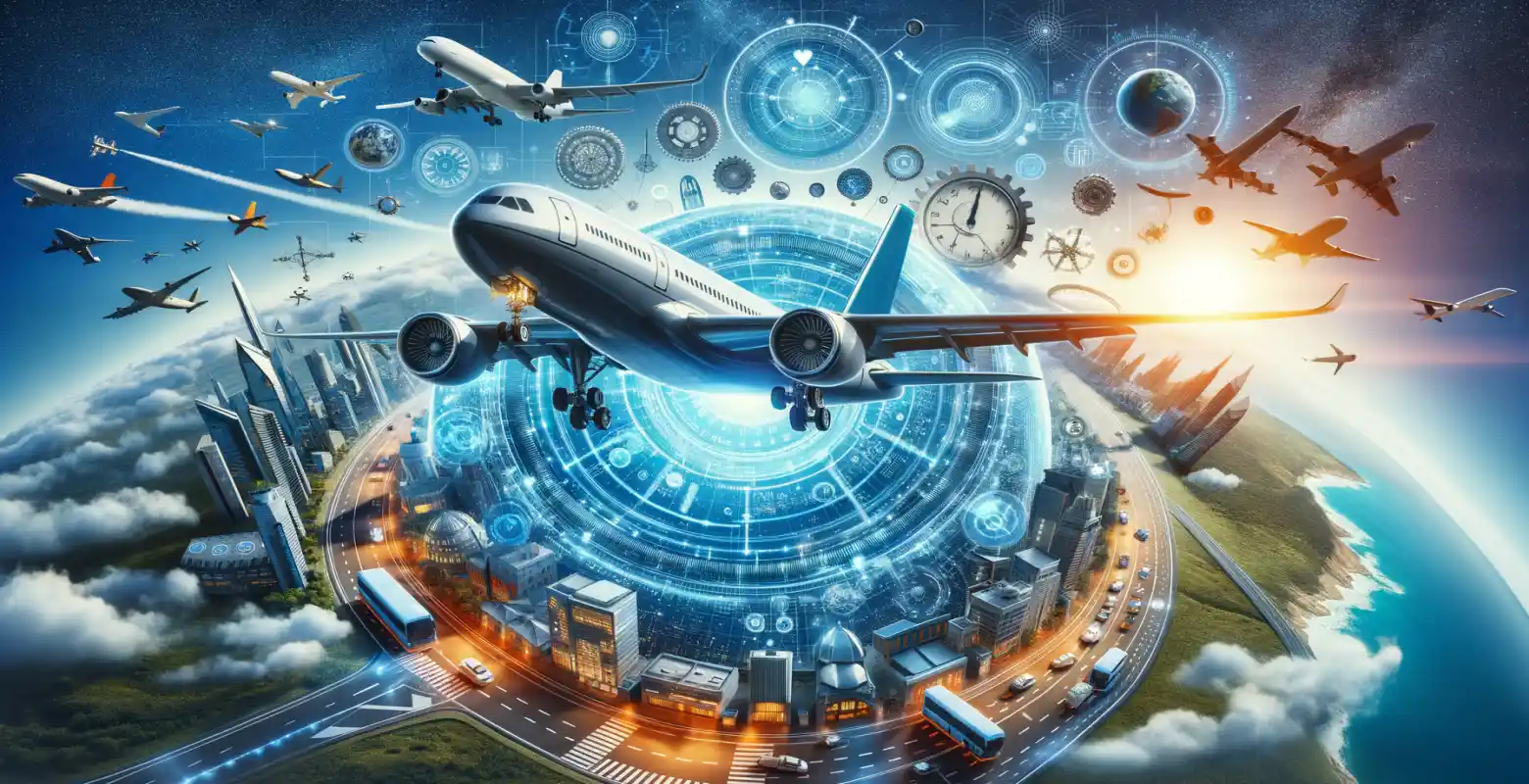
Overview of the most important technological changes in civil aviation
Introduction
Civil aviation is one of the most important sectors of transportation, connecting people worldwide and contributing to the global economy. Technological progress in this field plays a crucial role, influencing safety, efficiency, and sustainable development. In an era where technology is advancing rapidly, understanding the key technological changes in civil aviation is not only interesting but also necessary. In this article, we will look at the most important innovations that are changing the face of aviation, analyzing their impact on the future of this sector.
Modern Materials and Constructions
One of the key areas of progress in civil aviation is the development of modern materials and constructions. Traditional materials, such as aluminum, are gradually being replaced by more advanced composites. Carbon composites, like those used in the Boeing 787 Dreamliner and Airbus A350, offer a significant reduction in weight while increasing strength. As a result, aircraft consume less fuel, leading to lower CO2 emissions and operational costs.
Modern aircraft constructions are also evolving. Aerodynamic optimization, including improved wing shapes, leads to better flight performance. An example of this can be seen in wing designs with "sharklet" tips, which improve performance and fuel efficiency.
Digitization and Onboard Systems
Digitization in civil aviation has revolutionized the way aircraft are designed, manufactured, and operated. Modern avionic systems are equipped with advanced computer technologies that enable more precise flight management. These systems integrate data from various sensors, allowing for better management of onboard resources and increased flight safety.
One example is fly-by-wire technology, which replaces traditional mechanical control systems with electronic interfaces. This solution increases control precision and reduces the aircraft's weight. Additionally, modern satellite navigation systems, such as GPS and its European counterpart Galileo, provide more accurate flight route tracking and improve navigational safety.
Electric and Hybrid Aircraft
Growing environmental concerns and the aim to reduce greenhouse gas emissions are prompting the aviation industry to seek alternative energy sources. Electric and hybrid aircraft are becoming increasingly viable solutions. In recent years, many companies, such as Airbus, Boeing, and startups like Wright Electric, have been vigorously working on the development of electric aircraft propulsion technology.
Although full-scale electric aircraft are still in the experimental phase, smaller electric aircraft are already in production. An example is the Pipistrel Alpha Electro, a two-seater training aircraft. The electrification of civil aviation can greatly reduce CO2 emissions, but the industry still faces challenges related to battery efficiency and flight range.
Autonomous Aviation Systems
Autonomous technology, known in the automotive industry, is also finding application in aviation. These systems can enhance safety and efficiency by automating certain flight elements. Autonomous technologies, such as autopilots, have long been standard in aviation, but work is underway on more advanced systems that can reduce the pilot's involvement in flight operations.
In the future, passenger drones and unmanned aerial vehicles (UAVs) may become commonplace. In cities like Dubai, the first air taxis are already being tested. However, full automation in civil aviation requires solutions to numerous challenges, including issues related to data security, legal regulations, and societal acceptance.
Advanced Safety Technologies
Safety is a priority in civil aviation, and technological progress plays a key role in its improvement. Modern technologies, such as automated monitoring, collision detection, and avoidance systems, significantly enhance flight safety. Traffic Collision Avoidance System (TCAS) and Automatic Dependent Surveillance–Broadcast (ADS-B) systems allow for automated information exchange between aircraft and air traffic control, minimizing the risk of collisions.
Biometrics and artificial intelligence technologies are also beginning to play an important role at airports, improving security procedures and optimizing passenger processing. The introduction of facial recognition systems can expedite security checks while increasing identification accuracy.
Challenges and the Future of Civil Aviation
Despite numerous technological advancements, civil aviation faces many challenges. One of the biggest challenges is further reducing CO2 emissions in the face of growing demand for air travel. Alternative propulsion technologies, such as biofuels, hydrogen, or electrification, still require further research and investment.
Another challenge is integrating new technologies with existing systems and ensuring they meet strict safety standards. Additionally, these transformations also require changes in legal regulations and training for aviation personnel.
Looking to the future, civil aviation will need to continue adapting to changing realities, while leveraging technologies that can make air travel more sustainable, safer, and more accessible to all.
Summary
Technological progress in civil aviation brings many benefits, impacting all aspects of air travel – from aircraft design, through aviation operations, to passenger experiences. Modern materials, digitization, alternative propulsion, autonomous systems, and advanced safety technologies are the foundation of aviation's future.
However, to fully harness the potential of these changes, the industry must address numerous challenges, including environmental, technological, and regulatory ones. Civil aviation is on the cusp of a new era in which innovations will continue to shape its development. For passengers, this means even better, more efficient, and safer journeys, while for the industry, it means new opportunities and directions for growth.



Number of comments: 0