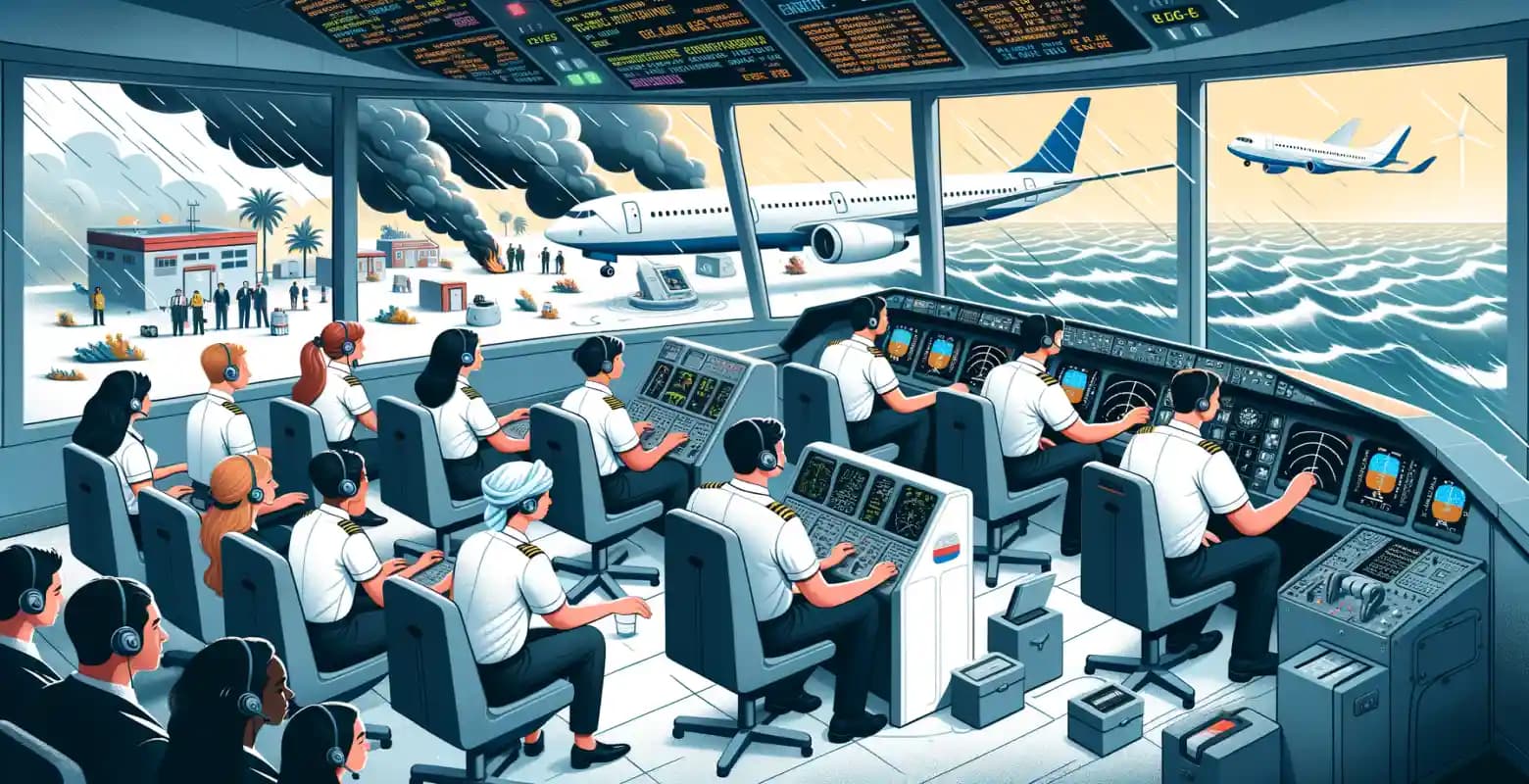
What do exercises for aircrew look like in emergency situations?
Introduction
In today's dynamic world of aviation, the safety of passengers and flight crews is a priority for every airline. That is why crew training in emergency situations is a key element of training and preparing aviation personnel to deal with unexpected incidents. In this post, we will take a look at what these exercises look like, why they are so important, and what challenges and future trends can be observed in this field.
Introduction to Air Crew Exercises
Air crew exercises encompass a wide range of activities aimed at preparing personnel for various emergency situations. From cabin fire simulations, through evacuations, to cabin pressure loss - each event requires a different approach and set of skills. These trainings are not only mandatory but also strictly regulated by international organizations such as the International Civil Aviation Organization (ICAO) and national aviation agencies.
Importance of Exercises in Emergency Situations
Emergency crew exercises aim primarily to ensure passenger safety. A well-trained crew can react quickly and effectively to any threats, minimizing the risk of injuries or loss of life. Moreover, regular training helps maintain a high level of competence and confidence among the crew, which is invaluable in stressful situations.
Types of Air Crew Exercises
There are many different types of exercises that crews must go through to be fully prepared for emergency situations.
Cabin and Cockpit Simulations
Crews regularly participate in simulations that reflect real conditions in the cabin and cockpit. Flight simulators are technologically advanced devices that allow the replication of various scenarios, such as engine failure, turbulence, or sudden decompression.
Evacuation Procedures
One of the key elements of training is evacuation procedures. Crews must be able to conduct a quick and safe passenger evacuation in emergency situations, e.g., in the event of a fire or emergency landing. Often these exercises take place on specially adapted aircraft mock-ups.
Dealing with Medical Threats
Air crews are also trained in first aid and handling sudden medical emergencies on board. The ability to react quickly to a heart attack or other sudden illness is extremely important, especially during long flights when access to professional medical care is limited.
Historical Background and Evolution of Exercises
Over the past decades, air crew exercises have undergone significant evolution. Initially, trainings were less complex and mainly based on theoretical lectures and basic practical exercises. As technology has advanced and the number of passengers has increased, the need for more advanced training has become evident.
The introduction of flight simulators has revolutionized crew training, allowing for realistic replication of many emergency situations. Today, these simulations are a key element of crew preparation and are conducted regularly to maintain a high level of competence.
Challenges in Crew Training
While crew training is extremely important, it also comes with some challenges. One of the main issues is cost. Advanced simulators and specialized training are expensive, representing a significant expense for airlines. Additionally, the need to regularly update training programs in response to new threats and technologies also generates additional costs.
Another challenge is maintaining crew motivation and engagement. Frequent training and simulations can lead to a sense of monotony, so it is important for training programs to be not only effective but also engaging for participants.
Future Trends in Air Crew Training
With technological advancements, new possibilities in crew training are emerging. Virtual Reality (VR) and Augmented Reality (AR) are beginning to play an increasingly important role in training, offering even more realistic and engaging experiences. These technologies can make training more effective and less costly.
Additionally, the development of Artificial Intelligence (AI) allows for a more personalized approach to training, identifying the strengths and weaknesses of individual crew members and adjusting training programs to their individual needs.
Summary
Air crew exercises in emergency situations are an essential element in ensuring safety in aviation. Through regular and advanced training, crews are able to effectively respond to various threats, protecting the lives of passengers and themselves. Despite challenges related to costs and motivation, the future of training seems promising thanks to new technologies that can revolutionize this process.
As aviation becomes increasingly complex and globalized, the importance of proper crew training will only grow. Therefore, both airlines and regulatory organizations must constantly strive to improve training programs to meet the challenges of the future.