

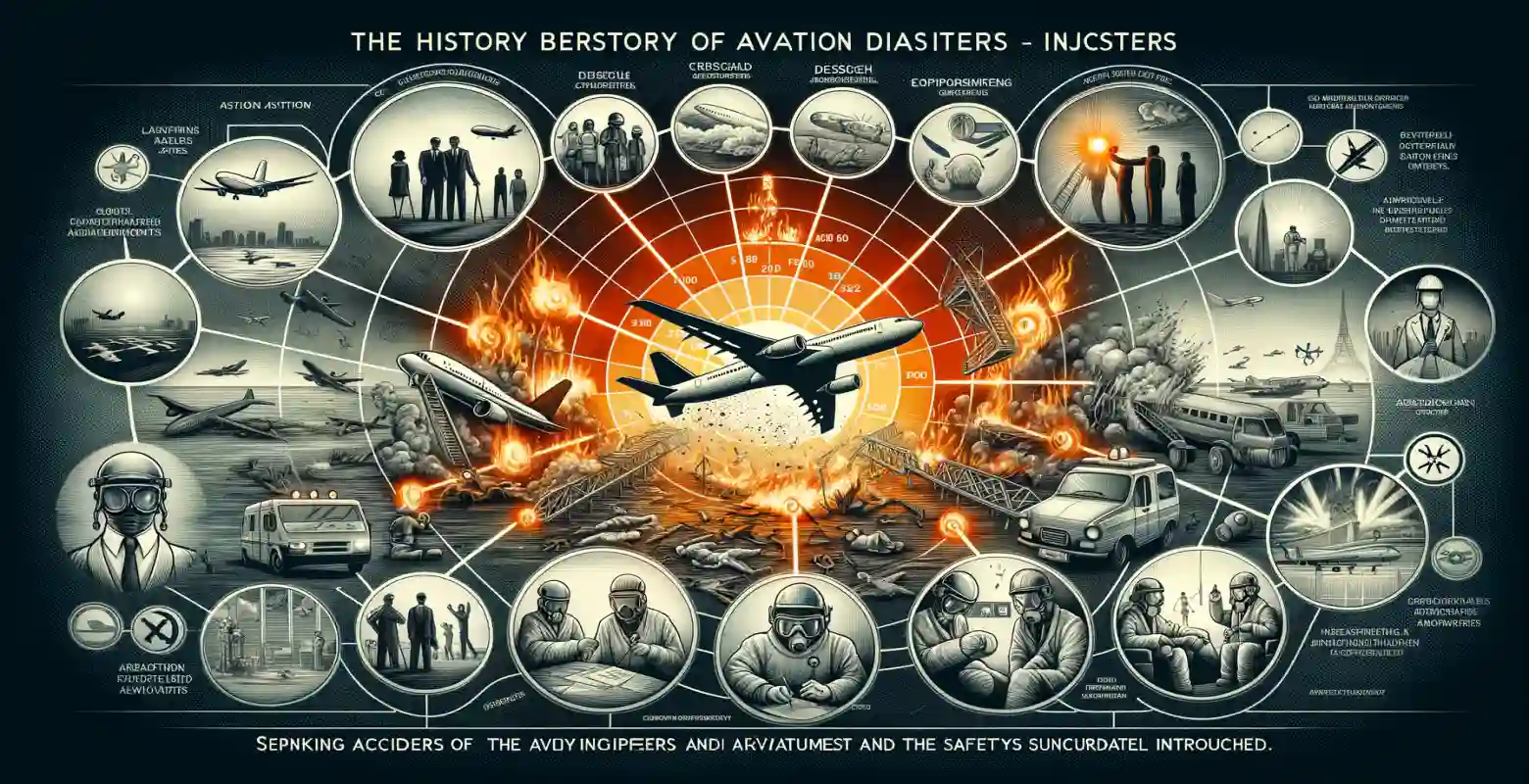
The history of aviation disasters and their impact on safety in the industry
Introduction
Aviation is one of the most important branches of transportation, playing a crucial role in the global economy. Despite tremendous technological advancements and safety procedures, aviation disasters still pose a serious threat. These accidents capture the world's attention not only due to their dramatic consequences but also because of their impact on changes in the aviation industry. The history of aviation disasters is full of difficult lessons that have contributed to improving aviation safety over the years. In this article, we will examine the most significant events in the history of aviation, their causes, and the changes they have brought in terms of safety.
Early Aviation Disasters and Their Impact on Safety Procedures Development
The history of aviation, dating back to the early 20th century, was marked by many tragic accidents. Early aviation disasters often resulted from mechanical failures and pilot errors. For example, the Hindenburg airship disaster in 1937, while not a plane crash, cast a shadow on air travel safety. This accident highlighted the need for strict regulations regarding flammable materials and safer aircraft construction.
In the 1950s, airlines began to employ more advanced technologies, and flights became more accessible. However, with the development of the aviation industry, new challenges emerged. The crash of the de Havilland Comet in 1954, caused by metal fatigue, underscored the need for more thorough material research and strength testing in aircraft design.
1970s and 1980s Aviation Disasters as a Turning Point in Safety Regulations
The 1970s and 1980s were a crucial period in aviation history, marked by numerous disasters that shook the world. In 1977, the largest aviation disaster in history occurred when two Boeing 747s collided on the runway in Tenerife. This event emphasized the importance of communication between the crew and air traffic control, leading to the introduction of radio communication standards and crew resource management (CRM) procedures.
Another groundbreaking event was the Air India Flight 182 crash in 1985, caused by a bomb attack. This incident highlighted the need for strict security control and baggage and passenger monitoring, leading to enhanced security procedures at airports worldwide.
Contemporary Aviation Disasters and Their Significance for Technological Innovations
In recent decades, aviation technologies have significantly advanced, and aviation disasters have become increasingly rare. However, accidents that do occur lead to significant changes in the industry. The disappearance of Malaysia Airlines Flight 370 in 2014 highlighted the need for better aircraft tracking. In response, the International Civil Aviation Organization (ICAO) introduced the Global Aviation Distress and Safety System (GADSS) to enhance flight monitoring.
Another significant incident was the crashes of two Boeing 737 MAX planes in 2018 and 2019. These events revealed issues with the MCAS automated system, leading to the grounding of the entire fleet of this model and a review of certification procedures. These disasters underscored the importance of independent testing and transparency in aircraft production and certification processes.
Impact of Aviation Disasters on Legal Regulations and Safety Standards
Aviation disasters directly influence legal regulations and safety standards in the aviation industry. Each disaster leads to detailed investigations, the results of which form the basis for implementing new regulations and procedures. An example is the introduction of "black boxes" after the TWA Flight 800 crash in 1996, which have become a standard in flight data analysis and cockpit recordings.
In response to various threats such as terrorism, climate change, and cybersecurity, regulatory bodies worldwide continually update their regulations. ICAO, the FAA (Federal Aviation Administration), and EASA (European Aviation Safety Agency) collaborate on harmonizing safety standards, which is crucial for global aviation coherence and safety.
The Future of Aviation Safety: Challenges and Innovations
The future of aviation safety is associated with many challenges but also opportunities. Technological advancements such as artificial intelligence, big data analytics, and automation play an increasingly significant role in enhancing flight safety. Predictive systems can help identify potential threats before they become a reality.
However, with technological progress comes an increased risk of cybersecurity threats. Securing information systems, both on board aircraft and at airports, becomes a priority for the industry. Additionally, climate change affects flight conditions, necessitating the adaptation and development of new technologies and procedures.
Faced with these challenges, international cooperation and investments in research and development are crucial to ensure continued growth in aviation safety.
Summary
The history of aviation disasters shows the importance of continuously improving safety procedures and technologies. Each disaster, though tragic, contributes to learning and progress in the aviation industry. Thanks to insights drawn from the past, contemporary aviation is safer than ever before.
However, we cannot rest on our laurels. As the world changes and technologies evolve, regulations and safety standards must evolve as well. It is essential for us as a global community to strive for even greater cooperation and information exchange to ensure that the future of aviation will be even safer.
Stay tuned for the latest trends and innovations in the aviation industry, as what lies ahead is sure to be a fascinating chapter in aviation history.



Number of comments: 0